 United States
Disposable vs. Rechargeable: What You're Really Paying For
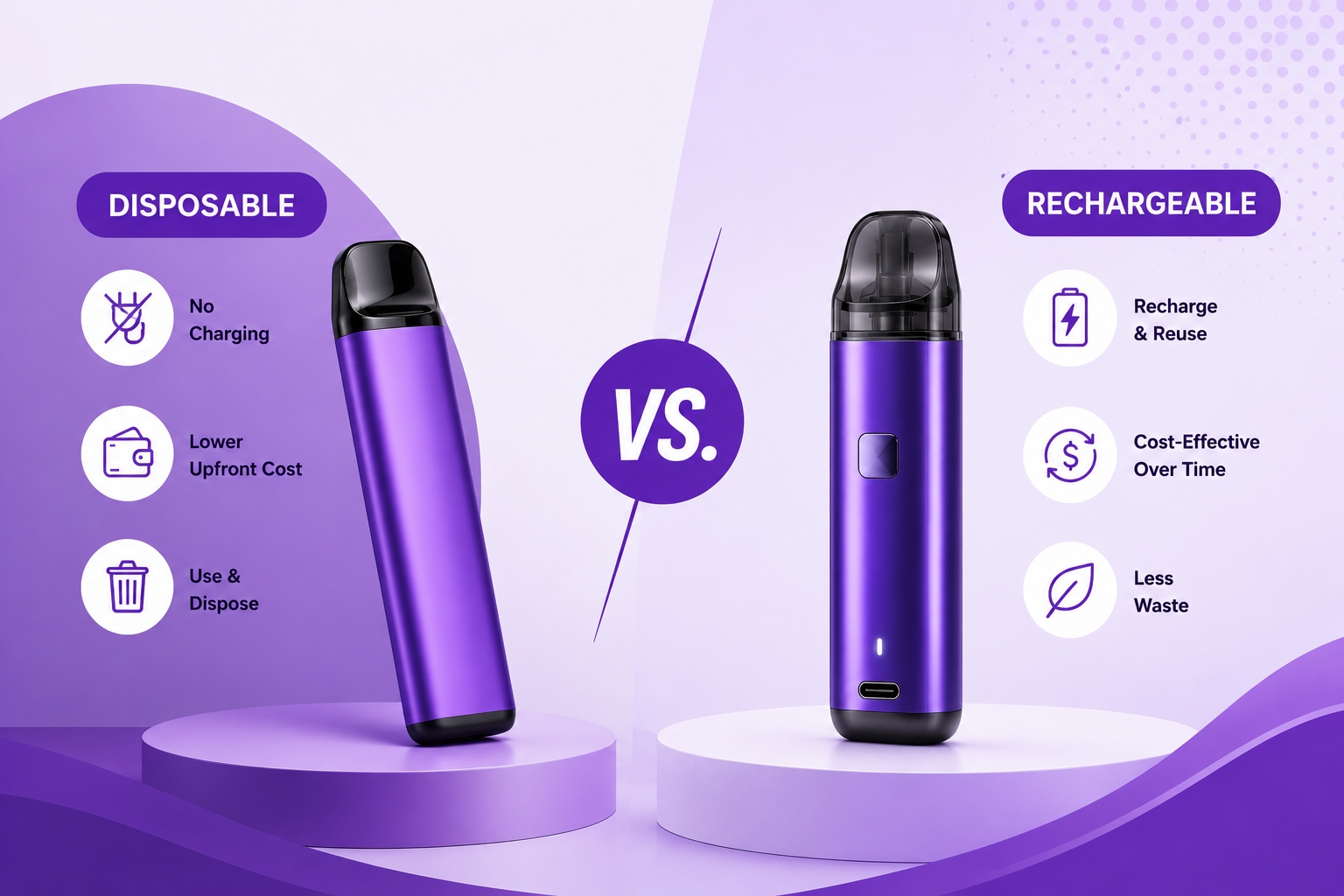
This content is intended for adult vapers of legal purchasing age. Pricing examples are illustrative and may vary by retailer, brand, product capacity, and region. Actual costs depend on the specific products and individual usage.
A disposable priced at $12.99 and a rechargeable pod kit priced at $24.99 can make the cheaper option look obvious. The disposable costs less upfront, so it must be the better deal — right?
Not necessarily.
The price on the shelf only tells you what one purchase costs. The more useful comparison is how much each option may cost over the same period. Purchase frequency, replacement pods or coils, e-liquid use, and hardware lifespan can all affect what you actually spend.
This guide compares disposable and rechargeable vape costs beyond the initial price, with a focus on ongoing expenses, replacement frequency, and longer-term spending.
What Does the Price Tag Actually Mean?
A disposable's price generally covers the complete device: battery, coil, e-liquid, and housing. When the device reaches the end of its usable life, the entire unit is replaced.
A rechargeable or refillable pod kit works differently. The initial purchase covers reusable hardware, while replacement pods, coils, or e-liquid become the ongoing expenses.
That means a $12.99 disposable and a $24.99 rechargeable device aren't equivalent purchases. One covers a complete unit you'll eventually replace, while the other includes hardware designed to be reused.
Why Purchase Frequency Changes the Cost
How often you vape and replace your device can make a major difference in total spending.
Someone who vapes occasionally may replace a disposable infrequently enough that its lower upfront cost remains practical. A frequent user, however, may purchase several disposables over the same period that a rechargeable device continues using the same hardware.
Light or occasional use: Fewer replacements can keep disposable spending relatively low.
Frequent use: Repeated device purchases can add up, making the reusable setup worth comparing over a longer period.
There isn't one universal break-even point. It depends on device prices, replacement costs, and actual usage.
Quick rule: Think of the sticker price as one data point, not the complete cost.
Cost Per Puff Gives You More Context
Another way to compare disposable products is to estimate cost per 1,000 advertised puffs.
The basic calculation is:
Product price ÷ advertised puff count × 1,000
For example, a $15 device advertised for 15,000 puffs would have a theoretical cost of:
$15 ÷ 15,000 × 1,000 = $1 per 1,000 advertised puffs
This is only an estimate. Actual puff count can vary depending on draw length, power settings, airflow, battery performance, and individual usage.
Advertised puff count also doesn't necessarily represent identical real-world use from one person or device to another. Factors affecting advertised puff counts should therefore be considered when using puff count as part of a cost comparison.
Rechargeable systems require a broader calculation because the initial hardware cost needs to be considered alongside replacement pods, coils, and e-liquid.
Disposable vs. Rechargeable Cost Comparison
| Cost Factor | Disposable Vape | Rechargeable Pod Kit |
|---|---|---|
| Upfront Cost | Usually lower | Usually higher |
| What You Pay For | Complete device, battery, coil, and e-liquid | Reusable device and battery |
| Ongoing Cost | Replacement device | Pods, coils, and e-liquid |
| Hardware Replacement | When the device is finished | When reusable hardware reaches the end of its usable life |
| May Suit | Light or occasional use | Frequent or regular use |
| Main Cost Variable | How often the device is replaced | Pod, coil, and e-liquid consumption |
The lower upfront price of a disposable doesn't automatically mean the lower long-term cost. The more useful comparison is what you'll spend over the same period of use.
Hardware Design Matters to Overall Cost
Not every disposable or rechargeable device has the same cost structure.
Rechargeable devices vary in pod size, replacement pricing, expected hardware lifespan, and the cost of consumables. A reusable device such as the Mission Pod Kit is an example of a setup where the main hardware is retained while replaceable components account for ongoing expenses.
Disposables also vary considerably in capacity, advertised puff count, and price. Current disposable vape options illustrate how capacity and features can vary between products.
Bulk pricing can reduce the price per disposable, but it doesn't change the basic cost structure. You're still purchasing multiple complete devices rather than reusing the same hardware.
That's why comparing the specific products you're considering gives you a better estimate than comparing the two categories by sticker price alone.
What to Check Alongside the Price Tag
Capacity: How much e-liquid or pod capacity are you getting?
Replacement cost: What will another disposable, pod, coil, or bottle of e-liquid cost?
Purchase frequency: How often will you realistically need another one?
Hardware lifespan: How long can the reusable device remain in service?
Consumable expenses: How much will pods, coils, and e-liquid contribute to ongoing spending?
Bulk pricing: Does purchasing multiple units change the effective price?
Your usage: Occasional and frequent use can produce very different total costs.
A Better Way to Compare Long-Term Costs
Instead of asking:
“Which one costs less upfront?”
Ask:
“How much will each option cost me over the same period?”
For disposables:
Price per device × number of devices purchased per month
For rechargeable systems:
Device cost + replacement pods/coils + e-liquid
A reusable pod system separates the initial hardware purchase from ongoing consumable expenses. The Freemax Rexa PRO review provides a practical example of the hardware and replaceable components involved in this type of setup.
For a longer-term comparison, the initial hardware cost can be spread across several months rather than treated as a new expense every month.
For example, if a pod kit costs $30 and the hardware remains in use for six months:
$30 ÷ 6 months = $5 hardware cost per month
Then add the average monthly cost of pods, coils, and e-liquid.
This gives you a more useful estimate than comparing two sticker prices at checkout.
Bottom Line
Disposable vapes generally have a lower upfront cost, while rechargeable systems separate the hardware purchase from ongoing consumable expenses. Neither is automatically cheaper for every user.
The more useful comparison is based on how often you buy, what replacements cost, and how long the hardware lasts.
For occasional use, fewer disposable purchases may keep total spending relatively low. With more frequent use, comparing repeated disposable purchases against the ongoing expenses of a reusable setup can produce a different long-term cost estimate.
Available disposables and rechargeable hardware can be compared using the same cost factors: upfront price, replacement frequency, ongoing expenses, and expected hardware lifespan.
Sources & Further Reading
Cost examples are illustrative estimates. Actual prices, advertised puff counts, product lifespan, replacement expenses, and individual usage may vary. Always check current pricing and specifications for the specific products you're considering.