 United States
How to Choose the Right Vape Coil: Best Types, Ohm Levels & Tips
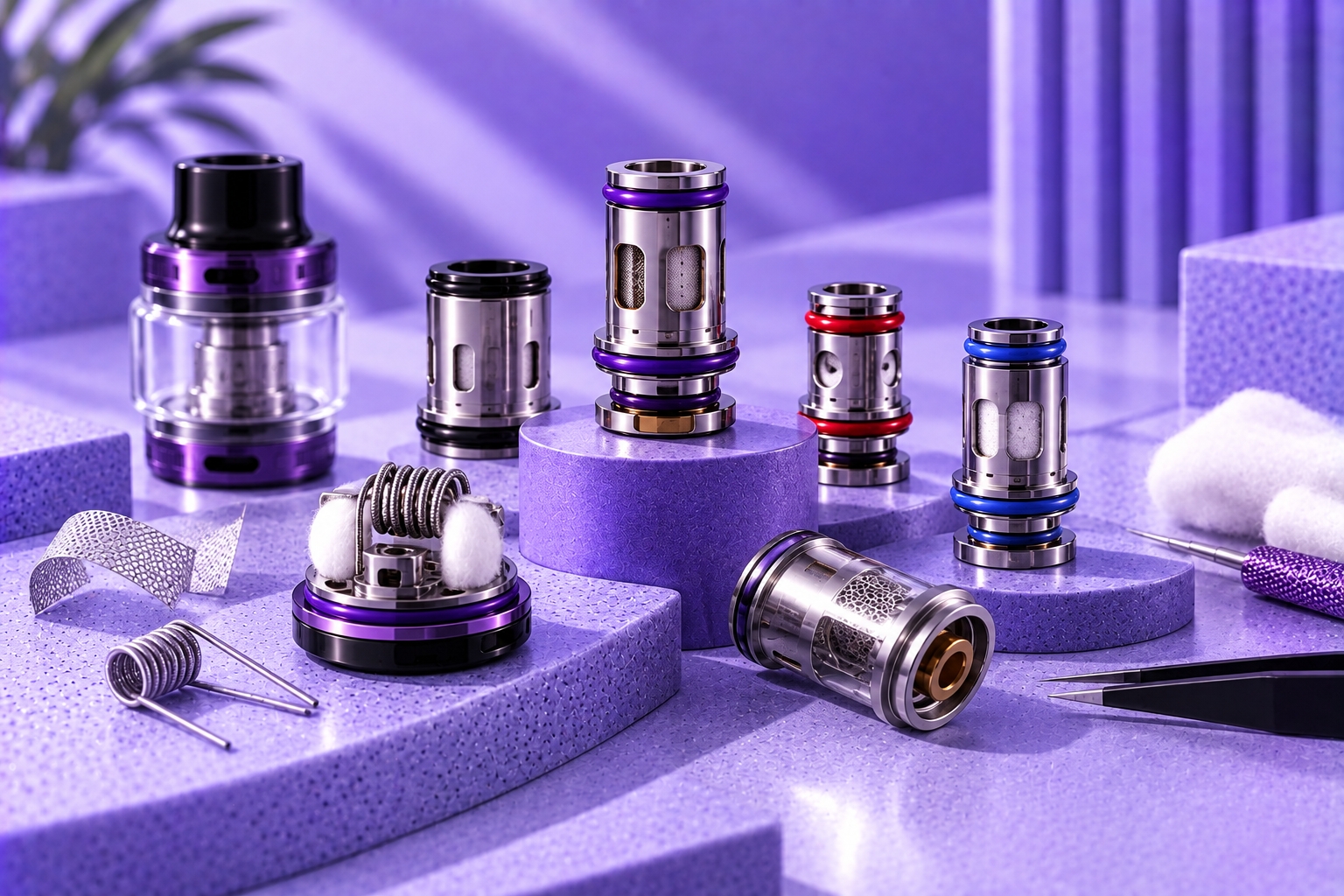
For adults 21+ only. If you do not currently use nicotine or tobacco products, do not start. Vape devices and nicotine products are not risk-free. Always use coils specifically listed as compatible with your device or tank and follow the manufacturer's operating specifications.
Choosing the right vape coil starts with more than simply deciding between a high or low resistance. Replacement coils can differ in physical compatibility, resistance, recommended power range, construction, and intended airflow.
This guide focuses specifically on how to choose the right vape coil. The first priority is confirming compatibility with your device or tank, followed by resistance, supported wattage, draw style, and the manufacturer's specifications.
1. Start With Device and Tank Compatibility
Compatibility should be the first filter when choosing a replacement coil. A coil with the resistance you want is not automatically compatible with your hardware.
Manufacturers commonly design coils as part of specific coil families, and compatibility can vary between tanks, pods, and device generations. Two coils may have similar resistance values while using different dimensions, connectors, seals, or operating ranges.
Before comparing resistance or performance characteristics, identify:
- The exact device or tank model
- The compatible coil family listed by the manufacturer
- The specific coil variants supported by that hardware
- The recommended operating range for the selected coil
If you cannot confirm that a replacement coil is intended for your exact hardware, do not rely on resistance alone to determine compatibility.
2. Understand Vape Coil Resistance
Coil resistance is measured in ohms (Ω). Resistance is one factor that influences how a coil operates, but it works together with the coil design, recommended power range, airflow, and device settings.
Higher-Resistance Coils
Higher-resistance options are commonly associated with lower-power operation and tighter airflow configurations. Depending on the coil family and device, these may be intended for mouth-to-lung (MTL) or similarly restricted draw styles.
Lower-Resistance and Sub-Ohm Coils
A coil below 1.0Ω is generally described as sub-ohm. Many lower-resistance coils are designed to operate at higher power and with greater airflow than higher-resistance alternatives, although the manufacturer's specifications for the exact coil should determine how it is used.
Resistance Does Not Tell the Whole Story
Avoid choosing a coil based only on an assumption such as “lower resistance means more vapor” or “higher resistance means MTL.” Modern coil designs vary, and two coils with similar resistance can have different recommended wattage ranges and airflow requirements.
Use the resistance value together with the manufacturer's stated power range and intended application.
3. Check the Recommended Wattage Range
Replaceable coils commonly have a recommended wattage or operating range specified by the manufacturer. This range should be checked before installing or adjusting the device.
Do not assume that two compatible coils should use the same power setting simply because they fit the same tank. Different resistance and coil constructions may have different operating ranges.
When switching between compatible coil variants, check the marked range on the coil, packaging, manual, or manufacturer's specifications and adjust the device accordingly.
4. Match the Coil to Your Draw Style
Once compatibility and operating range are confirmed, consider the type of airflow and draw the coil is designed to support.
Mouth-to-Lung (MTL)
MTL setups generally use a tighter airflow and lower-power configuration. Compatible coil options intended for this style are often higher in resistance than coils designed for more open airflow, although exact specifications vary by product.
Restricted Direct-to-Lung (RDL)
RDL sits between tighter MTL airflow and more open DTL operation. Some coil families include intermediate resistance options specifically intended to provide this middle-ground airflow and power range.
Direct-to-Lung (DTL)
DTL configurations generally use more open airflow and coils designed for higher power. Many are sub-ohm, but the exact resistance and wattage requirements depend on the compatible coil and tank.
Instead of assigning a draw style from resistance alone, check how the manufacturer describes the particular coil variant.
5. Consider Coil Construction and Material
Replacement coils can also differ in heating-element construction and material. These characteristics can affect their supported operating modes and should be considered only after confirming that the coil is compatible with the hardware.
Kanthal
Kanthal is commonly used in wattage-controlled coil designs. If a device or coil is intended for standard wattage operation, confirm the recommended range before use.
Stainless Steel
Some stainless-steel coil designs can support wattage operation and compatible temperature-control configurations. Whether temperature control is supported depends on the exact coil and device specifications.
Nickel and Titanium
Nickel and titanium heating elements are associated with specific temperature-control applications and should only be used with hardware and operating modes designed to support them. Follow the manufacturer's instructions rather than substituting materials or operating modes based on general resistance values.
Mesh Coils
Mesh describes the structure of the heating element rather than a resistance category. Mesh coils are available across different resistance and power ranges, so the same compatibility and manufacturer-specification checks still apply.
6. Check Whether the Coil Matches the Intended E-Liquid Setup
Coil design, wicking, airflow, and power range can affect how a particular setup handles e-liquid. Instead of assuming that every compatible coil performs identically with every formulation, check the manufacturer's recommendations for the specific pod, tank, or coil.
This is particularly important when switching between substantially different coil resistances or operating ranges within the same coil family.
7. Compare Compatible Coils Within the Same Coil Family
If your tank or device supports several replacement coils, comparing those compatible options is usually more useful than comparing unrelated coils from different platforms.
For each compatible option, compare:
- Resistance
- Recommended wattage range
- Intended airflow or draw style
- Heating-element construction
- Supported operating mode
- Manufacturer compatibility
This approach keeps the decision within the hardware ecosystem your device is actually designed to use.
Vape Coil Selection Checklist
Before purchasing a replacement coil, work through these questions in order:
- What is the exact model of my device, pod, or tank?
- Which coil family does the manufacturer list as compatible?
- Which resistance options are supported?
- What wattage or operating range is specified for each option?
- Which option matches the intended MTL, RDL, or DTL airflow?
- Does the coil require a particular operating mode?
- Does the manufacturer provide additional e-liquid or setup guidance?
Compatibility should remain the deciding factor. A coil that appears better suited to a preferred resistance or draw style should not be installed if the manufacturer does not list it for the hardware.
What About Priming and Coil Maintenance?
Choosing the correct coil and caring for it after installation are separate tasks. A compatible replacement coil still needs to be installed, prepared, operated, and eventually replaced according to its requirements.
New wick-based coils generally require proper saturation before normal use. Because coil priming has its own setup procedure, it should be handled separately from the coil-selection decision.
Similarly, changes in flavor, vapor production, visible condition, leaking, or persistent burnt taste can indicate that a coil or another component needs attention. Ongoing coil maintenance and replacement should therefore be evaluated separately from choosing the initial replacement coil.
How This Fits Into Broader Coil Basics
Coil selection is only one part of understanding vape coils. A broader vape coil guide can cover how coils work, general terminology, resistance, replacement, and other fundamentals, while this page stays focused on selecting a compatible coil for a particular setup.
Final Thoughts
The right vape coil is not simply the option with the lowest resistance, highest wattage, or most popular construction. Start with your exact device or tank, identify the manufacturer's compatible coil family, and then compare resistance, operating range, draw style, construction, and other specifications within those supported options.
That order keeps coil compatibility at the center of the decision and prevents this selection process from becoming a general comparison of unrelated replacement coils.
Use only replacement coils and operating settings supported by the manufacturer of your device or tank. Stop using damaged or abnormally operating hardware and follow the manufacturer's instructions for installation, power settings, maintenance, and replacement.