 United States
How to Pick a Vape Based on Your Daily Nicotine Cigarette Equivalent
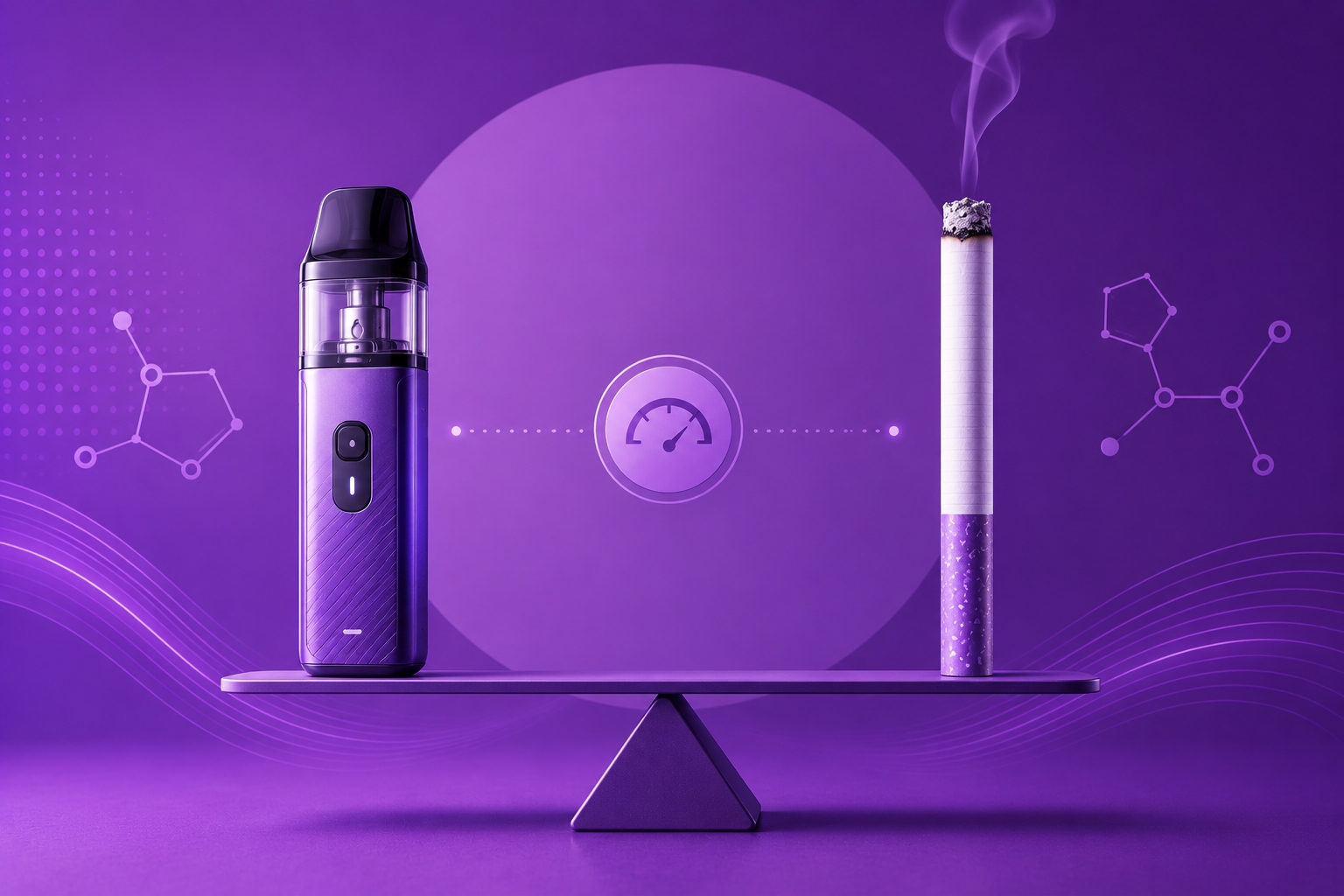
This article is intended for adults of legal purchasing age who already use nicotine products. Nicotine is highly addictive. There is no established 1:1 conversion between the number of cigarettes smoked and a specific e-liquid nicotine concentration. The information below is for general educational purposes, not individualized dosing or medical advice. Nicotine exposure can vary based on the product, device, nicotine formulation, and individual usage patterns.
If you're switching from smoking to vaping, choosing a nicotine strength can be confusing. A strength that feels insufficient for one person may be excessive for another because nicotine delivery varies across products, devices, and patterns of use.
Rather than treating cigarette count as an exact conversion formula, this guide uses previous smoking habits as one piece of context while explaining the other factors that can affect nicotine exposure.
Why Cigarette Count Is Only a Starting Point
There is no reliable 1:1 conversion between cigarettes, vape puffs, and e-liquid nicotine concentration. Nicotine delivery from e-cigarettes can vary depending on factors such as product design, nicotine concentration, device characteristics, and how the product is used. The Centers for Disease Control and Prevention (CDC) also notes that most e-cigarettes contain nicotine, which is highly addictive.
Previous cigarette consumption can provide context about a person's past nicotine use, but it should not be treated as a formula for determining an exact vaping strength. When comparing products, consider the labeled nicotine concentration together with the nicotine formulation, device type, and how frequently the product is used.
What to Consider Based on Your Previous Smoking Pattern
| Previous Smoking Pattern | What to Consider | Why It Matters |
|---|---|---|
| Light or occasional | Nicotine concentration, formulation, and device type | Different products can deliver nicotine differently even when their labeled strengths appear similar. |
| Regular | Strength, nicotine formulation, device output, and frequency of use | Nicotine concentration alone does not determine total nicotine exposure. |
| Frequent or heavy | Avoid relying on cigarette count alone to select a nicotine concentration | Previous nicotine use, product characteristics, and individual usage patterns can differ substantially. |
The key takeaway is that previous smoking frequency provides context rather than an exact nicotine recommendation. Product format matters too. For example, Pod Juice Dubai is available in 3mg and 6mg strengths, while refillable systems such as the Lost Vape Ursa Nano 3 allow users to choose a compatible e-liquid instead of being limited to a fixed prefilled nicotine concentration.
Freebase vs. Nicotine Salts: Why Formulation Matters
The nicotine concentration printed on a product label is only part of the picture. Nicotine formulation and device characteristics can also affect how a product is experienced and how nicotine is delivered.
Freebase nicotine is commonly found in lower-concentration e-liquids and is widely used across refillable vaping systems. The experience can vary considerably depending on concentration, device power, airflow, and individual use.
Nicotine salts are commonly used in pod systems and other products available at higher labeled nicotine concentrations. Research on electronic nicotine delivery systems has shown that nicotine delivery can vary considerably according to product characteristics and user behavior, which is another reason concentration should not be evaluated in isolation.
The U.S. Food and Drug Administration (FDA) provides additional information about electronic nicotine delivery systems, their components, and nicotine.
For context, products within the same general category may have very different labeled concentrations. The Rinn Bar NIX 50K, for example, is listed at 50mg. This illustrates why it's important to check the actual product specification rather than assuming all disposables contain equivalent nicotine concentrations.
Product specifications and availability can change. Verify the current nicotine concentration and other specifications on the product label, manufacturer information, or current product listing before use.
Pay Attention to How You Respond
Nicotine affects individuals differently, and physical symptoms should not be used as a precise way to calculate an appropriate nicotine concentration.
Exposure to nicotine can cause unwanted effects. If you experience symptoms such as nausea, dizziness, headache, or other concerning effects while using a nicotine product, stop using it and seek appropriate guidance. For additional information about nicotine and e-cigarettes, refer to guidance from the CDC and FDA.
If symptoms are persistent, severe, or concerning, contact a qualified healthcare professional or appropriate medical service.
A Better Way to Compare Nicotine Options
Check the labeled concentration. Don't assume products within the same category contain the same amount of nicotine.
Consider the nicotine formulation. Freebase nicotine and nicotine-salt products can differ in formulation and typical product concentrations.
Consider the device. Device characteristics and product design can influence nicotine delivery.
Consider your usage pattern. Puff frequency, duration, and overall product use can affect nicotine exposure.
Don't treat cigarette count as a dosing formula. Previous smoking frequency is only one piece of context and does not establish an exact vaping strength.
Looking at these factors together provides more useful context than trying to convert a specific number of cigarettes directly into a specific e-liquid nicotine concentration.
Final Thoughts
Your previous cigarette use can provide context when comparing nicotine products, but it isn't an exact nicotine conversion. Device characteristics, nicotine formulation, labeled concentration, and individual usage patterns can all affect nicotine exposure.
Instead of matching cigarette count directly to a nicotine number, check the product's labeled concentration and consider the nicotine formulation and device together. If you're uncertain about nicotine use or experience unwanted effects, seek guidance from a qualified healthcare professional.
Sources & Further Reading
Product concentrations and device specifications referenced in this article should be verified against current product labeling, manufacturer information, or the corresponding product listing because specifications and availability may change.
📩 Want more guides like this? Subscribe to our newsletter for tips, reviews, and exclusive deals.
Nicotine is highly addictive. There is no exact cigarette-to-vape nicotine conversion, and this article should not be interpreted as individualized nicotine dosing or medical advice. If you experience unwanted or concerning symptoms, stop use and seek appropriate professional guidance.