 United States
Nicotine Pouch Strengths Explained: How to Pick the Right mg Without Guessing
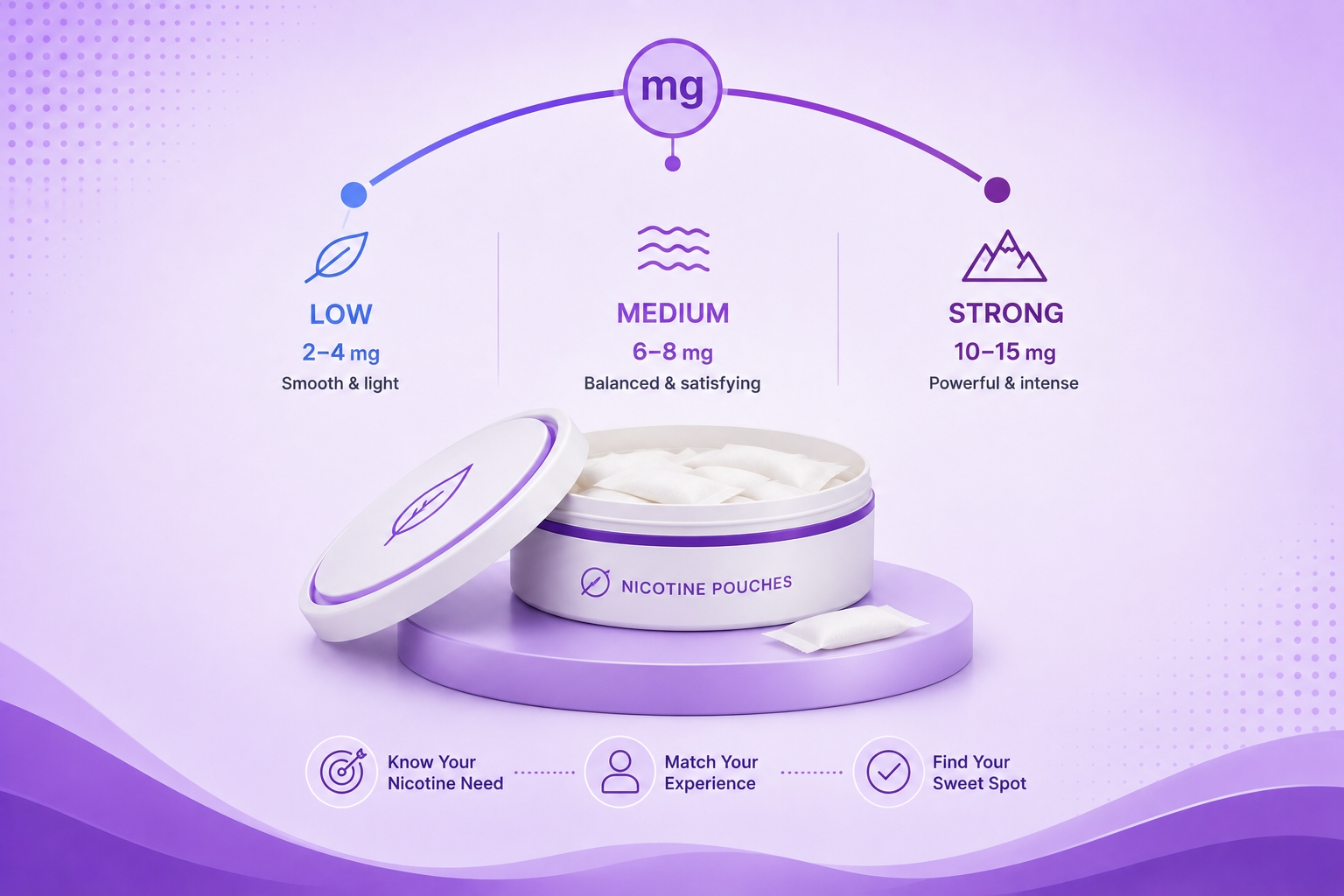
This content is intended for adult users of legal purchasing age. Nicotine strength can feel different between products, so the mg number should be treated as a reference rather than an exact measure of individual experience.
Nicotine pouch strength labels vary more than people expect — an "8mg" pouch from one brand isn't necessarily the same real-world strength as an "8mg" from another. Here's how to actually think about strength selection instead of guessing off the number on the tin.
Why the mg Number Isn't the Whole Story
The printed mg figure typically refers to total nicotine content in the pouch, not how much is actually absorbed or how fast. Two brands with identical mg ratings can feel noticeably different depending on:
Whether the nicotine is salt-based or freebase
Moisture level (dry pouches release more slowly, moist pouches faster)
Pouch size and fill density
pH level, which affects absorption rate
This is why "just match the mg number" advice often leads people to pick a strength that feels wrong even though it matches on paper.
General Strength Categories
| Category | Typical Range | Who It Tends to Suit |
|---|---|---|
| Low | 2–4mg | New users, very light or occasional smokers |
| Moderate | 6–8mg | Light-to-moderate smokers, regular pouch users |
| Strong | 10–14mg | Moderate-to-heavy smokers |
| Extra Strong | 15mg+ | Heavy smokers, experienced pouch users |
These ranges are general guidance, not fixed rules — individual tolerance varies significantly. In practice, this is why a brand's own range matters as much as the category. Thursday Dry Nicotine Pouches stay in the low tier at 3mg and 6mg in a dry format, so they tend to sit toward the gentler, slower-onset end even before you factor in mg alone. Basix Nicotine Pouches spans low through strong in one lineup — 3mg, 6mg, and 12mg — making it possible to move a tier up or down without switching brands entirely. WYN Nicotine Pouches leans moderate-to-strong at 6mg, 10mg, and 14mg with a softer, moist pouch straight out of the can, which can make the same mg number feel more immediate than a dry pouch at that strength.
How to Choose Based on Your Smoking Habit
If you're switching from smoking: A rough (not exact) reference point some people use is pack-a-day habits leaning toward the strong-to-extra-strong range, moderate smokers toward moderate-to-strong, and light/social smokers toward the low-to-moderate range. This is a starting point for experimentation, not a formula — actual tolerance varies by person.
If you're switching from vaping: Pouches and vapes deliver nicotine differently (oral mucosa absorption vs. inhalation), so your vape nicotine strength in mg doesn't translate directly. Many vapers find they need to experiment down or up from their vape strength rather than assuming a 1:1 match.
If you're new to nicotine products entirely: Start at the lowest available strength. It's straightforward to move up if it's not enough; starting too strong can cause nausea, dizziness, or a harsh experience that puts people off the category entirely.
Signs You've Picked the Wrong Strength
Too low:
Cravings return quickly
You find yourself using pouches much more frequently than intended to compensate
Too high:
Nausea, lightheadedness, or a racing feeling
Excess salivation or mouth irritation
A harsh, unpleasant sensation rather than satisfaction
Adjusting Over Time
Many users start higher when first switching from cigarettes and gradually step down in strength over weeks or months as cravings become less intense. Others settle at one strength long-term. Neither approach is "correct" — it depends entirely on your goals and comfort level.
A Practical Way to Test Strength
Start one tier below where you think you need to be
Use it consistently for 2–3 days before judging
If cravings persist or you're reaching for pouches too frequently, move up one tier
If you notice nausea or harshness, move down one tier
Repeat until it feels balanced, not just "strong enough"
Bottom Line
The mg number on the label is a starting reference, not a guarantee of feel — format, moisture level, and individual tolerance all shape the real experience. Starting conservatively and adjusting based on how you actually respond gets you to the right strength faster than matching numbers alone.
Nicotine is addictive, and individual tolerance varies. Nicotine pouch strengths and availability also differ by country or region, so always check local regulations and product information before use.