 United States

Vape Battery Percentage Jumping? Causes and What to Check
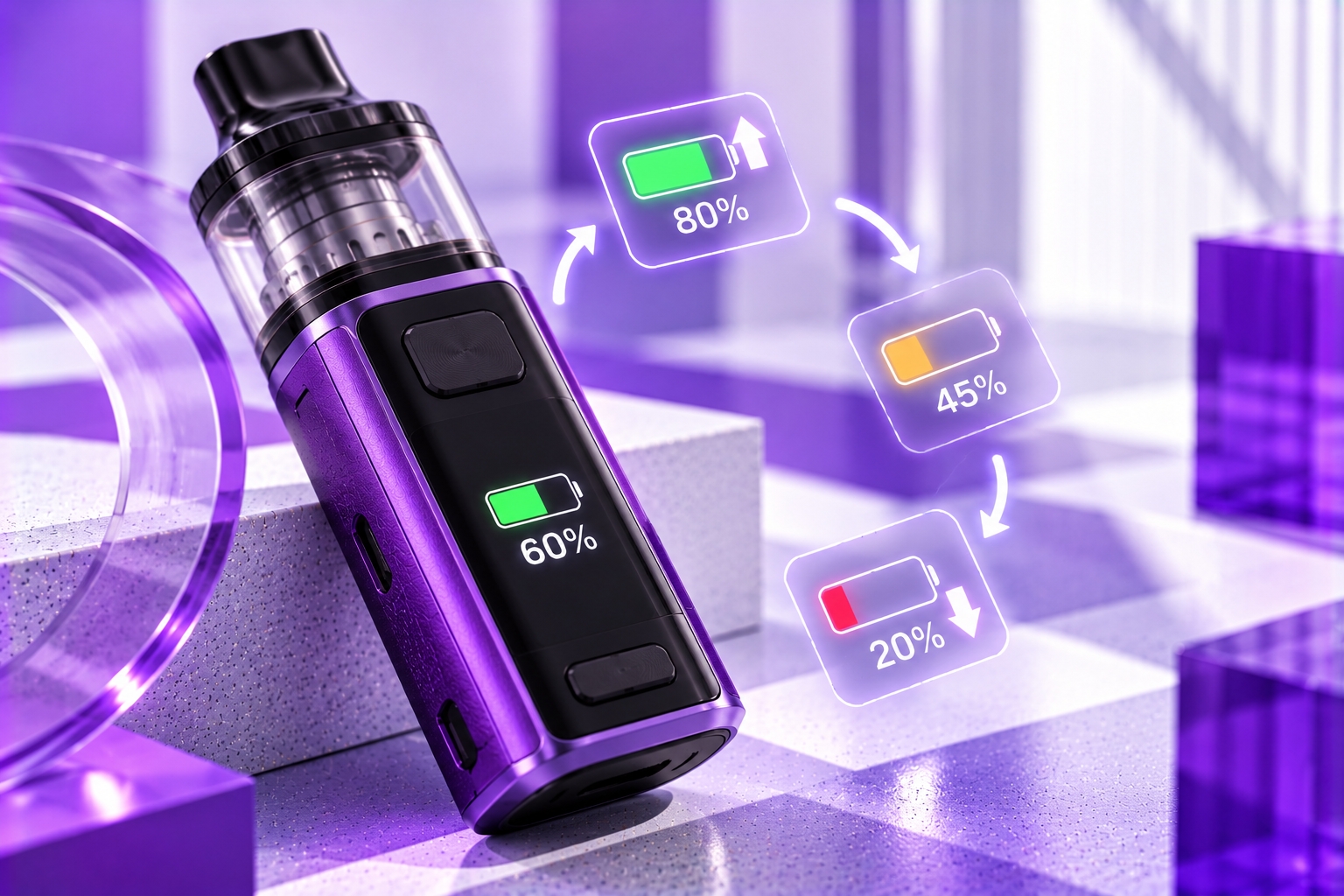
Your vape shows 70% battery, but after a few puffs, the display suddenly drops to 40%. A little later, it climbs back to 60% without being charged. If your vape battery percentage keeps jumping, the changing numbers can make it difficult to know how much charge is actually left.
Unexpected battery-level changes do not always mean the battery is damaged. Some devices estimate remaining charge using battery voltage, which can change during use and recovery. However, aging batteries, inaccurate indicators, and electrical faults can also contribute to inconsistent readings.
This guide explains why vape battery percentages fluctuate, how to distinguish display behavior from actual battery drain, and what you can safely check before deciding whether the device needs professional attention or replacement.
What Does It Mean When Your Vape Battery Percentage Jumps?
A jumping battery percentage occurs when the displayed charge level changes unexpectedly, sometimes dropping sharply during use and increasing again after the device rests.
The percentage shown on a vape screen is generally an estimate rather than a direct measurement of stored energy. Depending on the device, the battery-management system may use voltage measurements, current monitoring, or other calculations to estimate the remaining charge.
Because these estimates depend on operating conditions and device design, the displayed percentage may not always decrease smoothly.
Is It Normal for Vape Battery Percentage to Fluctuate?
Small changes can occur in some devices, especially during periods of higher power demand. A battery's terminal voltage may temporarily decrease when supplying current and recover when the load is removed.
If the device estimates charge primarily from voltage, this behavior can influence the displayed percentage. However, not every vape uses the same battery-level calculation, and some devices are better at compensating for temporary voltage changes than others.
Large, repeated changes should not automatically be considered normal. The table below explains several patterns and their possible meanings.
| Battery Indicator Behavior | Possible Explanation | What to Do |
|---|---|---|
| Percentage drops during use and partly recovers afterward | Temporary voltage sag affecting the charge estimate | Compare the behavior with manufacturer guidance |
| Percentage changes unexpectedly while idle | Indicator estimation issue or possible hardware fault | Check for warnings and contact support if repeated |
| Percentage falls quickly and the device shuts down | Reduced battery capacity, voltage drop, or another fault | Stop use if the behavior is unexplained or persistent |
| Battery indicator changes with unusual heat or swelling | Potential battery safety problem | Stop using and charging the device immediately |
These examples are general diagnostic patterns, not manufacturer-approved thresholds. The correct interpretation depends on the device and its battery-management system.
Why Does Your Vape Battery Percentage Change Unexpectedly?
1. Battery Voltage Drops Temporarily During Use
When a battery supplies electrical current, its terminal voltage can temporarily decrease. This is commonly called voltage sag.
The size of the voltage drop depends on factors such as current demand, battery condition, internal resistance, and temperature. When the electrical load stops, the voltage may partially recover.
A device that relies heavily on voltage to estimate battery charge may interpret these changes as a temporary reduction and recovery in remaining battery percentage.
Voltage sag is a normal electrical phenomenon, but unusually large or worsening changes may indicate reduced battery performance or another problem.
2. The Battery Indicator Is Estimating Charge Inaccurately
Battery percentage displays are estimates generated by the device's electronics. Their accuracy depends on the measurement method, software, and battery characteristics.
Some systems estimate charge primarily through voltage, while more advanced battery-management designs may also track current and accumulated energy use.
An inaccurate estimate can cause the percentage to appear inconsistent even when the battery's actual stored energy has not increased.
Do not attempt unofficial battery calibration procedures, repeated full discharges, or firmware modifications unless the device manufacturer specifically recommends them.
3. The Battery Has Aged or Lost Capacity
Rechargeable lithium-ion batteries gradually lose capacity and may develop higher internal resistance as they age. The rate of deterioration depends on battery chemistry, temperature, charging conditions, storage, and usage history.
An aging battery may experience a greater voltage drop under load, making charge estimates less stable on certain devices.
Reduced battery capacity may also cause shorter operating time between charges. However, battery percentage fluctuations alone cannot confirm that a battery has reached the end of its service life.
For related maintenance and handling considerations, Puffin's battery safety resources provide additional context on device care and charging precautions.
4. Temperature Is Affecting Battery Performance
Battery temperature can influence voltage behavior, internal resistance, and available performance. Cold conditions may temporarily reduce the power a lithium-ion battery can deliver, while excessive heat can accelerate deterioration and create safety risks.
If the battery indicator becomes inconsistent after exposure to extreme temperatures, stop using the device until it returns to the manufacturer's recommended operating conditions.
Never use external heating methods, direct sunlight, or improvised cooling techniques to change battery temperature. If the device becomes unusually hot or shows other warning signs, discontinue use.
5. Charging or Internal Electronics Are Malfunctioning
A malfunctioning charging circuit, battery-monitoring component, or internal connection may contribute to unexpected charge readings.
For example, a device might indicate a high charge level immediately after charging but then report a much lower level during ordinary use.
This pattern does not identify a specific failed component. Persistent unexplained changes require manufacturer guidance rather than attempts to open or repair the device.
Why Does Vape Battery Percentage Drop and Then Go Back Up?
A battery percentage that drops during use and rises afterward may be responding to voltage recovery.
When a battery supplies current, voltage can fall because of internal electrical resistance and other electrochemical effects. After the load stops, the voltage may recover toward its resting level.
If the device translates that recovered voltage into a higher estimated charge percentage, the displayed number may increase without any new energy being added to the battery.
This does not mean the battery has recharged itself. It means the estimated charge level has changed. The amount of variation considered acceptable depends on the device's design and manufacturer specifications.
Battery Percentage Jumping vs. Rapid Battery Drain
Although these symptoms can appear together, they describe different problems.
| Issue | Main Characteristic | Possible Cause |
|---|---|---|
| Battery percentage jumping | Displayed charge level changes unexpectedly | Voltage variation, inaccurate estimation, or electrical fault |
| Rapid battery drain | Actual operating time becomes unusually short | Reduced capacity, higher energy demand, or another battery problem |
A device can show inaccurate battery percentages while still providing relatively consistent operating time. Alternatively, a deteriorating battery may produce both unstable charge readings and noticeably shorter runtime.
Understanding this distinction helps prevent confusing a display-estimation problem with a genuine reduction in battery capacity.
How to Check Unexpected Battery-Level Changes Safely
If your vape battery percentage keeps jumping, use the following non-invasive checks to assess the situation.
- Check for physical warning signs. If the device is swollen, damaged, leaking from its battery compartment, unusually hot, or producing an abnormal odor, stop using and charging it.
- Review the manufacturer's instructions. Confirm how the battery indicator works and whether the manufacturer documents normal variations.
- Consider recent temperature exposure. If the device has been exposed to extreme heat or cold, follow its specified operating and storage limits.
- Observe whether the change is related to use. Note whether the percentage changes under load, after resting, or while idle. Do not repeatedly activate a malfunctioning device for testing.
- Check charging accessories. Use only manufacturer-approved or explicitly compatible charging equipment. Do not continue charging a device that shows unusual behavior or physical damage.
- Contact the manufacturer. If substantial fluctuations persist, especially with unexpected shutdowns, seek authorized support or replacement guidance.
Avoid opening sealed devices, probing battery terminals, modifying internal components, or intentionally discharging a lithium-ion battery to zero in an attempt to correct the display.
When Should You Stop Using the Device?
An inconsistent battery indicator is not always an emergency, but certain symptoms require immediate attention.
Stop using and charging the device if you notice unusual heat, swelling, visible battery damage, smoke, abnormal odors, or other signs of battery failure. Keep away from a smoking or burning battery and contact emergency services when necessary.
Repeated unexpected shutdowns, persistent electrical warnings, or substantial unexplained charge-level changes also warrant discontinuing use until the manufacturer confirms the appropriate next steps.
For broader device troubleshooting, Puffin's device troubleshooting articles cover other common operating symptoms. This guide remains focused specifically on inaccurate or unstable battery-percentage readings.
Frequently Asked Questions
Why does my vape battery percentage jump up and down?
A fluctuating percentage may result from temporary voltage changes, the device's battery-level estimation method, battery aging, temperature effects, or an electrical fault. The exact cause cannot be confirmed from the displayed percentage alone.
Why does my vape battery percentage increase without charging?
Some devices estimate remaining charge from battery voltage. After the battery stops supplying current, its voltage may partially recover, causing the estimated percentage to rise even though the battery has not actually recharged.
Does a jumping battery percentage mean my vape battery is damaged?
Not necessarily. Minor fluctuations can reflect normal electrical behavior or measurement limitations. However, large or persistent changes, especially with overheating, shutdowns, or physical damage, should be treated as possible warning signs.
Can cold weather affect vape battery percentage?
Yes. Low temperatures can increase internal resistance and temporarily reduce lithium-ion battery performance. The effect on the displayed percentage depends on the device's battery-monitoring system.
Can I calibrate my vape battery percentage?
Do not attempt unofficial calibration methods or repeated full-discharge cycles. Only follow calibration or maintenance procedures specifically documented by the device manufacturer.
Final Thoughts
A vape battery percentage that jumps unexpectedly may reflect temporary voltage changes, inaccurate charge estimation, battery aging, or an underlying electrical problem.
The key is to distinguish minor display variations from persistent or unusual behavior. Battery percentage readings are estimates, and their accuracy depends on the device's design and operating conditions.
If the display becomes consistently unreliable or the device develops additional warning signs, stop using it and consult the manufacturer. Battery safety should take priority over attempts to correct an unexplained percentage reading.