 United States
Vape Battery Safety Guide: How to Prevent Accidents and Extend Battery Life
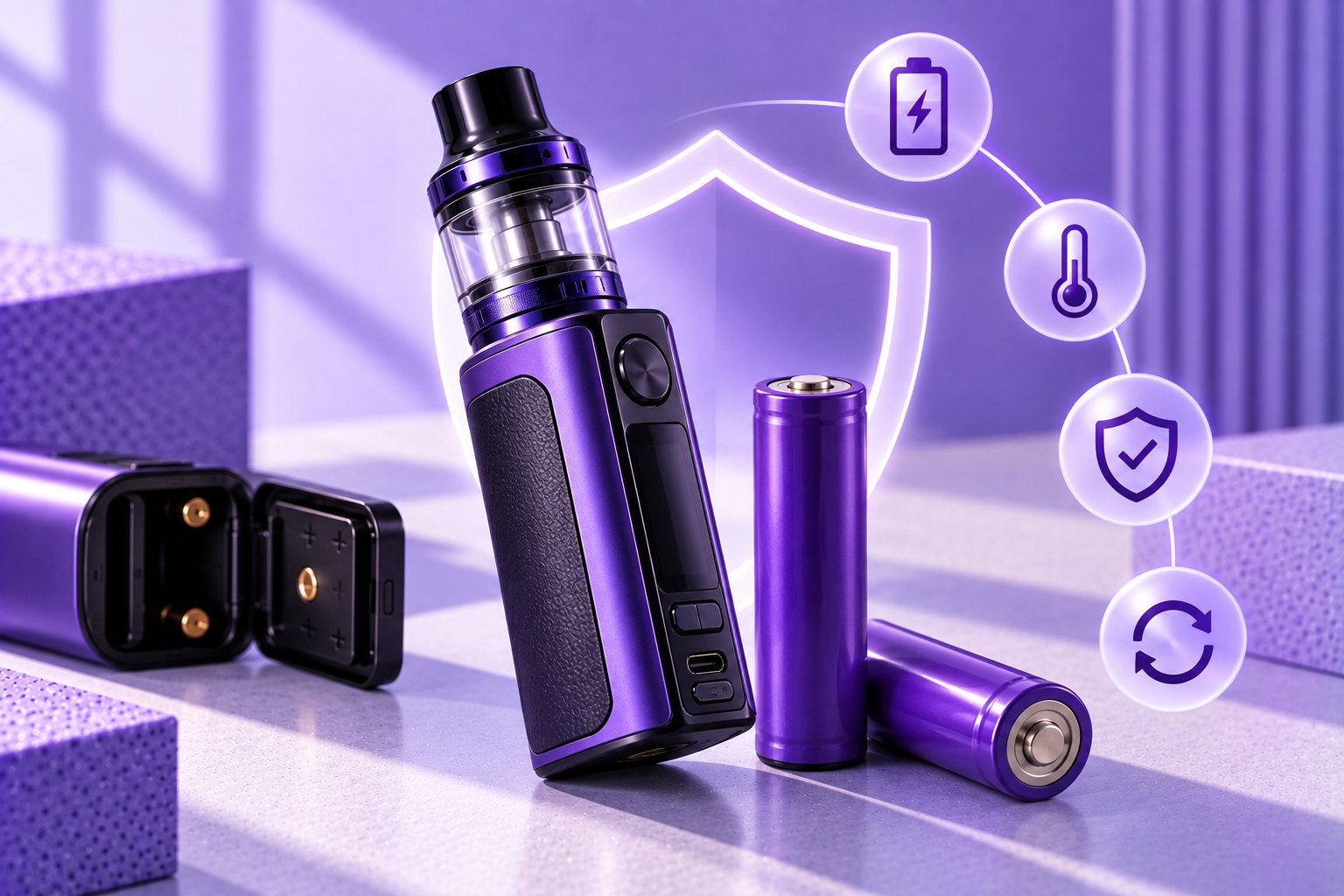
For adults 21+ only. Vape batteries can present fire, burn, or explosion hazards if they are damaged, short-circuited, improperly charged, or used outside manufacturer specifications. Always follow the instructions provided for your specific device and battery, and stop using batteries or devices that show signs of damage, swelling, leakage, or abnormal heat.
Battery safety is an important part of using any rechargeable vape device. Lithium-ion batteries store substantial energy in a compact package, and damaged cells, exposed terminals, incompatible charging equipment, or improper handling can increase the risk of overheating, fire, or other failures.
This guide focuses specifically on vape battery safety: charging, storage, short-circuit prevention, warning signs, damaged batteries, and knowing when a battery or device should no longer be used. For a broader explanation of battery formats, specifications, current ratings, compatibility, and performance, our vape battery guide covers those topics separately.
Why Vape Battery Safety Matters
Battery-related problems can occur when a lithium-ion cell is damaged, short-circuited, exposed to extreme temperatures, charged improperly, or otherwise used outside its intended specifications. The U.S. Food and Drug Administration (FDA) advises users to understand and follow the manufacturer's recommendations for their device and batteries, use batteries recommended for the device, and protect vaping devices from extreme temperatures.
Battery safety is therefore less about one universal rule and more about using the correct equipment, following specifications for the individual device, inspecting batteries regularly, and recognizing warning signs.
Use the Battery and Charging Method Specified for Your Device
Different vape devices can have different charging and battery requirements. A cable, adapter, battery, or charger should not be assumed compatible simply because it physically fits.
Follow the device manufacturer's instructions for charging equipment, battery type, orientation, replacement, and operating limits. FDA also recommends using batteries specifically recommended for the device and not mixing different battery brands, charge levels, or old and new cells in multi-battery devices.
For charging-specific considerations, our safe vape charging guide explains why charging requirements should be matched to the individual device.
Charge Your Vape on an Appropriate Surface
FDA recommends charging vape devices on a clean, flat surface away from materials that can easily catch fire and in a location where the device can be clearly seen.
Avoid charging a vape on beds, couches, pillows, or other soft surfaces where heat may be trapped or the device may be accidentally covered. Pay attention to unusual heat, swelling, odors, charging interruptions, or other abnormal behavior.
If a device repeatedly stops charging, disconnects, or fails to charge normally, our vape not charging guide covers common cable, charging-port, battery, and device issues.
Protect Removable Batteries From Short Circuits
Removable lithium-ion cells require particular care because exposed terminals can contact conductive objects. A battery should never be carried loose in a pocket, bag, drawer, or toolbox where its terminals could touch coins, keys, tools, or other metal objects.
The U.S. Consumer Product Safety Commission (CPSC) has specifically warned about loose 18650 lithium-ion cells separated from battery packs. Exposed terminals can short-circuit when they contact metal objects, potentially causing overheating and thermal runaway.
Keep spare removable cells in an appropriate protective case that prevents their terminals from contacting conductive materials.
Inspect Batteries Before Using Them
Physical condition matters just as much as battery specifications. Before using a removable battery, check for visible signs that its condition has changed.
- Damaged or torn wrapping: Damage may expose conductive areas that should remain insulated.
- Dents or deformation: Physical damage can indicate that the cell should no longer be used.
- Swelling: A swollen battery or integrated device should be taken out of service.
- Leakage or corrosion: Stop using the battery or device and follow appropriate disposal or manufacturer guidance.
- Abnormal heat: Unexpected or excessive heating during use or charging should not be ignored.
If you are unsure whether a damaged battery is suitable for continued use, do not keep operating it simply to test whether it still works.
Keep Batteries Away From Extreme Temperatures
Temperature can affect lithium-ion battery behavior. FDA recommends protecting vape devices from extreme temperatures, including leaving them in direct sunlight, a hot vehicle, or extremely cold conditions.
Store devices and removable batteries according to manufacturer instructions in a location protected from excessive heat, moisture, physical damage, and accidental contact with conductive objects.
Be Careful With Multi-Battery Devices
Devices that use multiple removable batteries require additional attention. FDA advises against mixing battery brands, using batteries with different charge levels, or combining old and new batteries in the same device.
Follow the device manufacturer's instructions regarding battery model, orientation, charging, and replacement. When matched cells are required, use the same battery model and maintain the set according to the manufacturer's recommendations.
Know the Warning Signs of a Battery Problem
Battery problems do not always look the same, but certain symptoms are strong reasons to stop and inspect the device rather than continuing to use it.
| Warning Sign | Recommended Response |
|---|---|
| Swelling or deformation | Stop using and charging the battery or device. |
| Leakage or corrosion | Discontinue use and follow manufacturer or appropriate disposal guidance. |
| Damaged removable-cell wrap | Do not continue using the cell while its insulation is compromised. |
| Unusual or excessive heat | Stop using or charging the device and follow manufacturer instructions. |
| Abnormal charging behavior | Check approved charging equipment and device condition before further use. |
What to Do With a Damaged Vape Battery
Do not intentionally puncture, crush, open, or attempt to repair a damaged lithium-ion cell. If a removable battery is damaged, stop using it and follow applicable manufacturer and local battery-disposal guidance.
If an integrated-battery vape shows swelling, leakage, severe physical damage, unusual odors, or abnormal heating, stop using and charging the entire device. Follow the manufacturer's instructions for service, replacement, or disposal rather than attempting to open the battery compartment yourself.
Common Vape Battery Safety Mistakes
- Carrying removable batteries loose: Exposed terminals can contact coins, keys, or other conductive objects.
- Ignoring physical damage: Swelling, dents, leakage, corrosion, or damaged insulation should not be treated as normal wear.
- Assuming every charger is compatible: Connector fit alone does not establish electrical compatibility.
- Charging on soft or flammable surfaces: Use a clean, flat location away from materials that can easily catch fire.
- Exposing devices to extreme temperatures: Avoid leaving batteries or devices in environments that become excessively hot or cold.
- Mixing batteries in multi-cell devices: Follow manufacturer requirements for battery model, condition, and charge state.
Battery Safety FAQ
Can I use any charger with my vape?
No. Follow the charging specifications and equipment recommendations for your specific device. A matching connector does not automatically mean a charger or adapter is appropriate.
Is it safe to carry a removable vape battery in my pocket?
A removable cell should not be carried loose where its terminals can contact coins, keys, or other conductive objects. Use an appropriate protective battery case.
What should I do if my vape battery becomes unusually hot?
Stop using or charging the device if the battery becomes abnormally hot and follow the manufacturer's guidance for inspection, service, or replacement.
Should I keep using a swollen or leaking battery?
No. Stop using and charging a battery or integrated-battery device that is swollen, leaking, deformed, or otherwise physically damaged.
How can I make a vape battery last longer?
Battery service life varies with chemistry, temperature, charging cycles, power demand, storage, and device behavior. Use compatible equipment, avoid extreme temperatures, follow manufacturer charging instructions, and replace batteries that become damaged or no longer perform normally. Our broader vape battery guide covers battery lifespan and performance in more detail.
Final Thoughts
Vape battery safety depends on using compatible equipment, following manufacturer specifications, charging in an appropriate location, protecting removable cells from short circuits, and paying attention to physical condition.
If a battery becomes swollen, damaged, leaking, corroded, or unusually hot, stop using the battery or device and follow the manufacturer's replacement or disposal guidance.
Sources & Further Reading
- U.S. Food and Drug Administration (FDA) — Tips to Help Avoid Vape Battery Fires or Explosions
- U.S. Consumer Product Safety Commission (CPSC) — Safety Warning on Loose 18650 Lithium-Ion Cells
Battery specifications and charging requirements vary by device. Follow the manufacturer's instructions for your specific vape and battery. Protect removable cells from short circuits, and stop using any battery or device that is damaged, swollen, leaking, corroded, or unusually hot.