 United States
Vape Coils Explained: How They Work and When to Replace Them
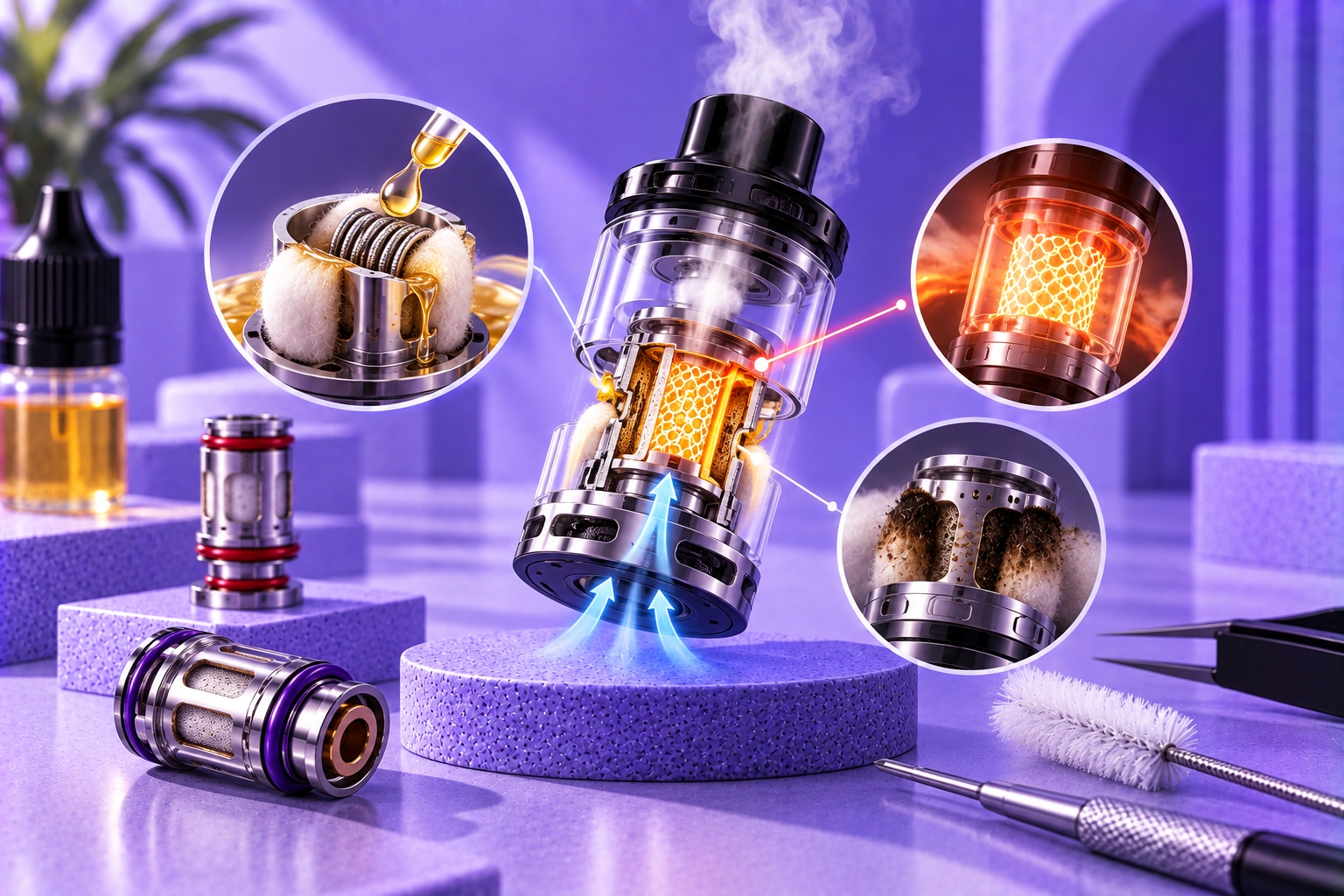
For adults 21+ only. Vape coil compatibility, resistance, wattage range, and replacement requirements vary by device and manufacturer. Always use a coil designed for your exact tank or pod and follow the manufacturer's operating instructions. Stop using a coil or device that shows unstable resistance, abnormal heating, physical damage, or persistent electrical warnings.
Burnt taste, weak vapor, or suddenly muted flavor? Your coil may be part of the problem—but these symptoms do not automatically mean the coil has failed. Low e-liquid, incorrect wattage, poor wicking, restricted airflow, battery condition, or an improper connection can create similar symptoms.
Understanding how a vape coil works makes it easier to understand why performance changes as the heating element and wick deteriorate. This guide focuses on the coil's role in the heating process, what happens as its condition changes, and the signs that can indicate replacement is appropriate.
What Is a Vape Coil?
A vape coil is an electrical heating element installed inside an atomizer, tank, or pod. Depending on the design, the heating element may be made from conventional wire, mesh, or another conductive structure and is typically paired with a wick that supplies e-liquid to the heated surface.
In simple terms, the process works like this:
- The battery and device circuitry supply electrical power to the heating element.
- Electrical resistance causes the element to heat.
- E-liquid held by the wick reaches the heated surface.
- The heated liquid forms the aerosol that travels through the airflow path and mouthpiece.
Resistance, heating-element construction, surface area, wick saturation, airflow, and operating power can all affect how this process behaves.
For broader information about coil types, materials, resistance, wattage, and compatibility, our complete vape coil guide covers those specifications in greater detail.
How the Coil and Wick Work Together
The heating element cannot work properly without an adequate supply of e-liquid from the wick. The wick absorbs and transports liquid toward the heating surface, where electrical energy is converted into heat.
During normal operation, liquid needs to replenish the wick as it is used. If the heating surface becomes hot while part of the wick is inadequately saturated, the wick can overheat or scorch. This is one reason a dry or burnt taste can occur even when a coil is relatively new.
Coil construction also affects this interaction. Differences in heating surface, wick size, liquid-feed openings, airflow, and manufacturer-rated power mean that two coils can behave differently even when their resistance ratings are similar.
What Happens as a Vape Coil Deteriorates?
A coil does not necessarily change from working normally to completely failed at one specific point. Performance can decline gradually as the heating element and wick are repeatedly exposed to heat, e-liquid, and residue.
Depending on the coil and operating conditions, deterioration may involve residue accumulating on the heating surface, changes in the wick, reduced liquid delivery, physical degradation, or unstable electrical contact.
These changes can affect flavor, aerosol production, wicking behavior, and resistance readings. However, similar symptoms can also originate elsewhere in the device, so coil replacement should not automatically be the first response to every performance problem.
Why Coil Condition Matters Beyond Flavor
Coil condition can influence more than flavor and vapor production. The Centers for Disease Control and Prevention (CDC) states that e-cigarette aerosol can contain potentially harmful substances, including metals such as nickel, tin, and lead.
Peer-reviewed research available through the National Library of Medicine has investigated metal concentrations in refill liquid, liquid that had been in contact with device heating systems, and generated aerosol. The findings indicate that the heating system can contribute to metal concentrations measured in e-cigarette aerosol.
This does not mean every coil releases the same amount of metal. Device construction, heating conditions, coil composition, liquid characteristics, and usage patterns can influence aerosol chemistry.
How Resistance Fits Into Coil Operation
Coil resistance is measured in ohms (Ω) and forms part of the electrical relationship between voltage, current, and power. It is an important specification, but resistance alone does not determine how a coil should be operated.
For example, two coils with the same resistance can have different heating surfaces, wick structures, coil mass, airflow requirements, and manufacturer-rated wattage ranges.
The electrical relationship is explained further in our Ohm's Law guide, but calculations should not replace the operating specifications provided for the exact coil and device.
Signs Your Coil May Need Replacement
A single symptom does not always prove that a coil has failed. Check basic factors such as e-liquid level, battery charge, airflow, wattage, and connections before assuming replacement is necessary.
Persistent Burnt Taste
A persistent burnt or charred taste can indicate damaged or scorched wicking material, particularly after adequate liquid supply and appropriate operating settings have been confirmed.
If the wick has been severely scorched, adding more e-liquid generally cannot reverse the physical damage.
Noticeably Muted Flavor
Residue and wick deterioration can contribute to declining flavor over time. If the change persists despite adequate liquid and normal device settings, coil condition may be contributing.
Reduced Vapor Output
A deteriorating coil can contribute to reduced output, but battery charge, airflow, wattage, liquid level, and electrical connections should also be checked before replacing the coil unnecessarily.
Persistent Gurgling or Flooding
Gurgling usually indicates excess liquid around the coil or airflow path. Coil or wick deterioration can contribute, but damaged seals, incorrect assembly, condensation, liquid characteristics, and operating settings can cause similar symptoms.
Unstable Resistance
Unexpectedly changing resistance deserves more attention than ordinary flavor decline. It can indicate a poor connection, damaged heating element, installation problem, or—in a rebuildable atomizer—a loose coil connection.
Stop using the atomizer until the cause of an unstable resistance reading has been identified.
How Long Does a Vape Coil Last?
There is no universal number of days that determines when every vape coil needs replacement. Coil service life varies substantially between products, operating conditions, and patterns of use.
Factors that can affect coil life include:
- Frequency and duration of use
- Operating wattage
- Coil and wick construction
- E-liquid formulation
- Wick saturation
- Airflow and operating conditions
- How the coil was prepared before initial use
Changes in actual performance and physical condition are more useful than assuming every coil should be replaced according to the same fixed schedule.
Coil Age and Aerosol Formation
Researchers have also examined whether aerosol formation changes as coils age. A peer-reviewed study available through the National Library of Medicine evaluated how coil resistance, coil age, and coil material affected aerosol formation and carbonyl production.
The findings indicate that aerosol chemistry can change over a coil's lifetime and that those changes are not necessarily simple or linear. Coil age alone therefore does not provide a universal threshold for determining performance or replacement.
When Should You Replace the Coil?
Replacement becomes more appropriate when deterioration persists after basic operating conditions have been checked. Examples include a permanently scorched wick, physical damage to the heating element, persistent performance decline, or unstable resistance that has been traced to the coil.
Routine vape coil maintenance can help distinguish temporary operating problems from deterioration that requires replacement. Maintenance should not, however, be used to continue operating a physically damaged or electrically unstable coil.
Should You Clean or Replace Your Coil?
The answer depends on whether the device uses a disposable pre-built coil head or a rebuildable heating element.
Pre-Built Replaceable Coil Heads
Most pre-built heads contain permanently installed wicking material. Once that wick is scorched or significantly degraded, replacement is generally more practical than attempting to restore it through aggressive cleaning.
Rebuildable Coils
Some reusable rebuildable heating elements can be cleaned and rewicked when appropriate for their material and atomizer design. A coil that is damaged, heavily corroded, deformed, or producing unstable resistance should be replaced rather than repeatedly reused.
Our coil cleaning guide explains the distinction between cleaning reusable components and replacing deteriorated coil hardware.
Coil Problem or Device Problem?
Not every symptom that appears at the coil originates from the coil itself. Battery charge, electrical contacts, airflow, device settings, liquid supply, tank assembly, and device protection systems can affect performance.
If replacing or reinstalling a compatible coil does not resolve the problem, repeatedly replacing coils may not address the underlying cause. Persistent electrical warnings, unusual heating, or unstable resistance should be investigated as device or connection problems rather than treated as ordinary coil wear.
Battery condition is another separate consideration. Our battery safety guide covers battery condition, device compatibility, storage, and charging considerations.
Quick Coil Replacement Checklist
- Confirm that the installed coil is designed for the exact tank or pod.
- Check e-liquid level and wick saturation.
- Confirm that the device is operating within the coil manufacturer's specified range.
- Check battery charge, airflow, and electrical connections.
- Look for persistent burnt taste, physical damage, or substantial performance decline.
- Stop using the coil if resistance becomes unstable or abnormal heating occurs.
- Replace deteriorated components rather than continuing to operate a questionable coil.
Final Thoughts
A vape coil is part of an electrical heating system in which the heating element, wick, e-liquid supply, airflow, resistance, and operating power work together. Understanding that process makes it easier to distinguish normal changes in performance from signs of actual coil deterioration.
Rather than replacing every coil according to a fixed calendar, consider its actual condition and performance alongside the manufacturer's specifications. Persistent burnt taste, physical deterioration, unstable resistance, or performance that cannot be restored through basic troubleshooting can indicate that replacement is appropriate.
Sources & Further Reading
- Centers for Disease Control and Prevention (CDC) — Health Effects of Vaping
- Environmental Health Perspectives / PubMed Central — Metal Concentrations in E-Cigarette Liquid and Aerosol Samples: The Contribution of Metallic Coils
- PubMed Central — Effects of Coil Resistance, Coil Age, and Coil Metal Material on E-Cigarette Aerosol
- U.S. Food and Drug Administration (FDA) — Tips to Help Avoid Vape Battery Fires or Explosions
Coil lifespan and performance vary by product and usage. A fixed number of days does not determine whether a coil is still suitable for use. Follow the coil and device manufacturer's specifications, investigate unstable resistance or abnormal heating, and replace damaged or deteriorated components rather than continuing to operate them.