 United States
Why Does My Vape Keep Turning Off? Common Causes Explained
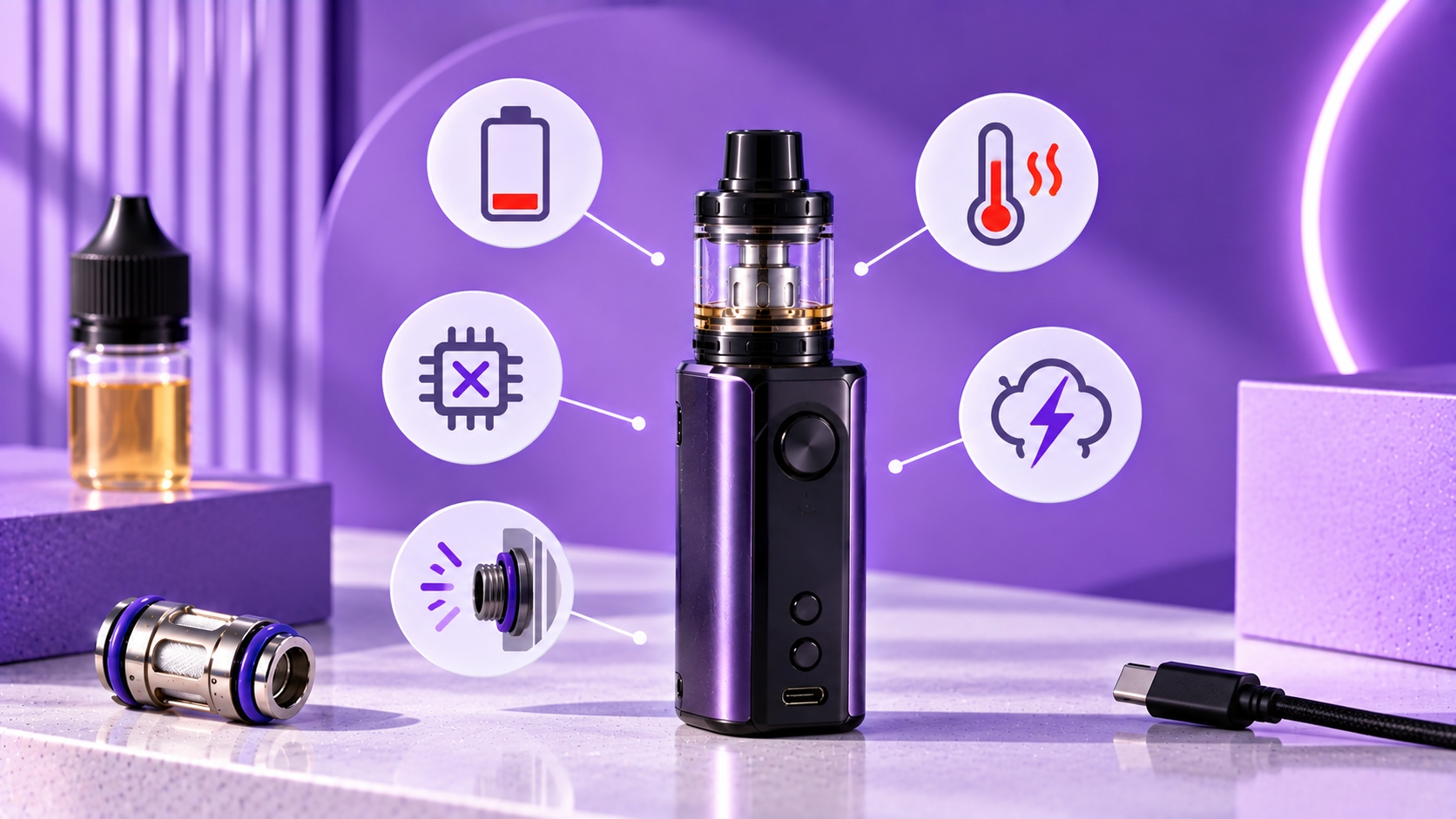
This guide is intended for adult users of legal purchasing age. A vape that repeatedly powers off can be responding to a normal device protection, but repeated shutdowns can also indicate a battery, connection, temperature, or hardware problem. Stop using the device if it becomes unusually hot, shows visible battery damage, swells, leaks, smells unusual, or continues behaving abnormally after basic troubleshooting.
If your vape keeps turning off unexpectedly, the device is not necessarily completely dead. Depending on the model, a shutdown can happen because the battery is too low, the device has reached an automatic cutoff, the electronics have detected an operating condition outside their limits, or an internal connection is becoming unreliable.
The key is identifying when the vape turns off. A device that shuts down after sitting unused may have a different explanation from one that powers off while firing, after several consecutive draws, or shortly after showing a warning.
This guide focuses specifically on repeated or unexpected power-off behavior. Charging failures, persistent overheating, and broader device malfunctions can produce similar symptoms but have different causes.
Why Does My Vape Keep Turning Off?
Common causes include a low or deteriorating battery, an automatic timeout, a loose battery or pod connection, a triggered protection function, excessive temperature, or an internal hardware problem.
Not every shutdown indicates a defect. Regulated devices can interrupt operation when their electronics detect conditions outside programmed limits. The exact cutoff behavior, warning messages, and protection functions depend on the manufacturer and model.
1. The Battery Is Too Low
A depleted battery is one of the first possible causes. Many regulated devices stop firing or restrict operation when battery voltage falls below a programmed operating threshold.
You may notice that the device powers on normally but turns off again when you try to fire it. Other devices display a low-battery message or flash an LED before stopping.
If the battery accepts a normal charge but the shutdown returns during use, the problem may extend beyond battery level. A device that cannot accept power normally falls under a separate charging problem rather than repeated shutdown behavior.
2. The Device Has an Automatic Power-Off Feature
Some vape devices automatically power down after a period of inactivity. This can be normal device behavior rather than evidence of a failing battery or internal electronics.
The interval varies by manufacturer, and some devices enter standby or sleep mode instead of completely powering off. If the shutdown occurs only after a predictable period without use, the device manual can confirm whether an automatic shutdown, sleep, standby, or lock function is responsible.
3. You're Reaching the Firing-Time Cutoff
Regulated devices may limit how long the heating element can remain continuously activated. Once that programmed limit is reached, the device can interrupt output even though battery power remains.
Manufacturer protection systems can include a firing cutoff after continuous activation reaches the model's programmed limit. The exact cutoff period and warning behavior are device-specific, so a threshold documented for one model should not be assumed to apply to another.
A shutdown that consistently occurs during unusually long draws or while the fire button is held continuously is therefore more consistent with a firing-time cutoff than a completely failed battery.
4. A Connection Is Momentarily Being Lost
A vape relies on stable electrical connections between the battery, device electronics, and heating element. Dirty contacts, a poorly seated pod, a loose tank, or another unstable connection can interrupt that communication.
Depending on the device, this may appear as a shutdown, failure to fire, resistance warning, or atomizer-related message. A specific No Atomizer warning points more directly toward the connection between the device and heating element rather than a general power problem.
With the device powered off, accessible contacts can be inspected for moisture, residue, or poor seating. Pods, tanks, removable batteries, and other components should fit according to the manufacturer's specifications rather than being forced into position.
5. A Protection Function Is Being Triggered
Modern regulated devices can monitor several operating conditions and restrict activation when something falls outside their programmed limits. Depending on the hardware, these can include low-voltage, short-circuit, resistance, firing-time, charging, or temperature-related protections.
Some manufacturer documentation identifies separate protection functions for low voltage, abnormal resistance, excessive firing time, and high internal temperature. Protection behavior should therefore not be assumed to be identical across brands or models.
A warning message, symbol, or LED pattern appearing immediately before shutdown can provide useful diagnostic context. However, the warning generally describes the condition detected by the electronics rather than proving which physical component caused it.
6. The Device Is Getting Too Hot
Some regulated devices include temperature-related protection that interrupts operation when internal electronics detect conditions outside their programmed limits.
Heat can also develop from repeated use, environmental temperature, charging conditions, battery problems, or an internal malfunction. Persistent vape overheating can require a different diagnosis even when excessive temperature eventually causes the device to stop operating.
Battery temperature also matters. The FDA recommends protecting vape batteries from extreme temperatures and following manufacturer instructions for device use, battery care, and charging. A device that becomes abnormally hot should not simply be restarted repeatedly.
7. The Battery May Be Deteriorating
Rechargeable batteries do not maintain identical performance indefinitely. Age, charging cycles, temperature exposure, physical condition, and usage can affect battery performance over time.
A deteriorating battery may appear to have some charge remaining but struggle to maintain normal device operation under load. Repeated shutdowns alone, however, are not enough to confirm battery failure.
Battery condition, storage, charging practices, physical damage, and replacement considerations are part of broader battery safety, while this shutdown diagnosis remains focused on why the device is unexpectedly losing or interrupting power.
Battery handling becomes particularly important when shutdowns occur alongside physical damage or abnormal heat. Using appropriate batteries and following battery precautions can reduce avoidable risks.
8. The Fire Button May Be Sticking or Behaving Abnormally
On button-operated devices, a damaged or inconsistent fire button can interfere with normal activation. A button that sticks, fails to register consistently, or behaves differently when pressed may indicate a mechanical or internal electrical problem.
A sealed device should not be opened or internally repaired as a routine troubleshooting step. Physical button damage, sticking, or unpredictable activation is a reason to discontinue use and follow the manufacturer's service or replacement instructions.
9. There May Be an Internal Device Fault
If the battery is adequately charged, connections are secure, the device is not unusually hot, and no normal cutoff explains the shutdown, an internal hardware or electronic fault becomes more plausible.
Possible problems can involve the control board, battery connection, charging circuitry, switches, sensors, or other internal components. Repeated shutdowns combined with other warning signs can point toward a broader malfunction rather than a single shutdown-related setting.
Problems involving overheating batteries, damaged hardware, or unexpected malfunctions can also be treated as product problems that consumers can report to the FDA.
Quick Shutdown Troubleshooting Guide
| When It Turns Off | Likely Area to Check |
|---|---|
| After sitting unused | Automatic shutdown, standby, or sleep setting |
| During a long draw | Firing-time cutoff |
| When pressing fire | Battery level, connection, or protection warning |
| After repeated use | Temperature-related protection |
| When the device is moved | Loose battery, pod, tank, or electrical connection |
| Randomly despite normal charge | Battery deterioration or internal device fault |
When Should You Stop Troubleshooting?
Basic troubleshooting is reasonable when the shutdown appears related to a normal setting, low charge, or simple connection problem. Battery swelling, leakage, unusual heat, burning odors, visible physical damage, repeated electrical warnings, or unpredictable activation are different situations and should not be treated as routine shutdown behavior.
The FDA includes battery overheating, ignition, explosions, damaged products, and malfunctions among reportable safety problems.
Do not puncture, crush, open, or attempt an internal repair on a damaged lithium-ion battery or sealed battery device.
How to Reduce Unexpected Shutdowns
Not every shutdown can be prevented, particularly when hardware is aging or damaged, but basic device care can reduce avoidable problems:
- Use and charge the device according to its manufacturer instructions.
- Keep accessible electrical contacts clean and dry.
- Use compatible coils, pods, tanks, batteries, and charging equipment.
- Do not ignore repeated warning messages.
- Protect the device and battery from extreme temperatures.
- Inspect removable batteries regularly for physical damage.
- Stop using hardware that behaves unpredictably or shows signs of damage.
Safe battery handling also includes charging on a clean, flat surface away from easily flammable materials and avoiding extreme temperatures.
Bottom Line
A vape that keeps turning off may simply be reaching an automatic timeout or firing cutoff, but repeated shutdowns can also point to low battery power, an unstable connection, a triggered protection function, excessive temperature, battery deterioration, or an internal device problem.
The timing of the shutdown and any warning that appears immediately beforehand are often the most useful clues. A predictable cutoff during a long draw suggests something different from a device that randomly loses power despite having a normal charge.
Shutdowns accompanied by abnormal heat, swelling, battery damage, unusual odors, or unpredictable activation should be treated as potential safety or hardware problems rather than something to repeatedly reset and test.
Sources & Further Reading
- U.S. Food and Drug Administration (FDA) — Tips to Help Avoid Vape Battery Fires or Explosions
- U.S. Food and Drug Administration (FDA) — How to Report Problems with E-Cigarettes, Cigarettes, Cigars, or Other Tobacco Products
- Vaporesso — TARGET 80 User Manual and Protection Functions
Automatic shutdown behavior, firing cutoffs, warning messages, and protection functions vary between devices. Manufacturer documentation for the exact model should determine how a specific warning or cutoff is interpreted.