 United States
The Secret to Longer-Lasting Vape Pods
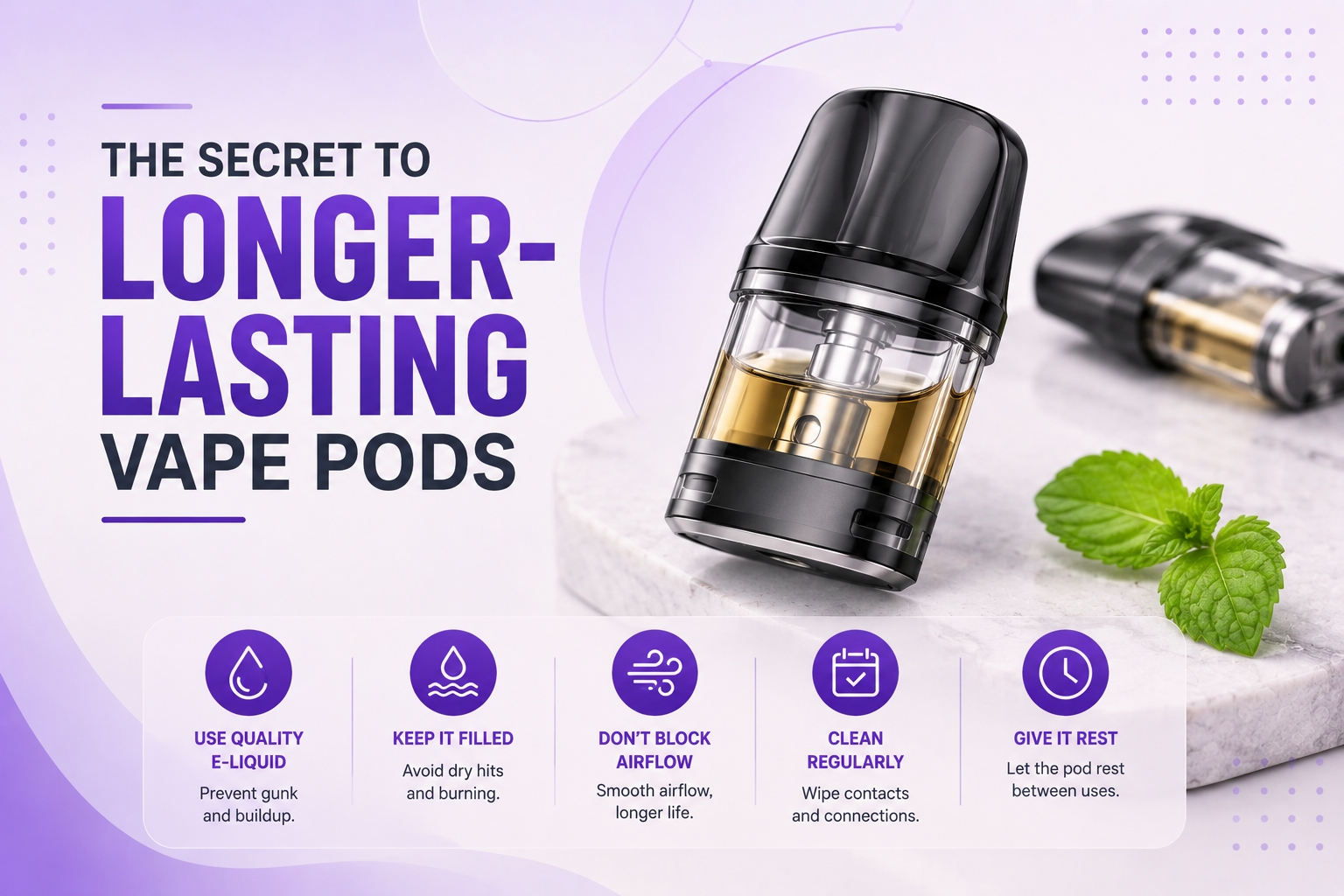
For adults 21+ only. Pod lifespan varies by device, coil design, e-liquid, power setting, frequency of use, and maintenance. There is no guaranteed method for making a pod last a specific number of days or weeks. Always use compatible pods and e-liquids and follow the device manufacturer’s filling, priming, wattage, storage, and replacement instructions.
Maximize Flavor, Extend Pod Life & Avoid Premature Burnout
Does your vape pod lose flavor quickly or start tasting burnt sooner than expected? A worn pod or coil may be responsible, but premature performance problems can also come from insufficient wick saturation, incorrect wattage, incompatible e-liquid, frequent long puffs, leaking, or poor electrical contact.
Rather than trying to make every pod last a predetermined number of days, focus on compatibility, proper filling, wick saturation, appropriate power settings, and recognizing when the pod or coil has actually deteriorated.
Why Vape Pods Can Burn Out Early
Premature pod failure is not always caused by bad hardware or user error. Pod construction, coil design, e-liquid formulation, power settings, wick saturation, and usage patterns can all affect how quickly performance changes.
Insufficient Wick Saturation
The wick needs enough e-liquid around the heating element before the device is activated. If the coil heats while the wick is inadequately saturated, the material can overheat and produce a dry or burnt taste, even when the pod or coil is relatively new.
A systematic review available through the National Library of Medicine found that wick saturation, power, coil configuration, and other device characteristics can influence aerosol chemistry, including carbonyl formation.
Operating Outside the Recommended Power Range
For adjustable pod systems, the correct vape wattage should be based on the exact pod or coil specification rather than resistance alone. Operating above the recommended range can heat the wick faster than it can replenish liquid.
Laboratory research has shown that device power can affect aerosol chemistry. This reinforces the importance of following the coil or pod manufacturer’s intended operating range rather than simply increasing power for stronger output.
Frequent or Long Puffs
Repeated heating cycles can sometimes use liquid around the coil faster than the wick can replace it. The recovery time varies by pod construction, liquid viscosity, wattage, airflow, and puff duration, so there is no universal number of seconds that applies to every device.
E-Liquid and Pod Compatibility
E-liquids differ in viscosity, nicotine concentration, flavoring composition, and PG/VG ratio. A liquid that wicks normally in one pod may behave differently in another, particularly when the intake openings and wick structure are designed for a specific viscosity range.
High-VG liquid should not automatically be described as damaging to pods. The more useful question is whether its viscosity is appropriate for the specific wicking system. Some heavily sweetened formulations may also contribute to deposits on heating surfaces, but sweetness alone does not determine pod lifespan.
Leaks and Poor Connections
Persistent pod leaking can result from overfilling, worn seals, improper coil seating, condensation, incompatible liquid viscosity, pressure changes, or physical damage. Liquid around electrical contacts can also interfere with the connection between the pod and device.
Choosing the Right Pod and Coil
Compatibility should come before claims about cloud production, flavor, or lifespan. A pod or coil that looks similar to another model is not necessarily electrically or mechanically compatible.
Proper coil selection involves more than choosing an ohm value. The exact device model, supported coil family, resistance, wattage range, airflow design, and e-liquid compatibility should all be considered together.
| What to Check | Why It Matters |
|---|---|
| Exact device model | Pod and coil compatibility is usually model-specific. |
| Coil or pod series | Similar-looking components may not have the same dimensions or electrical characteristics. |
| Resistance | The selected resistance must be supported by the device. |
| Wattage range | Adjustable devices should remain within the range specified for the coil. |
| E-liquid compatibility | Viscosity and wick design influence how readily liquid reaches the heating element. |
Refilling Vape Pods Without Creating New Problems
Filling methods vary between pod designs, so the manufacturer’s instructions should take priority. A few general habits can still help reduce flooding, leaking, and insufficient saturation.
Do Not Overfill the Pod
Use the manufacturer’s maximum fill line when one is provided. Filling beyond the intended capacity can push liquid toward the airflow path or contribute to leaking in some designs.
Use the Correct Fill Port
Many refillable pods separate the e-liquid fill opening from the central airflow channel. Add liquid only through the designated port and wipe away accidental spills before reinstalling the pod.
Allow a New Wick to Saturate
There is no universal 2–3 minute priming rule. Saturation time depends on the wick, pod design, liquid viscosity, and manufacturer instructions. Follow the specified priming time rather than immediately activating a visibly dry wick.
Start Within the Recommended Wattage Range
If the device allows manual adjustment, begin within the coil manufacturer’s operating range. Starting toward the lower portion of that range can help confirm that the wick is supplying liquid normally before making gradual adjustments.
Important: Do not increase wattage simply because a new pod produces less vapor than expected. Check compatibility, wick saturation, airflow, battery charge, and the manufacturer’s operating range first.
Maintenance Habits That Support Pod Performance
Keep Pod Contacts Clean and Dry
Condensation or leaked liquid can collect where the pod connects to the device. With the device turned off, inspect accessible contacts and clean them only according to the manufacturer’s instructions. Avoid introducing water or liquid cleaners into electronic components.
Monitor the E-Liquid Level
Avoid repeatedly operating a refillable pod when there is not enough liquid to keep the wick supplied. Some pod designs expose the coil intake openings before the cartridge is completely empty.
Inspect the Pod for Damage
Check refillable pods for cracks, damaged fill plugs, warped seals, or persistent leaks. Physical damage is generally a reason to replace the pod rather than continuing to refill it.
Avoid Extreme Temperatures
Follow the manufacturer’s storage recommendations and avoid leaving the device or pods in unusually hot or cold environments. Temperature changes can affect e-liquid viscosity, internal pressure, battery performance, and some sealing materials.
Do Mesh Pods Automatically Last Longer?
No. Mesh describes the structure of the heating element, not a guaranteed lifespan.
Mesh designs can offer a relatively large heating surface, but actual longevity still depends on wick construction, material, wattage, airflow, e-liquid, manufacturing quality, and usage patterns. The same caution applies to ceramic and conventional wire coils.
Peer-reviewed research available through PubMed Central has examined the effects of coil age, resistance, and coil material on e-cigarette aerosol, demonstrating that coil behavior can change over time rather than following one predictable lifespan pattern.
Common Pod Problems and What to Check
| Problem | Possible Causes | What to Check |
|---|---|---|
| Burnt taste | Dry wick, excessive wattage, low liquid, deteriorated coil | Saturation, liquid level, wattage range, pod condition |
| Leaking | Overfilling, damaged seal, incorrect installation, unsuitable liquid, cracked pod | Fill level, seals, pod shell, coil seating |
| Weak vapor | Low battery, worn coil, blocked airflow, poor contact, incorrect settings | Battery charge, contacts, airflow, wattage, pod condition |
| Muted flavor | Residue buildup, deteriorated wick, insufficient liquid supply | Coil condition, liquid level, compatibility, wattage |
| Gurgling | Flooding, condensation, excess liquid, installation issue | Pod assembly, airflow path, fill level, coil seating |
| Pod not recognized | Dirty contacts, incorrectly seated pod, damaged coil or connection | Contacts, installation, compatibility, visible damage |
What If a New Pod Already Tastes Burnt?
A new pod can develop a burnt taste when the wick is insufficiently saturated, the wattage is inappropriate, liquid is not reaching the wick effectively, or repeated heating outpaces resaturation.
Once the wick has been badly scorched, adding more e-liquid may not restore it. Persistent burnt flavor after checking saturation, liquid level, airflow, and wattage can indicate that the pod or coil should be replaced.
When Should You Replace a Vape Pod?
There is no universal replacement schedule. Integrated-coil pods, replaceable-coil systems, e-liquid formulations, and usage patterns differ too much for a fixed “one week,” “two weeks,” or “several weeks” rule to apply reliably.
Consider replacing the pod or coil when you notice:
- Persistent burnt taste despite adequate saturation and correct settings.
- Significant and persistent flavor deterioration.
- Persistent flooding or leaking traced to the pod or coil.
- A cracked, warped, or otherwise damaged cartridge.
- Repeated connection problems after accessible contacts have been cleaned and the pod is correctly installed.
- Unexpected resistance or device errors associated with the installed pod.
Can You Make Vape Pods Last for Weeks?
Some pods may remain usable for weeks under certain conditions, while others require replacement much sooner. No maintenance technique can guarantee that a pod will last weeks instead of days.
A more useful goal is preventing avoidable premature deterioration by using compatible components, keeping the wick supplied with liquid, operating within manufacturer limits, addressing leaks early, and replacing damaged components when necessary.
A Practical Pod-Care Checklist
- Use only pods or coils listed as compatible with the exact device.
- Follow manufacturer filling and priming instructions.
- Keep adjustable wattage within the specified coil range.
- Maintain enough e-liquid to supply the wick.
- Allow the wick time to resaturate during frequent use.
- Keep accessible pod and device contacts clean and dry.
- Investigate persistent leaking rather than simply wiping it away.
- Check pods for cracks, worn seals, or other physical damage.
- Replace a deteriorated pod instead of continuing to use it solely to maximize lifespan.
Why Pod Condition Matters Beyond Flavor
Pod care is usually discussed in terms of flavor and coil life, but operating conditions can also influence the aerosol produced by an e-cigarette.
The Centers for Disease Control and Prevention (CDC) states that e-cigarette aerosol is not harmless and can contain potentially harmful substances, including nicotine, volatile organic compounds, certain metals, and tiny particles.
Laboratory research has also shown that aerosol composition can vary with device power, coil characteristics, wick saturation, and other operating conditions. Following a maintenance routine does not make vaping safe, but using equipment according to its intended specifications can help avoid preventable device problems.
Final Thoughts
Longer pod life is not about finding one maintenance hack. The most useful habits are straightforward: use compatible components, fill and prime according to manufacturer instructions, keep the wick adequately supplied, stay within the intended operating range, keep connections clean, and investigate leaks or burnt taste before they become persistent.
Most importantly, do not continue using a damaged or severely burnt pod simply to save money. Pod condition, device behavior, and manufacturer guidance should determine replacement timing—not an arbitrary number of days or weeks.
Sources & Further Reading
- Centers for Disease Control and Prevention (CDC) — Health Effects of Vaping
- National Library of Medicine / PubMed Central — Electronic Nicotine Delivery System Design and Aerosol Toxicants: A Systematic Review
- National Library of Medicine / PubMed Central — Effects of Coil Resistance, Coil Age, and Coil Metal Material on E-Cigarette Aerosol
Want more pod, coil, and troubleshooting guides? Subscribe to our newsletter for new educational content.
Pod lifespan varies significantly by hardware, e-liquid, settings, and usage. Maintenance can help prevent some premature problems but cannot restore a permanently scorched wick or damaged pod. Stop using pods that are cracked, persistently leaking, producing abnormal heat or errors, or continuing to taste burnt after basic troubleshooting.