 United States
Can You Use a Vape While Charging? Pass-Through Safety Explained
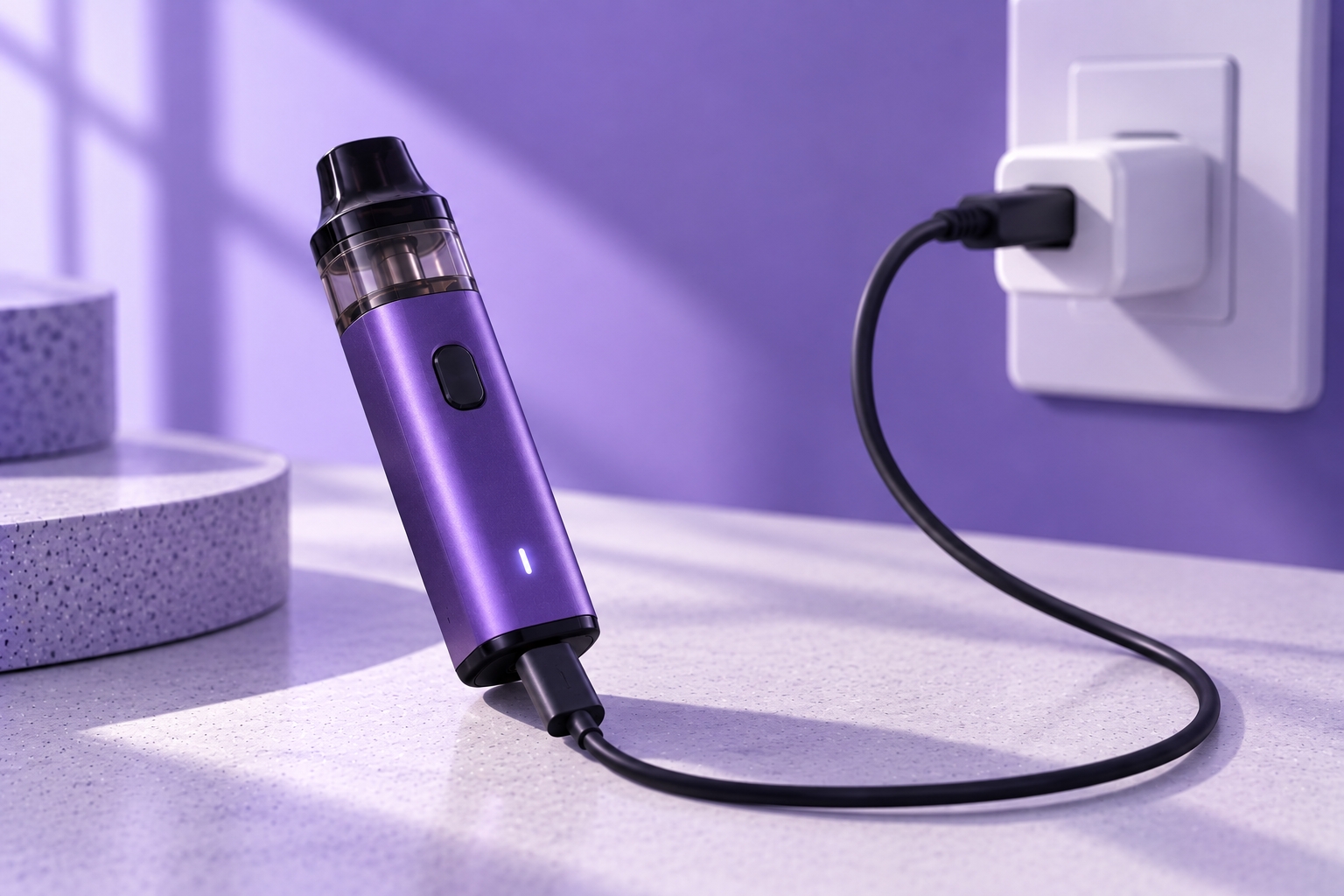
Note: Not every rechargeable vape supports use while charging. Confirm pass-through capability and approved charging equipment in the manufacturer's documentation before attempting to operate a connected device.
Can you use a vape while charging? The answer depends on your device. Some models support operation while connected to external power, while others intentionally disable firing until the charging cable is removed.
This distinction matters because a vape that will not activate while plugged in is not necessarily broken. Understanding the supported charging behavior can help you avoid unsafe assumptions and recognize when further troubleshooting is appropriate.
Can You Use a Vape While Charging?
Only when the manufacturer explicitly supports that operation for your exact model. Some devices include a feature commonly called pass-through charging, which allows operation while connected to charging power under specified conditions.
A USB-C charging port, rechargeable battery, or charging light does not prove that a device supports this feature. If the manual does not confirm it, do not assume use while plugged in is intended.
What Is Pass-Through Charging?
Pass-through charging describes supported device operation while an external power source is connected. It does not necessarily mean the battery is bypassed or that charging continues at its normal rate during use.
For practical safety decisions, the important question is whether the manufacturer permits this behavior and what charging equipment or operating conditions it specifies.
How to Confirm Whether Your Vape Supports It
Identify the exact model and consult its official manual or product specifications. Look for wording such as pass-through charging, use while charging, or operation while connected to external power.
Check the recommended charging cable, adapter, and input requirements. Do not assume that a different model from the same brand behaves identically.
If pass-through capability is not documented, allow the device to charge normally and disconnect it before use.
When Should You Avoid Using a Vape While Charging?
Avoid operating the device while connected if pass-through is unsupported or unconfirmed. Also stop charging or using the device if you notice unusual heat, battery swelling, visible damage, moisture in the charging port, leaking, unusual odors, abnormal noises, or repeated charging errors.
These conditions may indicate a battery, charging connection, or electrical problem that should not be treated as normal pass-through behavior.
What If Your Vape Does Not Work While Plugged In?
First, check whether the manufacturer intentionally disables operation during charging. If so, the lack of activation may be normal rather than a malfunction.
If the device is documented to support pass-through but no longer operates as expected, check the manufacturer's approved power source, cable requirements, charging status, and troubleshooting instructions.
Do not attempt to bypass a built-in charging restriction or modify the device to force activation.
Pass-Through Charging vs. Charging Problems
| Situation | What to Check |
|---|---|
| Does not fire while plugged in | Whether the manufacturer supports pass-through operation |
| Battery level does not increase | Charging behavior, approved cable, adapter, and manufacturer instructions |
| Neither charges nor operates | Possible cable, power-source, charging-port, battery, or internal charging problem |
| Unusual heat or damage | Stop using and charging; follow manufacturer safety guidance |
If the battery does not recharge normally, a separate charging problem may be responsible rather than the absence of pass-through support.
Does Using a Vape While Charging Damage the Battery?
There is no universal answer. Battery performance depends on the device's charging architecture, battery condition, temperature, power-management system, and intended operating conditions.
Even when pass-through is supported, it does not eliminate normal battery wear or the need to follow charging instructions. Avoid using unsupported charging equipment or operating a device that shows signs of damage.
Warning Signs That Require You to Stop Charging
Stop using or charging the device if it develops excessive heat, swelling, deformation, leaking, unusual odors, abnormal noises, or visible battery damage.
A loose or damaged charging connection and moisture inside the charging port also require attention. Do not continue testing a device that appears electrically damaged.
The U.S. Fire Administration identifies several of these conditions as warning signs associated with lithium-ion battery hazards.
Safe Charging Practices
Follow the manufacturer's recommended charging input, compatible equipment, and operating instructions. Charge on a clean, flat, nonflammable surface where the device can be monitored, and avoid charging near easily combustible materials.
Appropriate charging safety includes checking the approved adapter and cable rather than assuming that every USB power source is suitable.
If the device displays unfamiliar warnings, consult its manual. The meaning of vape LED indicators can vary between models and should not be interpreted from color alone.
Final Thoughts
Using a vape while charging is only appropriate when the manufacturer explicitly supports that behavior. Pass-through capability is not guaranteed by a rechargeable battery or USB-C port.
If a vape refuses to operate while plugged in, confirm whether that is normal for the model before troubleshooting. If the device shows unusual heat, battery damage, charging errors, or other abnormal behavior, stop using it and follow the manufacturer's safety instructions.
Sources & Further Reading
- U.S. FDA — Tips to Help Avoid Vape Battery Fires or Explosions
- U.S. Fire Administration — Battery Fire Safety
- STORZ & BICKEL — MIGHTY+ Charging Documentation
- STORZ & BICKEL — CRAFTY+ Charging Documentation
Safety note: Never assume that a rechargeable vape supports operation while charging. Follow the official instructions for your exact model and stop using equipment that shows signs of damage or malfunction.