 United States
Why Does My Vape Pod Keep Disconnecting? Contact Problems Explained
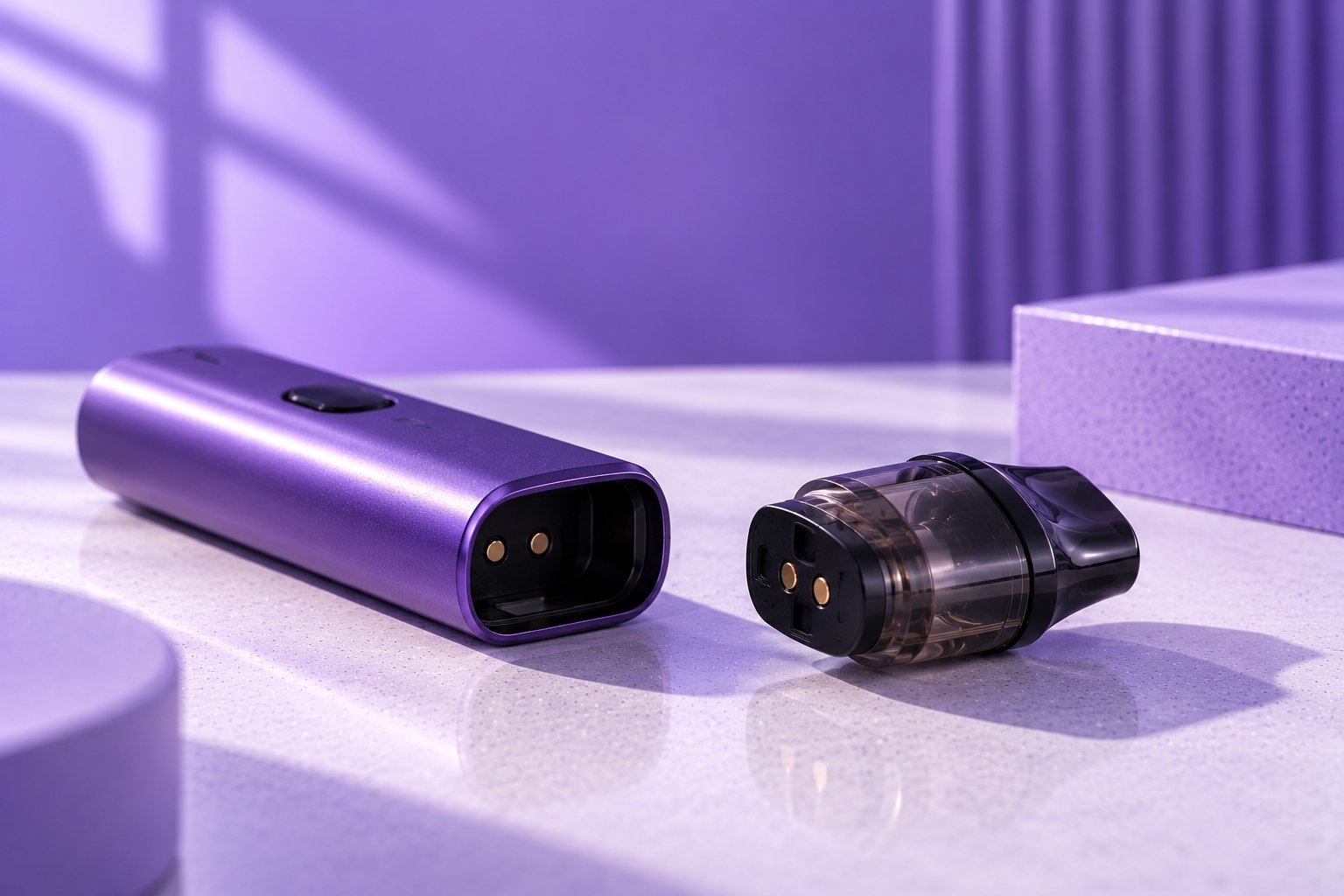
Pod connection systems vary by device. If your vape repeatedly loses pod recognition, use the troubleshooting steps below for basic external checks, but follow the manual for your exact model before attempting repairs. Do not bypass contact pins, protection systems, or other electrical components.
Your vape works normally for a few puffs, then suddenly stops. You remove the pod, put it back in, and it works again—only for the same problem to return later.
An intermittently disconnecting vape pod usually means the device is not maintaining a consistent electrical connection with the pod or coil. The problem can involve residue on the contacts, condensation, incorrect pod seating, incompatible hardware, a worn pod, damaged contacts, or an internal device fault.
The important distinction is intermittent recognition. If your device never recognizes the atomizer at all, a persistent No Atomizer error may require a slightly different diagnostic approach.
How Does a Vape Detect the Pod?
A pod system needs an electrical connection between the pod or coil and the battery section. Depending on the design, metal pads on the pod contact fixed or spring-loaded pins inside the device.
When those contact points align correctly, the device can recognize the electrical load presented by the installed coil and operate according to its programmed limits. If that connection opens or becomes unstable, the device may temporarily stop recognizing the pod.
Depending on the model, this can appear as:
- No vapor when you inhale
- An LED blinking instead of normal activation
- A “No Pod,” “Check Pod,” or “No Atomizer” message
- A resistance reading that disappears or changes unexpectedly
- The device working only after the pod is removed and reinserted
- Intermittent firing when the pod moves
The exact warning varies by manufacturer and model, so LED patterns and screen messages should always be checked against the device manual.
1. The Pod Is Not Fully Seated
Start with the simplest possibility: the pod is not sitting correctly in the device.
Even when a pod appears installed, its electrical pads still need to align with the device contacts. Debris in the pod chamber, an incorrectly positioned cartridge, physical damage, or a pod that is not fully inserted can interfere with that connection.
Remove the pod and reinstall it in its normal orientation without forcing it. It should sit as intended by the manufacturer rather than rocking, remaining visibly raised, or requiring pressure to keep the device operating.
2. Condensation or E-Liquid Is Covering the Contacts
Moisture underneath a pod deserves attention because this area contains the electrical interface between the cartridge and device.
Condensation can accumulate during normal use, while an actual pod leak can leave considerably more liquid around the pod base and device chamber.
If you see moisture:
- Turn off or lock the device if the model provides that control.
- Remove the pod.
- Wipe accessible pod and device contact surfaces with a clean, dry, lint-free cloth or cotton swab.
- Allow the area to become completely dry before reinstalling the pod.
Do not pour cleaning liquid into the device, rinse the battery section, or insert metal objects into the pod chamber.
3. The Electrical Contacts Are Dirty
Even when you do not see an obvious leak, residue or debris on the pod base or device contacts can interfere with a reliable connection.
This is especially worth checking when the pod begins working immediately after removal and reinsertion but disconnects again later.
Clean only the accessible external contact surfaces. A dry cotton swab or lint-free material is generally appropriate for removing visible residue without introducing additional liquid into the device.
4. A Spring-Loaded Contact Pin Is Not Moving Correctly
Some pod systems use spring-loaded contact pins inside the battery section. These pins are designed to maintain contact with the pod when it is installed.
If one appears visibly lower than another, remains stuck, is corroded, or is physically damaged, the electrical connection may become intermittent.
Do not bridge, pry, short, or reposition electrical contacts with metal tools. If an accessible contact appears mechanically damaged or remains stuck after ordinary external cleaning, stop troubleshooting and follow the manufacturer's service or replacement guidance.
5. The Pod or Coil Is Not Compatible
Physical fit does not necessarily guarantee electrical compatibility. Pod families can include cartridges with different coils, resistance ranges, generations, or device compatibility.
A cartridge that looks similar may therefore not operate correctly with every device in the same product family.
Confirm the exact device model, pod model, and coil compatibility before troubleshooting further. Correct coil compatibility matters because the device must be able to recognize and operate with the installed hardware.
6. The Pod or Coil May Be Damaged
A connection problem can also originate inside the cartridge rather than at the visible contacts.
If your device works consistently with one compatible pod but repeatedly loses connection with another, the problem is more likely associated with the problematic pod or its coil.
Inspect the pod for:
- Cracks or deformation
- Damaged contact surfaces
- Heavy leaking
- A loose or incorrectly seated replaceable coil
- Visible damage around the pod base
Do not attempt to rebuild or modify a sealed cartridge simply to restore its electrical connection.
7. Movement Is Breaking an Already Weak Connection
A healthy pod connection should not normally require you to hold the cartridge at a particular angle to keep the device working.
If the vape fires only when you press down on the pod, move it sideways, or repeatedly remove and reinstall it, that behavior can indicate a poor mechanical or electrical connection rather than a normal operating characteristic.
Avoid wedging paper, foil, metal, or another object around the pod to force the contacts together. That does not repair the underlying fault and can interfere with the way the device was designed to operate.
8. The Device May Be Experiencing a Different Electrical Error
A pod-recognition problem is not the same as every atomizer-related warning.
A device may separately identify an open circuit, short circuit, unsupported resistance, low battery, or another protection condition. These errors can produce similar symptoms—such as refusing to fire—but may require different troubleshooting.
For example, an “Atomizer Short” warning should not be treated as merely a dirty-contact problem. Repeated protection warnings should be interpreted according to the manual rather than defeated or bypassed.
Why Does My Pod Disconnect After I Refill It?
If the problem begins immediately after refilling, inspect the pod base and connection area for liquid before assuming the electronics have failed.
A small amount of liquid can escape during filling if the pod is overfilled, the fill port is not properly closed, a seal is damaged, or liquid reaches an area where it should not be.
Remove the pod, wipe the accessible exterior surfaces and contact area dry, check that the fill port is closed correctly, and inspect for continued leakage before reinstalling it.
Why Does My Pod Disconnect When I Move the Vape?
A connection that fails when the device moves points more strongly toward a mechanical contact problem.
Possible causes include:
- The pod is not seated correctly.
- The pod base is damaged or distorted.
- Debris is preventing the cartridge from sitting normally.
- A contact is damaged or stuck.
- The pod-retention mechanism is damaged.
- An internal connection in the device has failed.
If normal reseating and external cleaning do not resolve movement-related disconnection, repeatedly pressing or twisting the pod is not a reliable repair.
Why Does Removing and Reinserting the Pod Temporarily Fix It?
Removing and reinserting a pod can temporarily restore alignment between the pod contacts and the device contacts. It can also shift residue or moisture enough for the electrical connection to return briefly.
That temporary improvement is useful diagnostically, but it does not necessarily mean the problem has been fixed. If the connection repeatedly fails again, inspect the pod, contacts, compatibility, and device condition instead of relying on constant reinsertion.
How to Troubleshoot a Vape Pod That Keeps Disconnecting
- Stop using the device temporarily. Turn it off or lock it if the model provides that option.
- Remove the pod. Check for liquid, debris, damage, or a protective shipping film on a new cartridge.
- Dry the contact area. Wipe accessible pod and device contacts with a clean, dry swab or lint-free material.
- Confirm compatibility. Verify that the pod and coil are intended for the exact device model.
- Reinstall the pod normally. Do not force, twist, or wedge it into position.
- Check the device indicator. Compare any LED sequence or screen warning with the official manual.
- Test another known-compatible pod if appropriate. If one pod works consistently and another does not, the cartridge or coil is a more likely source of the problem.
- Stop if the problem continues across compatible pods. The fault may be in the device contacts or internal electronics.
Pod Disconnecting vs. No Atomizer: What's the Difference?
| Symptom | Typical Pattern | First Things to Check |
|---|---|---|
| Pod keeps disconnecting | Works intermittently or reconnects after reseating | Seating, moisture, contacts, pod condition |
| No Pod / No Atomizer | Device cannot establish the expected connection | Compatibility, contacts, coil installation, pod condition |
| Atomizer Short | Device reports a short/protection condition | Stop firing and follow model-specific troubleshooting |
| No vapor but pod detected | Device recognizes hardware but output is absent | Battery, coil, liquid supply, airflow, activation system |
Can Auto-Draw Problems Feel Like a Pod Disconnection?
Yes. On an inhale-activated device, the pod can remain electrically connected while the draw sensor fails to trigger normal firing. From the user's perspective, this can feel like the pod suddenly disconnected because inhaling produces nothing.
If the device consistently recognizes the pod but does not respond to inhalation, the problem may involve the auto-draw system rather than the pod contacts.
When Should You Stop Troubleshooting?
Basic external troubleshooting should stop when the problem cannot be resolved through normal pod reseating, drying accessible contacts, confirming compatibility, or testing another compatible cartridge.
Stop using the device if you notice:
- Damaged or recessed electrical contacts
- Heavy liquid intrusion into the battery section
- Cracked, melted, or deformed components
- Unexpected heating
- Burning or unusual electrical odors
- Repeated short-circuit warnings
- Unexpected activation or auto-firing
Do not open the battery section, bypass protection features, bridge contacts, or modify the electrical connection to force the device to operate.
Final Thoughts
A vape pod that keeps disconnecting usually points to an unstable connection rather than a completely dead device. Pod seating, moisture, dirty contacts, compatibility, cartridge condition, and damaged contact hardware are the main areas to check.
Start with the least invasive checks: remove the pod, inspect and dry the accessible contacts, confirm compatibility, and reinstall it normally. If another compatible pod works consistently, the original cartridge is a likely source of the problem. If multiple compatible pods disconnect in the same device, the device itself may require manufacturer support or replacement.
Sources & Further Reading
- U.S. Consumer Product Safety Commission — Lithium-Ion Battery Safety Warning
- U.S. FDA — Tips to Help Avoid Vape Battery Fires or Explosions
Pod detection and protection behavior vary by manufacturer and model. For model-specific error codes, resistance limits, contact design, and pod compatibility, the official manual for the exact device remains the primary reference. General battery-safety sources do not establish what a particular blink pattern or pod error means.