 United States
Buying Your First Vape Kit in 2025? Here's How to Choose the Right One for You
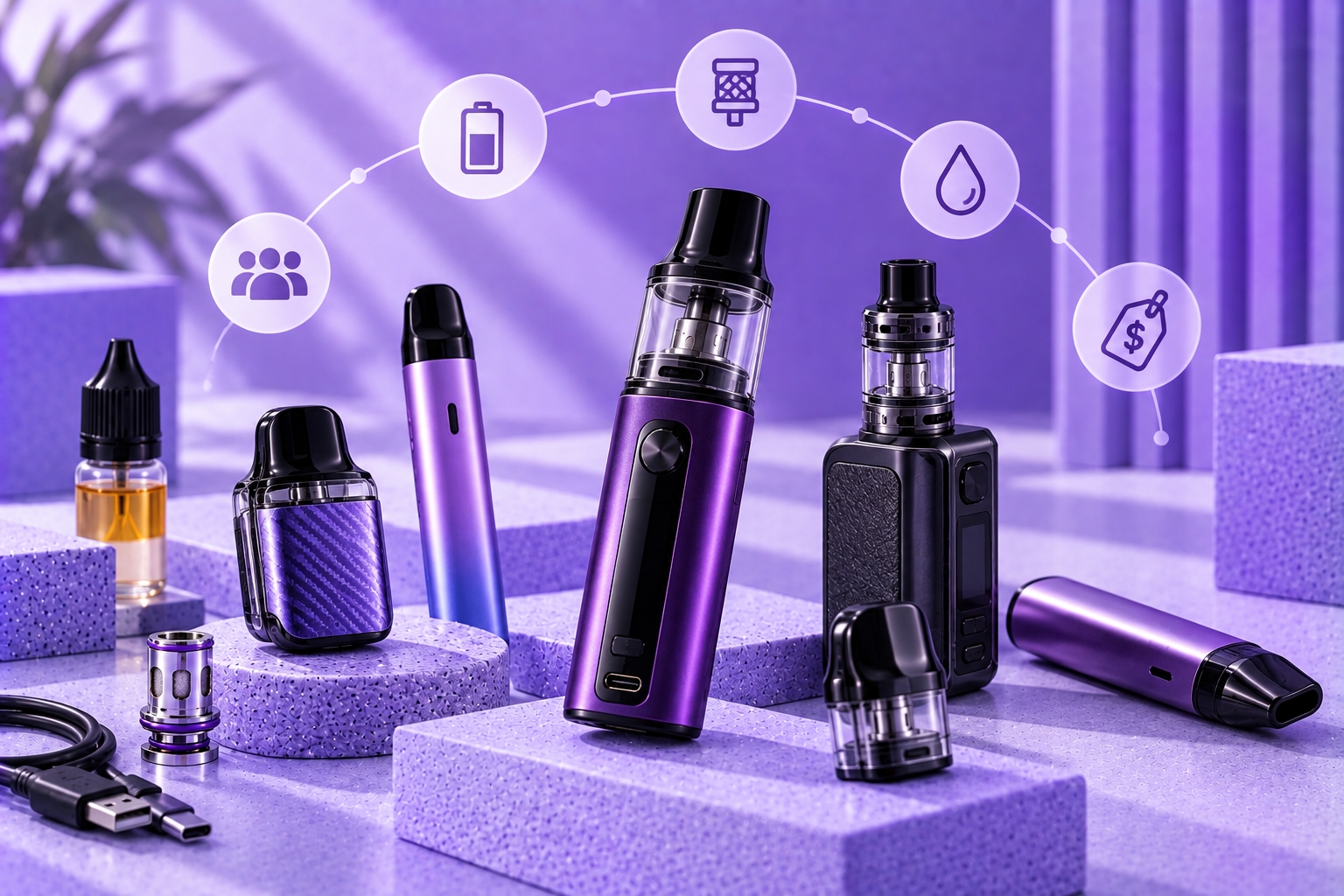
For adults 21+ only. If you do not currently use nicotine or tobacco products, do not start. Vape devices and nicotine products are not risk-free. Always follow the manufacturer's instructions for compatible components, charging, filling, maintenance, and operation.
Buying your first vape kit can be confusing when devices differ in pod or tank design, coil compatibility, battery capacity, charging requirements, controls, and replacement parts. Instead of choosing based only on appearance or advertised features, it helps to know exactly what to check before purchasing.
This guide focuses on how to choose your first vape kit by evaluating the hardware, included components, compatibility, maintenance requirements, and ongoing replacement needs before you buy.
First Vape Kit Checklist: What to Check Before Buying
A vape kit should be evaluated as a complete system rather than as a device alone. Before purchasing, confirm what is included, what additional components are required, and what you will eventually need to replace.
1. Decide How Much Setup and Control You Want
Start by considering how much device setup you are comfortable managing. Some kits prioritize straightforward operation with minimal controls, while others provide adjustable airflow, wattage, replaceable coils, external tanks, or additional settings.
More adjustment is not automatically better for a first device. If simplicity is the priority, features such as straightforward controls and fewer replaceable components may be more useful than extensive customization.
2. Check Exactly What the Kit Includes
The word “kit” does not always mean that every component required for operation is included. Package contents vary by product.
Before purchasing, check the manufacturer's package list for items such as:
- Device or battery section
- Pod or tank
- Included coil or integrated-coil cartridge
- Charging cable, when supplied
- Spare seals or other accessories, when supplied
- User manual or operating instructions
For devices that use removable batteries, confirm whether the required battery is included or must be purchased separately.
3. Confirm Pod or Coil Compatibility
Replacement-part compatibility is one of the most important checks before buying a refillable vape kit. A device may work only with a particular pod family, coil platform, or resistance range.
Check the manufacturer's specifications rather than assuming that components with a similar shape or brand name are interchangeable. Knowing the correct replacement pod or coil before purchasing can make future maintenance considerably easier.
4. Check E-Liquid Compatibility
Refillable devices can differ in coil resistance, power range, wicking design, and airflow, so not every setup is intended to perform the same way with every e-liquid formulation.
Review the manufacturer's coil and pod specifications and follow its recommendations for the intended setup. The selected coil, power range, airflow, and e-liquid characteristics should be considered together rather than treating the device as universally compatible with every liquid.
5. Compare Battery Capacity and Charging Requirements
Battery capacity can help indicate how much stored energy a device has, but actual runtime also depends on power settings, coil resistance, usage frequency, and device efficiency.
Before buying, check whether the device uses an integrated or removable battery, which charging method the manufacturer specifies, and whether any required charging equipment or removable cells must be purchased separately.
Battery condition and correct charging practices remain important after purchase. Appropriate battery safety includes following the manufacturer's charging instructions and discontinuing use of batteries or devices showing signs of damage, swelling, leaking, or abnormal heat.
6. Look at the Controls Before Buying
Check how the device operates before purchasing it. Depending on the model, firing may be draw-activated, button-activated, or support both methods. Adjustable devices may also include airflow controls, wattage settings, screens, locking functions, or menu systems.
For a first kit, consider whether you understand the controls you will actually need to operate rather than choosing based on the number of available settings.
7. Consider Maintenance Requirements
Different kits require different levels of upkeep. Some use replaceable cartridges with integrated coils, while others require separate coil replacement, tank cleaning, seal inspection, and additional maintenance.
Before purchasing, identify which parts are consumable and how they are replaced. Routine vape maintenance can involve inspecting pods or coils, keeping connection areas clear, checking seals, monitoring charging behavior, and replacing worn components when necessary.
8. Check Replacement-Part Availability
The initial device is only one part of owning a refillable vape kit. Pods, coils, glass, seals, or other consumable components may eventually require replacement depending on the design.
Before buying, identify the exact replacement components used by the kit and confirm that you can distinguish them from incompatible versions. This is especially useful when a manufacturer offers several similar pod or coil families.
9. Understand the Ongoing Cost
Purchase price alone does not show the full cost of a vape kit. Depending on the device, ongoing expenses can include replacement pods, coils, e-liquid, batteries, or other components.
Consider both the initial kit price and the components that will need periodic replacement. A lower-priced device is not necessarily less expensive over time if its consumable parts are difficult to find or require frequent replacement.
10. Check Manufacturer Documentation
Before using a new kit, make sure operating instructions are available for the specific model. The documentation should explain basic operation, charging, compatible components, filling or pod installation, device protections, and any model-specific warnings.
Manufacturer instructions should take priority over generalized advice whenever the device has model-specific requirements.
Questions to Ask Before Buying Your First Vape Kit
Before completing a purchase, use this short checklist:
- What components are included in the box?
- Does the device use an integrated or removable battery?
- If it uses removable batteries, are they sold separately?
- Which exact pods or coils are compatible?
- Are replacement components readily identifiable?
- What maintenance will the device require?
- How is the device charged?
- Does it have adjustable settings that I need to understand?
- What components will require ongoing replacement?
- Are manufacturer instructions available for the exact model?
Common First-Kit Buying Mistakes
Choosing Based Only on Maximum Power
A higher maximum wattage does not automatically make a device more appropriate for a first-time user. Power requirements depend on the compatible coil and intended operating range.
Buying Before Checking Replacement Parts
A device may appear suitable initially but become inconvenient if the buyer does not know which pods, coils, or other components it requires. Compatibility is easier to manage when replacement parts are identified before purchase.
Assuming Every Kit Contains Everything Needed
Package contents differ. In particular, some devices that use removable batteries may not include the cells required for operation. Always check the actual package contents rather than relying on the word “kit.”
Choosing Features You Do Not Understand
Adjustable wattage, airflow, different coil resistances, and additional operating modes can provide more control, but they also introduce more variables. Make sure you understand the functions you plan to use and their relationship to compatible hardware.
After You Buy Your First Vape Kit
Before first use, read the manufacturer's instructions and confirm that the installed pod, coil, battery, and other components are compatible. If the kit uses a refillable coil or pod that requires saturation before use, follow the manufacturer's preparation instructions before firing the device.
As the device is used, inspect it for leaks, damaged components, unusual heat, charging problems, or persistent error messages. Problems involving damaged batteries, electrical components, or abnormal operation should not be treated as routine maintenance issues.
Final Thoughts
Choosing your first vape kit becomes easier when the decision is treated as a practical hardware checklist rather than a search for one universally “best” device. Check what is included, confirm component compatibility, understand charging and maintenance requirements, identify replacement parts, and consider ongoing costs before purchasing.
The goal is to choose a kit whose operation and upkeep you understand. Device-specific manufacturer instructions should then guide setup, charging, component replacement, and normal use.
Nicotine is addictive. Keep vape devices, batteries, and e-liquids away from children and pets. Do not use damaged batteries or equipment, and follow the manufacturer's instructions for charging, compatible components, maintenance, storage, and replacement.