 United States

Vape 510 Threads Damaged? Signs of Stripping and Connection Problems
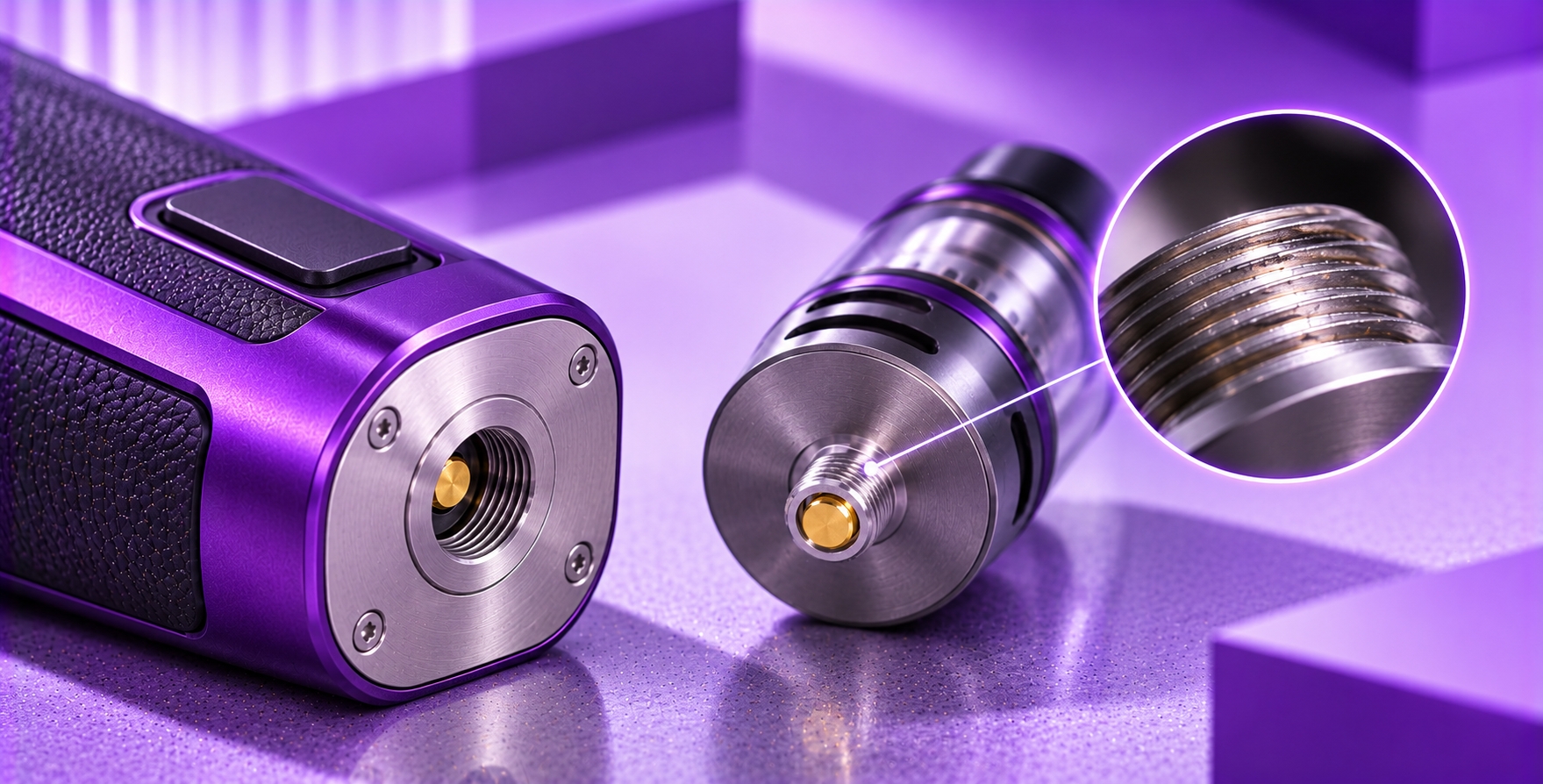
A 510 connection is one of the most common threaded attachment systems found on compatible vape mods and tanks. It allows the tank or atomizer to attach to the device while also providing the electrical connection needed for operation.
When the 510 threads become damaged, a tank may no longer attach smoothly, sit evenly, or remain secure. The problem can develop through cross-threading, repeated overtightening, physical impact, or wear affecting the connector surfaces.
Not every tank connection problem means the threads are stripped. Debris, incompatible hardware, a damaged center contact, or a loose connector assembly may produce similar symptoms. This guide focuses on identifying physical thread damage and understanding when further use or adjustment is inappropriate.
Quick Verdict: Damaged vape 510 threads may cause a tank to attach unevenly, wobble, bind during installation, or fail to remain secure. Cross-threading and overtightening can damage the mating surfaces, while dirt or residue may simply interfere with normal attachment. If the threads are visibly stripped, cracked, or deformed, stop using the affected hardware and seek manufacturer-approved replacement or service rather than forcing the connection.
What Are Vape 510 Threads?
The 510 connector is a threaded attachment interface used by many vape tanks, atomizers, and compatible devices. Typically, the tank has external or male threads, while the device has a corresponding internal or female threaded connection.
The threaded portion helps hold the components together. A separate center contact is generally involved in completing the electrical connection, with insulating material separating conductive parts as required by the design.
Because the connection performs both mechanical and electrical functions, damage should not be treated as a purely cosmetic problem. A tank that does not attach correctly may also fail to establish a reliable electrical connection.
Innokin's official MVP5 support documentation identifies the 510 connection as a standard attachment used with compatible tanks and recommends checking the connector and threads when troubleshooting atomizer detection problems.
What Causes Vape 510 Threads to Become Damaged?
1. Cross-Threading During Tank Installation
Cross-threading occurs when two threaded components begin engaging at an incorrect angle rather than following their intended grooves. The tank may feel unusually resistant after only a small amount of rotation.
Continuing to turn the tank against that resistance can deform the thread surfaces. Depending on the materials and severity, damage may affect the tank, device connector, or both.
A tank that repeatedly tilts or binds during attachment should not be forced into position.
2. Repeated Overtightening
A tank generally needs to be attached according to the manufacturer's instructions, not tightened with maximum force. Excessive tightening can place unnecessary stress on the threaded surfaces and connector assembly.
Overtightening may also make the tank difficult to remove, increasing the risk of damage during later handling. Innokin specifically cautions against overtightening tanks in its MVP5 support guidance.
3. Dirt, Debris, or E-Liquid Residue
Dust, pocket lint, dried residue, and e-liquid can collect around accessible connector surfaces. This buildup may interfere with smooth attachment or make a normally functioning thread feel rough.
Debris does not necessarily mean the threads are damaged. However, forcing a tank onto a contaminated connector can create additional mechanical stress.
4. Impact or Connector Misalignment
Dropping a device with a tank attached can place force on the 510 connection. Depending on the impact, the tank base, device connector, or surrounding top plate may become misaligned.
A tank that begins leaning noticeably after a drop may indicate structural damage rather than ordinary thread wear.
5. Wear or Damage to the Connector Assembly
Repeated attachment and removal can gradually wear mechanical contact surfaces. Some devices may also develop problems with the connector assembly itself, which can feel loose even when the visible threads appear intact.
A loose connector plate, damaged insulator, or displaced center contact requires a different assessment from ordinary surface contamination. These conditions should not be repaired through improvised adjustments.
Signs Your Vape 510 Threads May Be Stripped
Physical thread damage often produces mechanical symptoms before an electrical warning appears. The following observations can help distinguish possible stripping from other connector problems.
| What You Notice | Possible Explanation | Recommended Response |
|---|---|---|
| Tank catches or binds immediately | Possible cross-threading or debris | Stop turning and inspect |
| Tank tilts while attaching | Misalignment or damaged threads | Do not force the connection |
| Threads look flattened or chipped | Possible physical thread damage | Seek approved replacement |
| Tank rotates without becoming secure | Possible stripped threads | Discontinue use of affected hardware |
| Tank attaches normally but is not detected | Possible electrical contact issue | Follow model-specific connection checks |
These signs are not definitive proof of stripping. A connector may be mechanically intact but electrically faulty, or the opposite may be true.
Cross-Threaded vs. Stripped 510 Threads: What's the Difference?
Cross-threading describes incorrect engagement between the tank and device threads. It commonly produces early resistance, uneven alignment, or a tank that begins attaching at an angle.
Stripped threads describe thread surfaces that have become sufficiently worn or deformed that they no longer engage correctly. A stripped connection may fail to hold the tank securely.
Cross-threading can lead to stripping if the components are repeatedly forced together. However, a tank that feels difficult to install is not automatically stripped; contamination or another alignment problem may be involved.
How to Inspect Damaged 510 Threads Safely
Step 1: Stop Using and Power Off the Device
If the tank is loose, tilted, binding, or displaying connection warnings, stop firing the device. Switch it off according to the manufacturer's instructions and disconnect charging equipment.
Step 2: Remove the Tank Only if It Can Be Detached Normally
If the tank is designed to be removable and is not jammed, detach it using the normal procedure. Do not use pliers, excessive force, or improvised leverage to free a stuck connection.
If the tank is seized or unusually resistant, contact the manufacturer or an authorized service provider rather than risking further damage.
Step 3: Inspect the Visible Thread Surfaces
Under adequate lighting, look for flattened grooves, chips, dents, metal fragments, deformation, or visible misalignment. Inspect both the tank's external threads and the accessible device connector without inserting tools into the assembly.
Step 4: Check for Accessible Contamination
If the threads appear structurally intact but have visible residue, follow the manufacturer's approved cleaning procedure. Keep cleaning liquid out of internal electronics and allow any permitted cleaning area to dry completely before reassembly.
Innokin's general support FAQ describes inspecting male and female 510 threads for dirt and physical damage. Its cleaning instructions apply to compatible devices and should not override the manual for another model.
Step 5: Check Manufacturer-Approved Replacement Options
If the threads are visibly damaged or the tank cannot attach securely, stop attempting to reinstall it. Confirm whether the affected tank base or connector assembly is a manufacturer-approved replaceable component.
If the damaged part is integrated into the device, authorized servicing or replacement of the device may be necessary.
Safety Warning: Do not file, grind, reshape, or forcibly rethread a damaged 510 connector. Do not pry up the center pin, bridge contacts with metal, or use improvised adapters to compensate for stripped threads. These actions can damage electrical insulation or create an unsafe connection.
Can Damaged 510 Threads Cause a No Atomizer Error?
Yes, depending on the device. A mechanically damaged connection may prevent the tank from seating as intended, potentially affecting electrical contact. However, a No Atomizer warning can also result from coil installation, contact contamination, incompatible hardware, or other electrical conditions.
If the tank attaches normally but the device does not recognize it, the issue may not involve thread stripping at all.
Puffin's No Atomizer troubleshooting guide covers those broader detection problems, including coil and contact checks.
Can a Damaged 510 Connector Cause an Atomizer Short?
A damaged connector may be relevant to an electrical fault if its contacts, insulation, or component alignment have been affected. However, stripped threads alone do not establish that a short circuit is present.
If the device displays an Atomizer Short warning, stop attempting to fire it and follow the manufacturer's instructions. Do not repeatedly tighten or reposition the tank in an effort to bypass the warning.
Our Atomizer Short guide explains why electrical protection messages require different troubleshooting from ordinary mechanical looseness.
Should You Replace the Tank or the Device?
The answer depends on which side of the connection is damaged and whether the manufacturer supports replacing that component.
- Damaged tank threads: Check whether the manufacturer offers a compatible replacement base or requires replacement of the complete tank.
- Damaged device connector: Contact manufacturer support or an authorized service provider to determine whether repair is supported.
- Damaged center pin or insulation: Discontinue use and seek professional assessment rather than attempting adjustments.
- Damage affecting both components: Do not continue using either component until its condition and compatibility have been evaluated.
A replacement part should match the exact device or tank model. The presence of a 510-style threaded connection does not guarantee that every tank and device combination is electrically or mechanically suitable.
Can Damaged 510 Threads Contribute to Tank Leaks?
Potentially, but the relationship depends on where the damage occurs. A damaged tank base or misaligned assembly may interfere with normal component fit. However, the external 510 connection itself is not necessarily part of the tank's liquid seal.
If e-liquid appears around the tank base, inspect the tank's approved sealing components, glass, coil installation, and housing condition rather than assuming the 510 threads are responsible.
Puffin's tank leakage guide covers those separate liquid-sealing issues.
How to Prevent Premature 510 Thread Damage
Careful handling can reduce unnecessary mechanical stress on compatible threaded connections.
- Align the tank carefully before engaging the threads.
- Stop immediately if the tank binds or begins attaching at an angle.
- Avoid overtightening beyond the manufacturer's instructions.
- Keep accessible connector surfaces free from dust, lint, and e-liquid.
- Protect the device and attached tank from impact.
- Do not use incompatible or visibly damaged components.
- Follow model-specific cleaning and maintenance instructions.
There is no universal number of attachment cycles after which a 510 connector must be replaced. Visible condition, secure fit, and manufacturer specifications are more useful indicators.
Frequently Asked Questions
How do I know if my vape 510 threads are stripped?
Possible signs include visibly flattened or damaged grooves, a tank that rotates without becoming secure, or a connection that no longer engages normally. Debris and misalignment can cause similar symptoms, so visual inspection and manufacturer guidance are important.
Can cross-threaded vape tanks be repaired?
Repairability depends on the extent of damage and the manufacturer's supported service options. Do not attempt to cut new threads or reshape the connector yourself. Replacement of the affected component may be necessary.
Why won't my vape tank screw on properly?
Possible causes include misalignment, dirt in the threads, damaged grooves, an incompatible attachment, or deformation of the connector. Stop turning the tank if resistance occurs unexpectedly.
Can overtightening damage a 510 connector?
Yes. Excessive tightening can stress the threads and connector assembly. Follow the device manufacturer's installation instructions and avoid using unnecessary force.
Is it safe to use a vape with stripped 510 threads?
No continued use is recommended when the tank cannot attach securely or the connector is visibly damaged. A compromised mechanical connection may also affect electrical contact. Seek approved repair or replacement.
Are all 510-threaded vape tanks interchangeable?
No. Sharing a 510-style attachment does not establish full compatibility. Device power limits, coil resistance support, connector geometry, and manufacturer specifications must also be considered.
Final Verdict
Damaged vape 510 threads can prevent a tank from attaching securely and may contribute to connection problems. Cross-threading, overtightening, physical impact, and wear are possible causes, but contamination or connector misalignment may produce similar symptoms.
The most important warning signs are visible thread deformation, a tank that repeatedly binds, a connection that no longer holds securely, or damage around the connector assembly.
Start with a non-invasive inspection and follow the manufacturer's cleaning and maintenance instructions. If the threads or electrical contacts are damaged, stop using the affected hardware and choose an approved replacement or service option.
Bottom Line: A 510 connector should hold compatible hardware securely without excessive force. If the threads are stripped or the connection is structurally damaged, replacement or authorized servicing is safer than attempting to force the components together.
Technical References & Editorial Review
This guide is based on manufacturer documentation describing 510 connectors, thread inspection, connection errors, and maintenance. It provides general mechanical troubleshooting information and does not claim hands-on testing of a specific device.
- Innokin — MVP5 Official Support: 510 connector construction, connection inspection, and overtightening precautions.
- Innokin — General Support FAQs: thread contamination, dents, nicks, and damaged connector replacement considerations.
- Innokin — CoolFire Z80 Support: 510 connection inspection and atomizer warnings.
Editorial Note: Prepared for adults of legal purchasing age. The article distinguishes physical thread damage from electrical contact faults and prioritizes non-invasive inspection and manufacturer-approved service. Connector construction and repairability vary by device. The official manual for the exact model takes precedence over general troubleshooting advice.
Prepared: November 4, 2026 | Editorial Review: Pending publication approval.