 United States
Why Does My Vape Say “Short” or “Atomizer Short”?
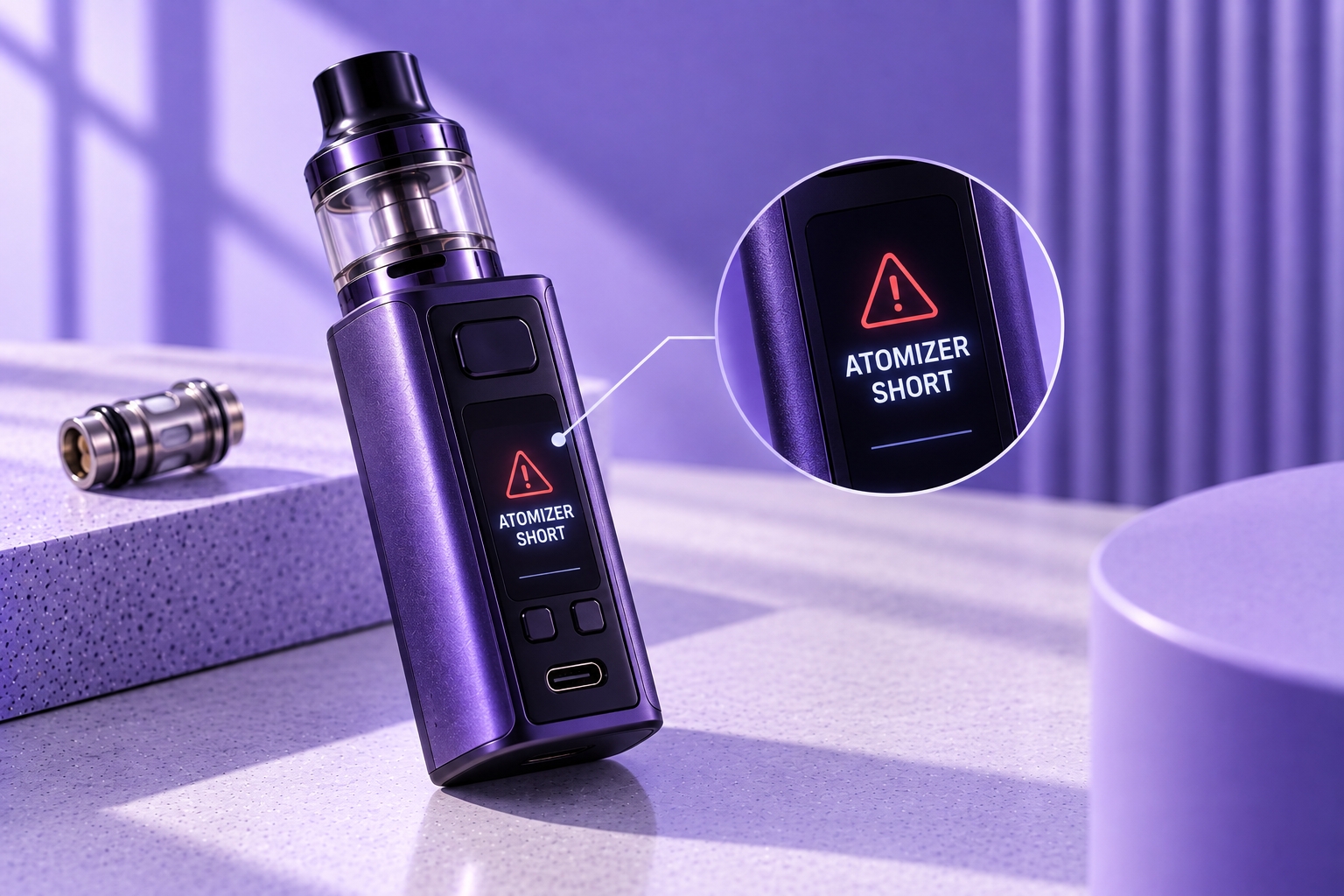
“Short,” “Atomizer Short,” and similar warnings are protection messages, not instructions to bypass the device. Their exact triggers and resistance thresholds vary by manufacturer and model. If the warning persists after basic checks, stop attempting to fire the device and follow the troubleshooting instructions for your exact model.
You press the fire button and instead of producing vapor, your vape displays “Short,” “Atomizer Short,” “Short Circuit,” or a similar warning. The device may then refuse to fire completely.
On regulated devices, this generally means the electronics have detected an electrical condition associated with the atomizer or coil and have stopped output as part of the device's protection system. It is different from a simple low-battery warning and also different from a vape that cannot detect an atomizer at all.
The exact cause can range from an incorrectly installed or damaged coil to a connection problem, incompatible resistance, liquid or contamination around contacts, or a fault in the atomizer or device.
What Does “Atomizer Short” Mean on a Vape?
“Atomizer Short” is a warning used by some regulated vape devices when their electronics detect a short-circuit or related low-resistance condition associated with the connected atomizer.
When this happens, the device can stop supplying output rather than continuing to energize the coil.
Vaporesso, for example, documents short-circuit protection on multiple devices. Its GEN FIT 40 documentation states that when a short circuit is detected, the device stops working and displays “SHORT ATOMIZER.” Other Vaporesso models similarly use the warning as part of their protection systems.
The wording is not universal. Another manufacturer or chipset may display “SHORT,” “ATOMIZER SHORT,” “SHORT CIRCUIT,” “LOW RESISTANCE,” or communicate the condition using an LED pattern.
Why Does My Vape Say “Short”?
The warning appears because the device has detected an electrical condition outside what it expects for normal operation. The exact trigger depends on the model.
Common areas to investigate include:
- An incorrectly installed or damaged coil
- A coil or atomizer resistance outside the device's supported range
- Contamination or liquid around electrical contacts
- A poorly seated atomizer, pod, or replaceable coil
- Damage to the atomizer or its connection
- A problem with the device's connector or internal electronics
- On rebuildable atomizers, an improperly installed build or unintended electrical contact
These are diagnostic possibilities rather than universal causes. The manufacturer's troubleshooting procedure for the exact device should take priority.
Is “Atomizer Short” the Same as “No Atomizer”?
No. Although both warnings involve the atomizer connection, they generally describe different detected conditions.
| Warning | Common Meaning | Primary Area to Check |
|---|---|---|
| Short / Atomizer Short | A short-circuit or related low-resistance protection condition has been detected | Coil, resistance, atomizer installation, contacts, and hardware condition |
| No Atomizer / Check Atomizer | The device is not detecting the expected atomizer/load or connection | Coil seating, pod/tank connection, contacts, and compatibility |
For example, Vaporesso documentation distinguishes “CHECK ATOMIZER” from “SHORT ATOMIZER” as separate protection states. A persistent No Atomizer message therefore has its own troubleshooting path rather than being interchangeable with a short-circuit warning.
Can a Loose or Incorrectly Installed Coil Cause the Warning?
Coil installation is one of the first areas worth checking because the atomizer must make the electrical connections intended by its design.
Vaporesso's official troubleshooting guidance for “Check Atomizer” and “Short Atomizer” specifically recommends confirming that the atomizer or coil is properly installed. Geekvape similarly recommends checking coil installation when troubleshooting an Atomizer Short condition.
Turn the device off before removing or reinstalling components, and follow the manufacturer's instructions for your tank, pod, or coil. Do not force a coil into a connection that does not fit correctly.
Can a Damaged Coil Cause “Atomizer Short”?
A faulty or damaged coil can be part of the problem. Manufacturer troubleshooting guidance commonly recommends replacing the coil or testing another compatible atomizer to determine whether the warning follows the atomizer or remains with the device.
If a new compatible coil works normally while the original repeatedly triggers the warning, that provides useful evidence that the original coil or its installation was involved.
Always verify coil compatibility before installing a replacement. Similar-looking coils are not automatically interchangeable.
Can E-Liquid or Dirty Contacts Trigger an Atomizer Error?
Contaminated electrical contacts can interfere with the connection between the atomizer and device. Vaporesso specifically recommends checking its atomizer and device contact pins for grime and keeping them dry and clean when troubleshooting “Check Atomizer” or “Short Atomizer.”
Turn the device off and inspect accessible contacts according to the manufacturer's cleaning instructions. If e-liquid has leaked around the pod, tank, or connection area, address the source of the leak before continuing to use the device.
Recurring pod leaking can create a separate problem that should be corrected rather than repeatedly wiping the connection and continuing to use the device.
Can Coil Resistance Cause “Atomizer Short”?
Yes, on devices that associate the warning with resistance below their supported operating range.
However, there is no universal resistance number at which every vape displays “Atomizer Short.” Protection thresholds vary by chipset and model.
For example, Vaporesso's GEN MAX documentation identifies a specific load-resistance threshold for its short-circuit/low-resistance protection. That specification applies to that model and should not be generalized to unrelated devices.
The device specifications and the resistance of the installed coil should therefore be checked together. The electrical relationship between resistance, voltage, current, and power is explained further in the Ohm's Law calculator, but calculations should not be used to override a device protection warning.
Why Does My Vape Say “Atomizer Short” With a New Coil?
A new coil does not automatically rule out an atomizer problem.
If the warning appears immediately after replacement, check:
- Whether the coil is specifically compatible with the device or tank
- Whether it is fully installed according to the manufacturer's instructions
- Whether the contacts are clean and dry
- Whether the atomizer or pod is seated correctly
- Whether another known-compatible coil produces the same warning
If several known-compatible coils produce the same warning, the problem may be elsewhere in the atomizer, connector, or device.
Why Does “Atomizer Short” Appear Only Sometimes?
An intermittent warning can indicate that the electrical condition changes as the pod, tank, coil, or connection moves.
Inspect whether the warning appears after installing the atomizer, moving the tank or pod, or after liquid reaches the contact area. A connection that repeatedly appears and disappears should not be treated as normal simply because the device occasionally fires.
On pod systems, an intermittent recognition problem without a short warning may instead fit the separate pattern of a pod disconnecting from its contacts.
Can the 510 Connection Cause an Atomizer Short Error?
On devices that use a 510-connected atomizer, the connector is part of the electrical path between the atomizer and mod. Contamination, physical damage, or an abnormal connection in this area can therefore be relevant when diagnosing an atomizer warning.
Manufacturer troubleshooting guidance may recommend inspecting and cleaning accessible 510 contacts. Do not pry, bridge, reshape, or short electrical contacts with metal tools in an attempt to make the device fire.
How to Troubleshoot “Short” or “Atomizer Short” Safely
- Stop firing the device. Allow the protection system to remain active while you identify the cause.
- Turn the device off. Do this before removing the pod, tank, or coil when the model allows it.
- Check the warning in the manual. Confirm what “Short,” “Atomizer Short,” or the displayed symbol means for that exact device.
- Inspect the atomizer or pod. Look for visible damage, improper seating, or liquid around accessible contacts.
- Check the coil installation. Confirm that the correct compatible coil is fully installed as specified by the manufacturer.
- Clean accessible contacts appropriately. Keep them dry and follow the manufacturer's cleaning instructions.
- Test another compatible coil if recommended. This can help determine whether the problem follows the coil.
- Test another known-good atomizer only when appropriate. Follow the device manufacturer's troubleshooting procedure and compatibility requirements.
- Stop if the warning remains. A persistent warning after basic checks can indicate a problem that should not be bypassed.
What Should You Not Do With an Atomizer Short Warning?
Because this is an electrical protection condition, troubleshooting should focus on identifying the cause rather than defeating the warning.
- Do not repeatedly hold the fire button hoping the warning will disappear
- Do not bridge electrical contacts with metal objects
- Do not force an incompatible coil into the device
- Do not intentionally lower resistance beyond the device's supported specifications
- Do not continue using visibly damaged atomizer components
- Do not open or modify an integrated battery or internal circuit board
If the device repeatedly detects a short, allow its protection system to do what it was designed to do: stop output until the condition has been resolved.
Is “Atomizer Short” a Battery Problem?
Not necessarily. The warning primarily points toward a condition the device associates with the atomizer/load rather than simply indicating that the battery charge is low.
Manufacturer documentation typically lists short-circuit protection and low-voltage protection as separate functions. A low battery may therefore generate a different warning such as “LOW BATTERY” or “BATTERY LOW.”
Battery safety still matters whenever a device has an electrical fault. If you notice unusual heat, physical battery damage, swelling, or another battery-related warning, stop using the device and follow appropriate battery safety guidance.
What If the Error Appears With Multiple Coils or Tanks?
If several known-compatible coils or atomizers produce the same warning, that makes a single defective coil a less complete explanation.
Vaporesso notes that persistent atomizer warnings can also be associated with damage to internal components or the circuit board after conditions such as liquid entry or physical damage. Geekvape likewise recommends support or warranty assistance when known-working atomizers continue to produce the problem.
At that point, repeatedly replacing coils may not solve the underlying issue. Stop using the device and consult the manufacturer, retailer, or an appropriate service channel.
When Should You Stop Troubleshooting?
Stop using the device when:
- The short warning remains with known-compatible replacement components
- The device or battery becomes unusually hot
- The connector, pod, tank, or device is visibly damaged
- Liquid has entered areas that should remain dry
- The warning appears together with unintended firing
- The device behaves unpredictably after a drop or other physical damage
- The manufacturer recommends service or replacement
A persistent electrical protection warning is not something that needs to be defeated to restore operation. The cause needs to be identified before the device is used again.
Final Thoughts
When a vape displays “Short” or “Atomizer Short,” it is generally responding to a detected short-circuit, low-resistance, or related atomizer condition defined by its protection system. The safest troubleshooting path starts with the exact device manual, followed by checking compatible coil installation, accessible contacts, the atomizer or pod, and visible hardware condition.
Most importantly, do not confuse an Atomizer Short warning with No Atomizer. They can involve some of the same components, but they represent different diagnostic states and should remain separate troubleshooting paths.
Sources & Further Reading
- Vaporesso — Official Troubleshooting for Check Atomizer and Short Atomizer
- Vaporesso — GEN FIT 40 User Manual and Protection Functions
- Geekvape — Official Atomizer Short Troubleshooting
Do not bypass an Atomizer Short warning. Protection thresholds, supported resistance ranges, and troubleshooting procedures vary by device. If the warning persists after the manufacturer-recommended basic checks, stop using the device until the cause has been identified.