 United States
Vape Devices 101: Find Your Perfect Pod, Mod, or Disposable
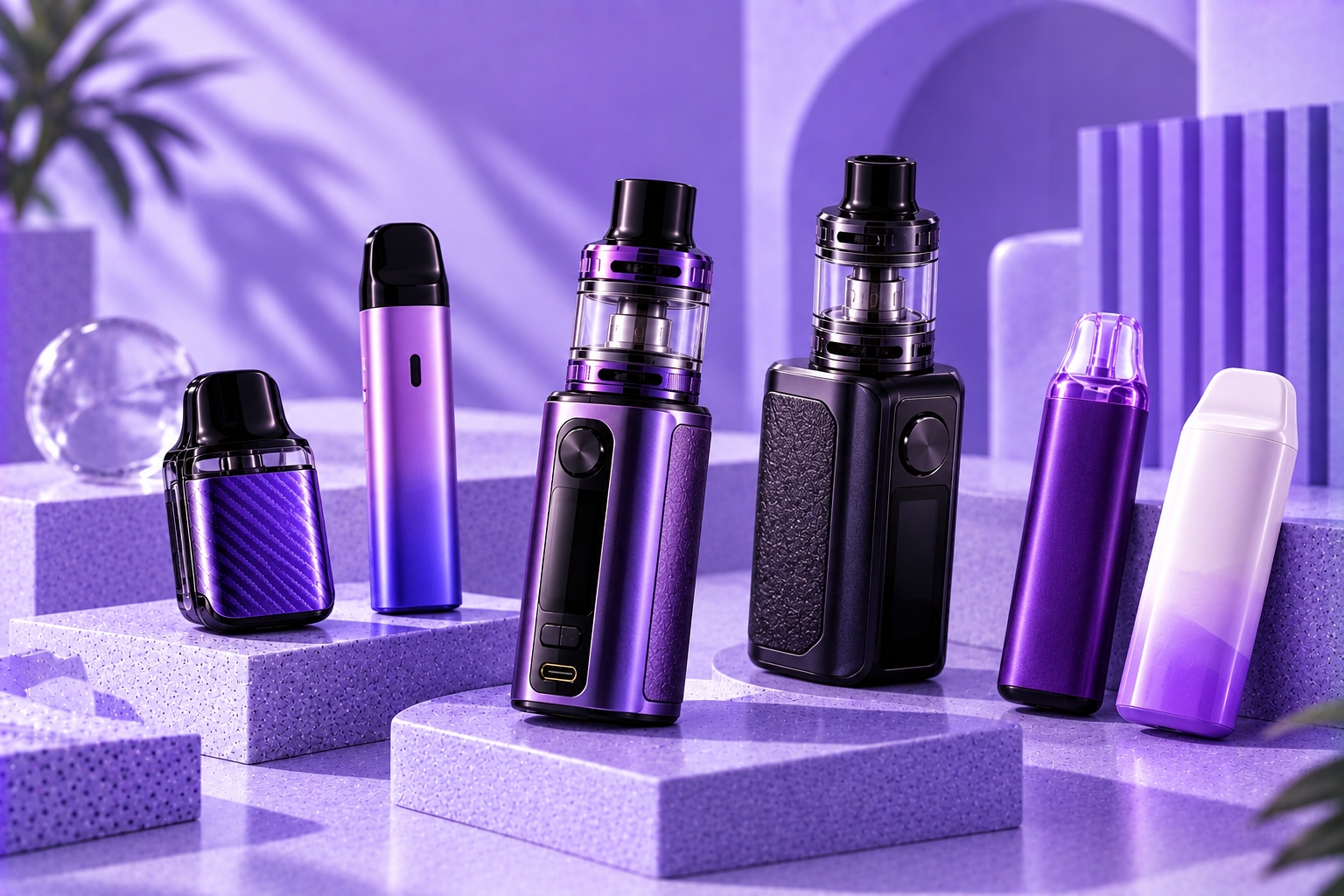
For adults 21+ only. If you do not currently use nicotine or tobacco products, do not start. Vape devices and nicotine products are not risk-free. Device designs, compatible components, and operating requirements vary, so always follow the manufacturer's instructions for the specific hardware you use.
Vape devices come in several formats, and terms such as pods, pens, mods, disposables, and mechanical mods describe hardware with different designs, components, controls, and maintenance requirements.
This vape device types guide explains the main categories, how they differ, and which components typically define each format. Rather than recommending one device as the best option, the goal is to make the hardware categories easier to understand and compare.
What Are the Main Types of Vape Devices?
The boundaries between vape categories are not always rigid. Modern devices sometimes combine characteristics from more than one format, but most hardware can still be understood through several broad categories.
1. Disposable Vapes
Disposable vapes are self-contained devices supplied as complete units. The battery, heating element, e-liquid reservoir, airflow system, and mouthpiece are integrated into the device rather than being designed around routine component replacement by the user.
Some disposables use non-rechargeable batteries, while many newer designs include rechargeable batteries so the available e-liquid can continue to be used after the initial battery charge is depleted. Rechargeability does not make the device equivalent to a refillable pod system; the device itself is still intended to be replaced rather than maintained as reusable hardware.
Typical Characteristics
- Self-contained construction
- Pre-filled e-liquid reservoir
- Integrated heating element
- Minimal hardware setup
- Rechargeable or non-rechargeable battery depending on design
- Device replaced when its usable service life ends
2. Pod Systems
Pod systems use a battery section combined with a removable pod or cartridge. Depending on the device, the pod may be refillable or prefilled and may contain an integrated coil or accept a separate replaceable coil.
This modular pod-and-battery structure is what primarily distinguishes a pod system from a disposable. Instead of replacing the entire device whenever the e-liquid or coil reaches the end of its service life, compatible pods or coils can be replaced according to the hardware design.
Typical Characteristics
- Removable pod or cartridge
- Refillable or prefilled designs
- Integrated or replaceable coils depending on model
- Compact battery section
- Draw-activated, button-activated, or dual activation
- Fixed or adjustable airflow and power depending on model
3. Vape Pens
Vape pens are generally identified by their narrow, cylindrical form factor. Depending on the design, they may use a refillable tank, cartridge, or other removable liquid-delivery component attached to a battery section.
The term describes the overall hardware format rather than one specific level of power or complexity. Some vape pens have simple fixed-output operation, while others provide adjustable settings or replaceable coils.
Typical Characteristics
- Narrow pen-shaped construction
- Integrated battery in many designs
- Tank or cartridge depending on device
- Relatively straightforward controls on many models
- Refillable or replaceable liquid-delivery components depending on design
4. Regulated Vape Mods
Regulated mods are electronic devices that use a chipset to control power delivery and provide built-in operating protections. Many are designed to work with separate tanks connected through a standard 510 connection.
Depending on the model, a regulated mod may provide adjustable wattage, screens, locking functions, multiple operating modes, and either integrated or removable batteries.
Typical Characteristics
- Electronic regulation through a chipset
- Adjustable power on many models
- Separate tank compatibility on many devices
- Integrated or removable batteries
- Screen and menu controls on many models
- Built-in protections vary by manufacturer and model
5. Mechanical Mods
Mechanical mods are fundamentally different from regulated mods because they do not use an electronic chipset to regulate power in the same way. Their operation depends directly on the battery, atomizer build, electrical resistance, and physical condition of the hardware.
Because they lack the electronic protections found in regulated devices, mechanical mods require specialized knowledge of battery limits, resistance, electrical behavior, and hardware condition. They should not be treated as interchangeable with ordinary regulated vape devices.
Pod vs. Mod vs. Disposable: What Is the Difference?
| Device Type | E-Liquid System | Heating Element | Controls | Reusable Hardware |
|---|---|---|---|---|
| Disposable | Pre-filled | Integrated | Usually minimal | Generally no |
| Pod System | Refillable or prefilled pod | Integrated or replaceable coil | Simple to adjustable | Yes |
| Vape Pen | Varies by design | Varies by design | Usually simple to moderate | Often |
| Regulated Mod | Usually separate refillable tank | Tank-dependent | Often adjustable | Yes |
| Mechanical Mod | Atomizer-dependent | Build-dependent | No electronic regulation | Yes |
Common Parts of a Vape Device
Although vape device types differ, many use variations of the same basic components.
Battery
The battery supplies electrical energy to the device. Batteries may be integrated into the hardware or removable depending on the design.
Pod, Tank, or Reservoir
This component contains the e-liquid. A disposable uses an integrated reservoir, a pod system uses a cartridge or pod, and many regulated mods use a separate tank.
Coil
The coil is the heating element used to vaporize e-liquid supplied by the surrounding wicking material. Depending on the hardware, it may be integrated into a pod or disposable device, installed as a replaceable coil head, or built separately in rebuildable atomizers.
Mouthpiece
The mouthpiece forms the upper part of the airflow path through which aerosol exits the device. It may be removable or integrated into the pod, tank, or device body.
Chipset
Regulated devices use electronic circuitry to manage device operation. Available functions can include power regulation, screen controls, cutoff functions, and other manufacturer-specific protections.
510 Connection
Many regulated mods and separate tanks use a standardized threaded connection commonly called a 510 connection. Pod systems generally use proprietary pod connections instead.
Closed vs. Open Vape Systems
Another way to distinguish vape devices is by whether the liquid-delivery system is closed or open.
Closed systems use prefilled or otherwise non-refillable liquid containers intended to be replaced as complete units. Some pod devices use this format.
Open systems allow compatible tanks or pods to be refilled with e-liquid. Depending on the device, the coil may be integrated into the refillable pod or replaced separately.
This distinction describes the e-liquid system rather than the overall shape of the device, which is why two pod systems can operate differently even when they look similar.
Integrated-Coil vs. Replaceable-Coil Devices
Device categories can also differ in how the heating element is replaced.
With an integrated-coil pod, the coil is permanently built into the cartridge. When the coil reaches the end of its service life, the entire pod is replaced.
With a replaceable-coil system, the tank or pod can remain in service while a compatible coil head is removed and replaced separately.
Disposable devices generally integrate the heating element into the complete device rather than treating it as a user-replaceable component.
How Device Type Affects Maintenance
Hardware design determines how much routine upkeep a device requires. A disposable has few user-serviceable components, while refillable pods, tanks, and regulated mods can require cleaning, coil or pod replacement, seal inspection, and connection maintenance.
Reusable hardware therefore benefits from regular vape maintenance appropriate to the device design.
Battery configuration also differs between categories. Devices with integrated batteries and those using removable cells have different handling requirements, while appropriate battery safety remains important for any battery-powered vape hardware.
Understanding Device Types Before Choosing Hardware
Knowing the difference between a disposable, pod system, vape pen, regulated mod, and mechanical mod helps establish what kind of hardware you are evaluating. The next step is determining whether that format matches the desired level of maintenance, portability, controls, and component replacement.
Device category alone does not determine whether a particular model is suitable for an individual user. Specifications and features can vary considerably within the same category, so the manufacturer's documentation for the exact model remains important.
Final Thoughts
The main types of vape devices differ primarily in how their batteries, e-liquid systems, coils, controls, and replaceable components are arranged. Disposables integrate most components into a single unit, pod systems use removable cartridges, vape pens describe a slimmer hardware format, regulated mods provide electronic power control, and mechanical mods operate without the same electronic regulation.
Understanding those structural differences makes it easier to compare hardware without treating every vape device as interchangeable.
Nicotine is addictive. Keep vape devices, batteries, and e-liquids away from children and pets. Follow the manufacturer's instructions for compatible components, charging, maintenance, and operation. Do not continue using damaged batteries or hardware that is leaking, overheating, or operating abnormally.