 United States
What Is a 510 Connection on a Vape? Threads, Contacts, and Compatibility Explained
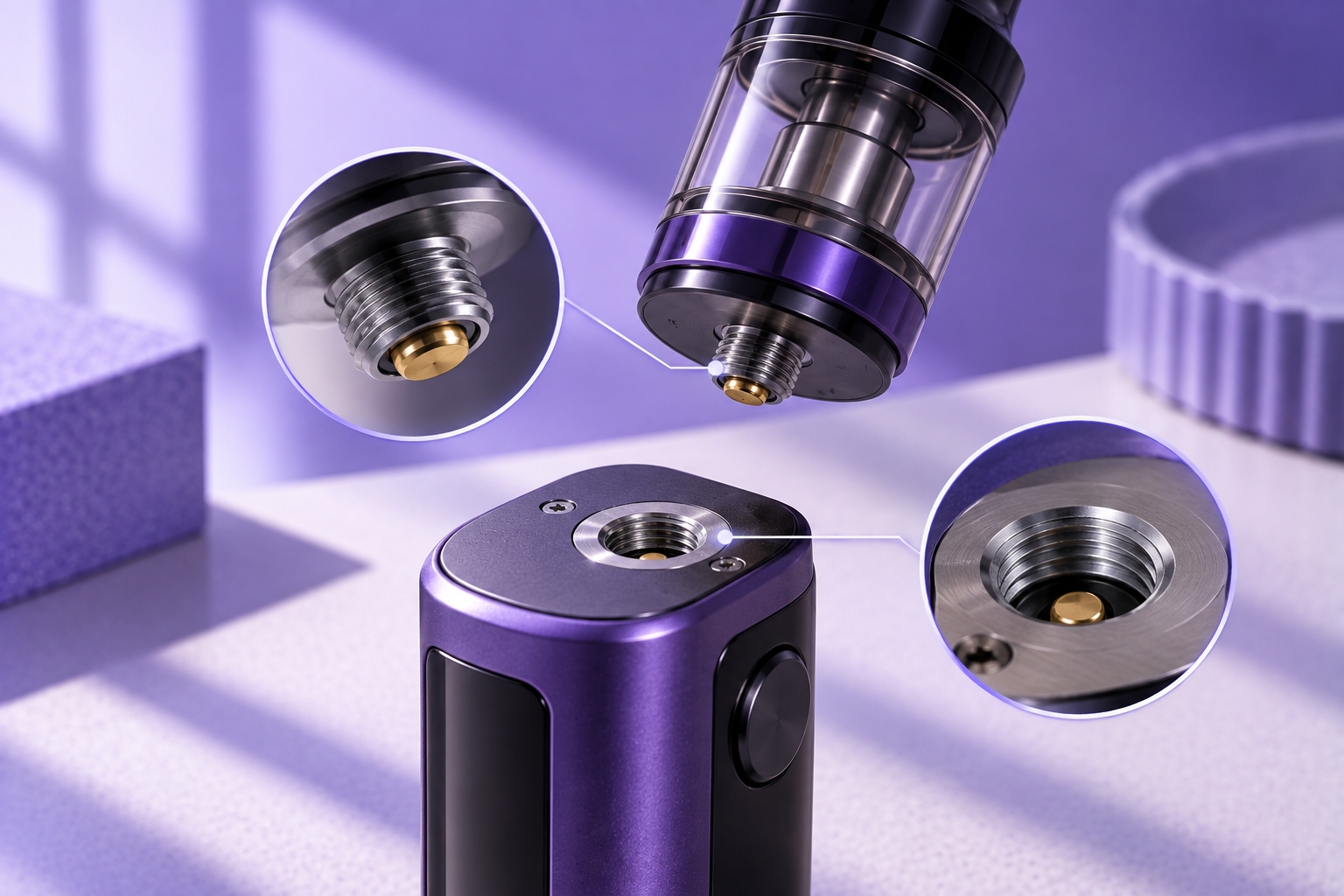
A 510 connection describes a commonly used threaded atomizer connection, but matching 510 threads do not guarantee that every tank and device are appropriate to use together. Physical fit, electrical compatibility, resistance range, power requirements, connector condition, and manufacturer specifications still matter.
If you have looked at the bottom of a vape tank or the top of a box mod, you may have seen the term “510 connection.” It refers to the interface that mechanically attaches many tanks and atomizers to compatible vape devices while also providing the electrical contact needed for the device to power the atomizer.
The 510 connection is widely used across many tank-and-mod systems, but “510 compatible” should not be interpreted as meaning that every 510 tank is suitable for every 510 device. Understanding the threads, contacts, tank fit, coil requirements, and device limits helps explain what compatibility actually involves.
What Is a 510 Connection on a Vape?
A 510 connection is a threaded mechanical and electrical interface used to attach many vape tanks and atomizers to compatible devices.
Innokin describes the 510 connection as standard threading used by many vaporizers and tanks. Its documentation for devices such as the MVP5 and CoolFire Z50 identifies those products as using standard 510 connections.
The connection does more than hold the tank in place. When correctly assembled, it also allows the atomizer's electrical contacts to connect with the device so the regulated device can detect and power the atomizer.
What Parts Make Up a 510 Connection?
Although designs vary between manufacturers, a typical 510 interface includes several functional parts:
- Threaded section: Mechanically secures the atomizer to the device.
- Center contact: Provides one side of the electrical connection between the atomizer and device.
- Outer conductive section: Forms another part of the electrical path in typical designs while also contributing to the mechanical connection.
- Insulator: Separates the center contact from surrounding conductive components.
- Device-side connector: Receives the atomizer and provides the corresponding electrical contacts.
The exact construction differs between products, so this should be treated as a general description rather than a repair diagram for every 510-equipped device.
The 510 interface is also only one part of the tank-and-device relationship. Tanks contain other components—including the coil, base, seals, reservoir, and airflow structure—that affect how they fit and function. Understanding basic vape tank components can make it easier to distinguish a connector problem from an issue elsewhere in the tank.
What Do the 510 Threads Do?
The threads provide the mechanical connection that secures a compatible atomizer or tank to the device.
A compatible tank should normally thread into the connector smoothly and sit securely without requiring excessive force. Cross-threading, damaged threads, contamination, or overtightening can interfere with proper attachment.
Innokin specifically cautions against overtightening tanks on several of its 510-equipped devices. A secure connection is important, but tighter does not automatically mean better.
What Does the Center Contact Do?
At the center of the 510 interface is an insulated electrical contact. When the tank and device are assembled correctly, the atomizer's center contact meets the corresponding contact in the device.
This contact forms part of the electrical path that allows a regulated device to detect and supply power to the atomizer.
Some devices use a spring-loaded or otherwise movable device-side contact to accommodate normal differences between compatible atomizers. Connector construction varies, however, so users should not assume that every center contact is designed to be manually adjusted.
Is Every Vape Tank a 510 Tank?
No. The 510 connection is common among traditional tanks and regulated mods, but it is not universal across all vaping devices.
Many pod systems use proprietary magnetic, press-fit, or model-specific connections instead of a threaded 510 interface. Innokin's educational material similarly distinguishes tanks that commonly use 510 connections from pods that typically use proprietary connections.
Some pod-style devices can also support compatible 510 atomizers through a dedicated adapter. Whether that option exists depends on the specific device.
Does a 510 Connection Mean Any Tank Will Work?
No. Matching threads establish only one part of compatibility.
A tank can physically screw onto a device while still being unsuitable because of its coil requirements, supported resistance, required power, dimensions, connector design, or manufacturer restrictions.
This becomes especially important when changing hardware. Tank size, coil platform, available output, connector type, and device features should all be considered when upgrading a device rather than assuming the 510 connection alone determines compatibility.
Why Coil Compatibility Still Matters With a 510 Tank
The 510 connection determines how the atomizer attaches to the device; it does not determine which replacement coil belongs inside the tank.
Coil compatibility is normally based on the exact tank and its supported coil family. Physical dimensions, electrical contacts, resistance, and manufacturer specifications all matter when checking coil compatibility.
This means you can have a correctly fitted 510 tank but still have an incompatible coil installed inside it. Tank-to-device compatibility and coil-to-tank compatibility are related, but they are not the same thing.
Does Tank Size Matter With a 510 Connection?
Yes. Physical dimensions can matter even when the connector itself is compatible.
A wide tank may extend beyond the edge of a narrow device, while some device shapes can physically interfere with certain atomizers. The location and surrounding structure of the 510 connector can also affect how a tank sits on the device.
Check both the tank dimensions and available mounting area rather than assuming that matching threads guarantee an appropriate physical fit.
What Is a Spring-Loaded 510 Connection?
Some vape devices use a spring-loaded center contact on the device side of the 510 connection. This movement can accommodate normal variation in the center-contact position of compatible atomizers while maintaining electrical contact.
Not every connector uses the same construction, and not every contact is intended to be manually moved. If the center contact appears stuck, recessed, damaged, or misaligned, follow the manufacturer's troubleshooting procedure rather than attempting to pry it upward.
Why Does My Tank Say “No Atomizer” After I Screw It In?
A tank being physically attached does not prove that its electrical connection is complete. The device still needs a stable electrical path through the connector, atomizer, and installed coil.
Manufacturer troubleshooting guidance commonly includes checking the connector for contamination, inspecting accessible contacts, confirming coil installation, and checking the tank or atomizer for damage when recognition fails.
Dirty contacts, connection misalignment, coil installation problems, or damaged components can prevent recognition. A persistent No Atomizer warning should therefore be diagnosed as a detection problem rather than corrected by simply tightening the tank further.
Can a Dirty 510 Connection Cause Problems?
Yes. E-liquid, condensation, dust, and debris around accessible electrical contacts can interfere with a stable connection.
Innokin specifically recommends checking the 510 connector for debris, e-liquid, and condensation when troubleshooting atomizer-detection problems on supported devices.
Turn the device off before cleaning accessible connection surfaces. Follow the manufacturer's cleaning instructions and avoid allowing liquid to enter the device body.
Can E-Liquid Around the 510 Connection Cause Problems?
E-liquid or condensation around accessible contacts can interfere with the electrical connection. If liquid repeatedly reaches the connector, cleaning the contacts without identifying the source may only provide a temporary fix.
When liquid is escaping from the tank base, airflow openings, seals, or other areas, the underlying tank leaking issue should be addressed before the tank is reattached and used normally.
Can a Damaged 510 Connection Cause an Atomizer Error?
Yes. Problems involving the connector, atomizer, coil, or electrical contacts can contribute to atomizer-related warnings.
Manufacturer troubleshooting documentation may recommend checking the connector threads, pins, coil installation, and atomizer condition when a device cannot correctly detect or operate the attached tank.
If the device displays Short, Atomizer Short, or another short-circuit warning, do not repeatedly attempt to fire it or manipulate the connector to bypass the warning. Treat it as a separate electrical protection condition and follow the instructions for the exact device.
Why Does My Tank Sit Crooked on the Mod?
A tank that does not sit correctly can indicate a mechanical fit problem rather than an electrical one.
Possible causes include:
- Cross-threading
- Damaged connector threads
- Debris in the threaded area
- A damaged tank base
- Physical interference between the tank and device body
If the tank does not thread smoothly, stop rather than forcing it into place. Forcing damaged or incorrectly aligned threads can worsen the connector damage.
Should You Tighten a 510 Tank as Much as Possible?
No. The goal is a secure and correctly seated connection—not maximum tightness.
Overtightening can make a tank difficult to remove and place unnecessary mechanical stress on the connector. Innokin specifically cautions against overtightening tanks on several of its 510-equipped devices.
Attach the atomizer according to the manufacturer's instructions and stop once it is seated appropriately rather than applying additional force.
Can a 510 Tank Get Stuck on a Vape?
Yes. A tank can become difficult to remove because of overtightening, damaged or contaminated threads, or another mechanical problem.
Grip the tank by its base rather than twisting fragile glass or upper components. Avoid excessive force or metal tools that could damage the connector. If normal removal does not work, follow the tank or device manufacturer's instructions.
What Is a 510 Adapter?
A 510 adapter allows certain devices that do not normally provide a standard threaded 510 mounting point to accept compatible 510 atomizers.
This arrangement can be found on some pod-mod systems that normally use proprietary pod connections but provide manufacturer-designed adapter support.
An adapter does not automatically make every atomizer appropriate for the device. Supported resistance, available output, physical fit, adapter design, and manufacturer specifications still apply.
510 Connection vs. Pod Connection
| Feature | 510 Connection | Typical Pod Connection |
|---|---|---|
| Attachment | Threaded | Often magnetic, press-fit, or proprietary |
| Compatibility | Used across many compatible tanks and devices | Usually specific to a device or product family |
| Electrical contact | Center and surrounding conductive contacts in typical designs | Model-specific contact arrangement |
| Adapter support | Not normally required on a native 510 device | Some devices support a dedicated 510 adapter |
How to Check 510 Compatibility Before Using a Tank
- Confirm the connector type. Verify that the tank and device are designed around a 510 interface.
- Check physical fit. Tank dimensions and device shape should allow the atomizer to sit correctly without obstruction.
- Verify the coil family. Make sure the installed coil is specifically supported by the tank.
- Compare electrical specifications. Confirm that the device supports the installed coil's resistance and operating requirements.
- Inspect the connection. Threads and accessible contacts should be clean and undamaged.
- Attach without forcing. Stop if the tank cross-threads, sits incorrectly, or requires unusual force.
- Check device recognition. Make sure the regulated device detects the atomizer normally before use.
What If the Resistance Reading Changes After Installing the Tank?
Displayed resistance can vary slightly depending on the device and measurement conditions, but substantial or repeatedly changing readings should not be ignored.
Turn the device off and check the coil installation, tank connection, and accessible contacts. If the resistance remains unstable, stop using the setup until the cause is identified.
Do not attempt to solve an unstable reading by continually tightening the tank or manipulating the connector. The issue may originate in the coil, atomizer, contact surfaces, or device itself.
Does a 510 Connection Determine Vape Performance?
Not by itself. The 510 connection primarily provides the mechanical and electrical interface between compatible components.
Vapor production, power requirements, airflow, flavor characteristics, and e-liquid consumption depend more directly on factors such as the installed coil, tank design, airflow, wattage, wicking system, and device settings.
A clean and stable connector matters because it allows compatible components to make the intended electrical connection, but the presence of a 510 connection does not determine how a vape will perform.
When Should You Stop Using a 510 Connection?
Stop using the tank-and-device combination if you notice:
- Severely damaged or stripped threads
- A loose, recessed, or visibly damaged contact
- Persistent unstable resistance readings
- Repeated No Atomizer or short-circuit warnings
- Liquid entering areas that should remain dry
- Unusual heating around the connector
- A tank that cannot be attached correctly without force
Do not bridge contacts with metal objects, force damaged threads together, or modify the connector simply to make the device fire.
Final Thoughts
A 510 connection is the threaded mechanical and electrical interface used by many vape tanks, atomizers, and regulated devices. Its widespread use allows many compatible components to share the same basic connection format.
But matching 510 threads are only the beginning of compatibility. Tank dimensions, coil compatibility, supported resistance, required power, connector condition, and manufacturer specifications must also work together.
When a 510-connected tank is not detected, produces unstable resistance, leaks around the connection, or triggers an electrical warning, diagnose the specific condition rather than simply tightening the tank or repeatedly attempting to fire the device.
Sources & Further Reading
- Innokin — MVP5 Support: 510 Connector and Connection Troubleshooting
- Innokin — CoolFire Z50 Support: 510 Connection and Atomizer Troubleshooting
- Innokin — Vape Parts: Tank, Pod, and Connection Types
- Innokin — Kroma-Z Support: 510 Adapter Compatibility
A physical 510 fit does not guarantee complete compatibility. Confirm the tank, coil, resistance range, power requirements, physical fit, and manufacturer specifications before use. Stop using a setup that produces persistent connection errors, unstable resistance, abnormal heat, or short-circuit warnings.