 United States
Why Does My Vape Taste Metallic? Common Causes Explained
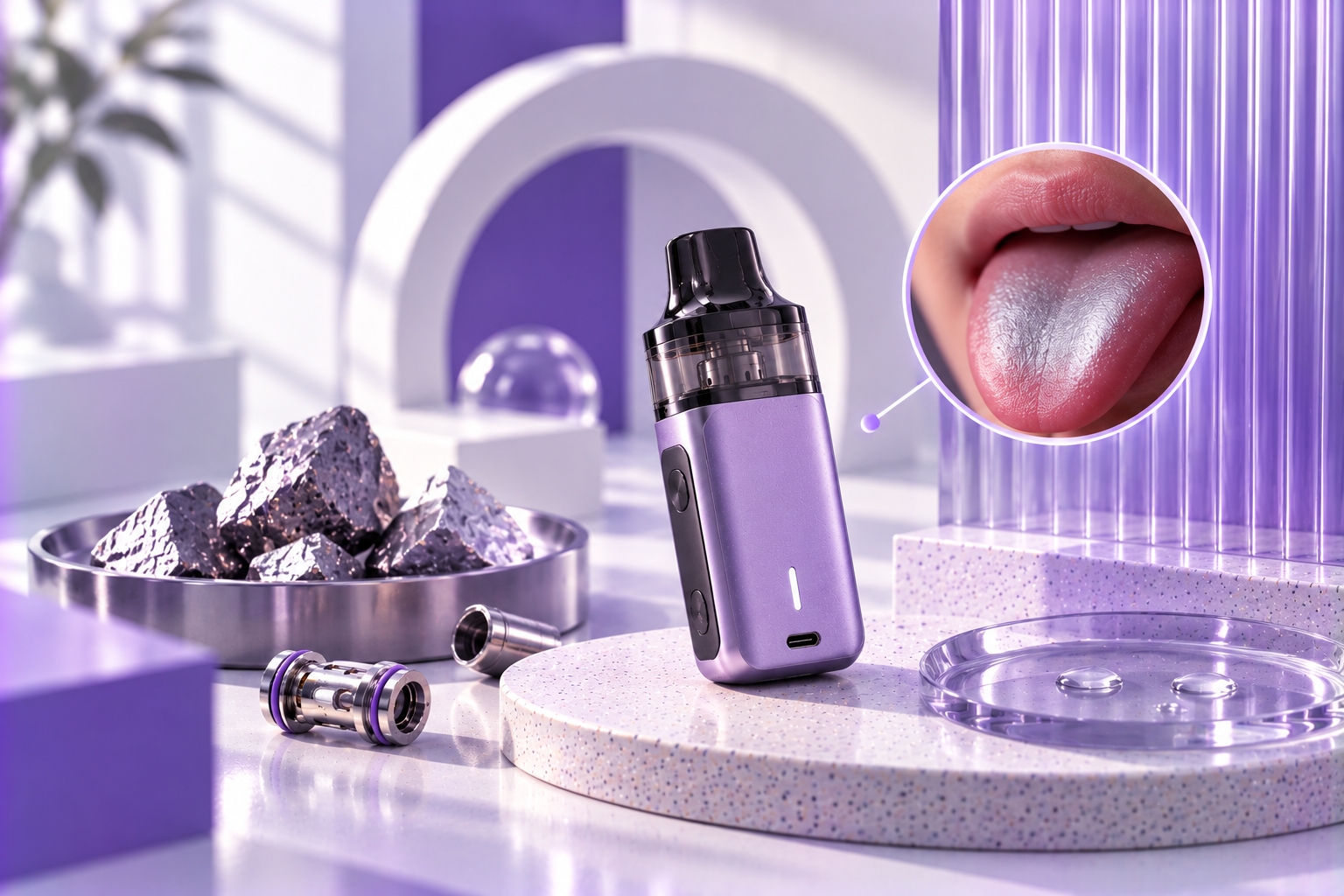
Note: An unexpected metallic taste does not identify a specific device fault or prove that metal is present in the aerosol. Stop using the device if the taste is new, persistent, or accompanied by unusual heat, visible damage, or electrical errors. Follow the manufacturer's inspection and replacement instructions. E-cigarette aerosol is not harmless.
A sudden metallic taste from your vape can be concerning, especially when the same device and e-liquid previously tasted normal. The change may involve the coil, a contaminated mouthpiece, an altered e-liquid, or another device problem. However, taste alone cannot reliably identify the cause.
If you're wondering why your vape tastes metallic, the most useful approach is to identify when the taste began, inspect accessible components without powering the device, and look for signs that require replacement or professional assessment.
Why Does My Vape Taste Metallic?
A metallic vape taste is an unexpected flavor sensation that some people describe as resembling metal, coins, or a sharp mineral-like aftertaste. It is different from the charred sensation commonly associated with a burnt wick, although descriptions of unusual tastes can overlap.
Possible explanations include residue around the mouthpiece, a deteriorated coil assembly, changes in e-liquid, or a problem unrelated to the device. None of these possibilities can be confirmed by taste alone.
Possible Causes of a Metallic Vape Taste
1. Coil Wear or Visible Deterioration
The heating element and wick are exposed to repeated heating cycles. Over time, deposits may accumulate and components may deteriorate. A change in flavor can occur alongside reduced vapor output, visible residue, or other performance changes.
However, a metallic sensation does not automatically mean the coil is releasing metal or that it has reached a particular age. The condition of the assembly and the manufacturer's replacement guidance are more useful than a fixed replacement schedule. Puffin's coil replacement guide explains the broader signs of coil deterioration.
2. Residue or Contamination Around the Mouthpiece
Condensation, leaked e-liquid, debris, or residue around the mouthpiece can affect what reaches the mouth. Check the accessible exterior and removable mouthpiece components for buildup, cracks, or visible contamination.
Clean only the parts the manufacturer identifies as safe to clean. Do not introduce water or cleaning liquid into the battery compartment, charging port, or internal electronics. Replace damaged components instead of attempting improvised repairs.
3. E-Liquid That Has Changed During Storage
An e-liquid may change in color, smell, or flavor as its ingredients age or are exposed to unsuitable storage conditions. This does not mean that every darkened liquid is unusable or that oxidation specifically causes a metallic taste.
Inspect the bottle for unexpected odor, separation, particles, damaged packaging, or changes inconsistent with the manufacturer's description. The e-liquid deterioration guide covers these broader storage-related warning signs.
4. An Incorrect or Damaged Replacement Coil
A coil that does not match the exact tank or pod series may fit poorly or operate outside its intended specifications. Damaged seals, an improperly seated coil, or abnormal resistance readings can also indicate an assembly problem.
Verify the exact replacement part against the manufacturer's compatibility information. Do not force a coil into place, modify its contacts, or continue operating a device that displays electrical warnings. Puffin's coil compatibility guide explains why matching the model and coil series matters.
5. A Taste Change Unrelated to the Vape
Not every metallic taste originates in a vaping device. Oral conditions, medications, infections, and other medical factors can affect taste perception. If the metallic taste continues when you are not using the device, or occurs with mouth irritation, bleeding, or other symptoms, seek advice from a qualified healthcare professional rather than assuming a hardware problem.
How to Check a Vape That Suddenly Tastes Metallic
If the taste is unexpected, stop using the device before inspecting it. These checks are intended to identify obvious issues, not to establish that a device is safe to resume using.
- Turn off the device. Disconnect it from charging equipment and allow it to cool before handling removable components.
- Inspect the mouthpiece. Look for residue, damage, or debris. Clean accessible parts only as instructed by the manufacturer.
- Check the tank or pod. Look for cracks, leaks, unusual deposits, or an improperly seated replaceable component.
- Review the e-liquid. Check its storage condition, packaging, appearance, and odor without tasting or directly inhaling it for testing.
- Confirm component compatibility. Compare the installed coil or pod with the exact device specifications.
- Look for electrical warnings. If the device shows unstable resistance, repeated errors, abnormal heating, or visible damage, discontinue use and contact the manufacturer or a qualified service provider.
Metallic Taste vs. Burnt Taste: What's the Difference?
Both symptoms can involve changes in flavor, but they should not automatically be treated as the same problem.
| Observation | What It May Suggest | Appropriate Response |
|---|---|---|
| Metallic or coin-like sensation | Possible flavor change, residue, component issue, or unrelated taste disturbance | Stop use and inspect accessible components; investigate persistent symptoms |
| Burnt or charred flavor | Possible dry or scorched wick | Stop use and check coil condition and manufacturer guidance |
| Chemical or unusually sharp flavor | Possible e-liquid change or contamination; cause uncertain | Discontinue use of the suspect liquid or device |
| Unusual taste with overheating or errors | Possible device malfunction | Stop using and charging the device; seek manufacturer guidance |
If the main symptom is a charred taste immediately after replacing a coil, the new-coil burnt taste article addresses that separate troubleshooting scenario.
Does a Metallic Taste Mean There Are Metals in the Aerosol?
Not necessarily. A metallic taste is not a reliable test for aerosol composition. Research has identified metals in samples of e-cigarette liquid and aerosol, but the presence and concentrations of those substances vary with device design, materials, and operating conditions.
A peer-reviewed study published in Environmental Health Perspectives investigated metal concentrations in refill liquid, liquid held in tanks, and aerosol samples. The research supports concern about potential metal exposure from some devices, but it does not establish that a metallic taste predicts a particular metal concentration or exposure level.
The CDC also identifies metals among the potentially harmful substances that can be present in e-cigarette aerosol. Absence of an unusual taste does not establish that an aerosol is harmless.
When Should You Stop Using the Device?
Discontinue use if the metallic taste is persistent or unexplained, particularly when accompanied by visible coil damage, abnormal heat, electrical errors, leaking into electronics, or damaged battery components.
Do not attempt to burn residue off a questionable coil, bypass a protection warning, or repair damaged internal electrical parts. Follow the manufacturer's instructions for replacing supported components or retiring the device.
If you experience persistent metallic taste outside vaping, significant oral symptoms, chest pain, or breathing difficulty, seek appropriate medical evaluation. Severe chest pain or breathing difficulty warrants urgent medical attention.
Final Thoughts
A metallic vape taste is a symptom, not a diagnosis. Coil deterioration, mouthpiece residue, e-liquid changes, incompatible parts, and non-device-related taste disturbances are possible explanations, but the taste alone cannot identify which one is responsible.
The safest troubleshooting approach is to stop using the device, inspect accessible components according to the manufacturer's instructions, and replace damaged or suspect parts rather than repeatedly testing an unexplained taste.
Sources & Further Reading
- Centers for Disease Control and Prevention — Health Effects of Vaping
- Environmental Health Perspectives — Metal Concentrations in E-Cigarette Liquid and Aerosol Samples: The Contribution of Metallic Coils
- U.S. Food and Drug Administration — Tips to Help Avoid Vape Battery Fires or Explosions
Safety Reminder: An unusual taste cannot confirm whether a vape device is functioning safely. Do not continue using a device with unexplained flavor changes, damaged components, abnormal heating, or electrical warnings. Follow the manufacturer's instructions and seek medical advice when symptoms persist outside device use.