 United States
Why Does My Vape Use E-Liquid So Fast? Common Causes Explained
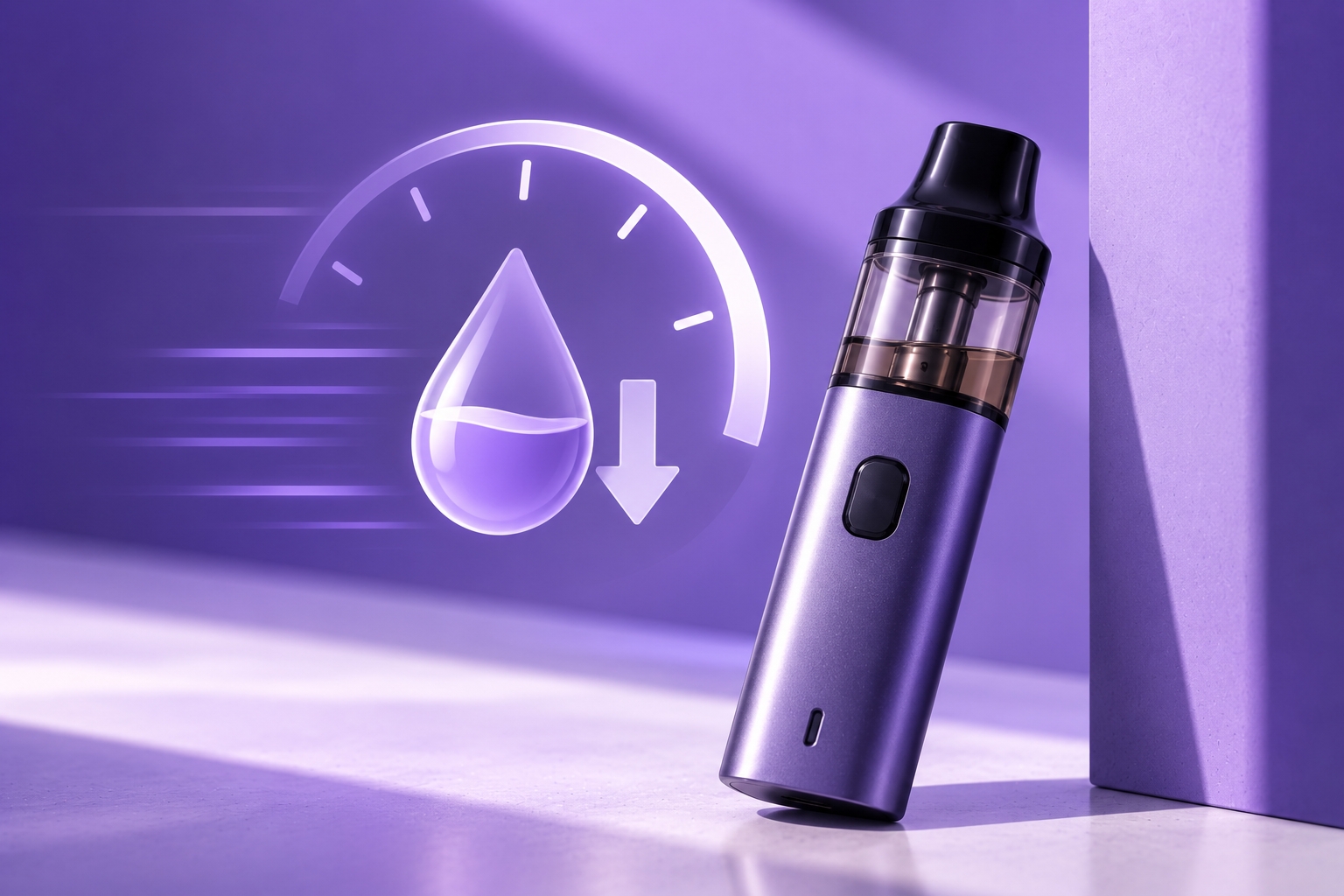
There is no universal amount of e-liquid that a vape should use. Research shows that power, coil configuration, device design, liquid characteristics, and puffing behavior can all influence how much liquid is vaporized. A sudden change in consumption can also point to leaking or another device problem.
Does it feel like your vape is suddenly going through e-liquid much faster than before? You may be refilling your tank more often, watching the level in your pod drop quickly, or wondering where all that liquid is going.
Fast e-liquid consumption does not automatically mean something is wrong. Some device and coil combinations vaporize substantially more liquid than others, and the way you use the device matters too. However, a sudden increase without a corresponding change in your settings or vaping habits is worth investigating.
What Determines How Fast a Vape Uses E-Liquid?
A vape does not consume a fixed amount of liquid with every puff. The amount vaporized depends on several interacting variables, including the electrical power supplied to the coil, atomizer design, coil characteristics, puff duration, frequency of use, and properties of the e-liquid.
Experimental research on coil power and e-liquid consumption found that the amount of liquid vaporized changed with the power supplied to the atomizer. Other controlled research has also found substantial differences in liquid consumption between high-power/lower-resistance and lower-power/higher-resistance configurations.
That means there is no reliable rule such as “a tank should last one day” or “a pod should use a certain number of milliliters per hour.” Your hardware, settings, and usage all matter.
1. You're Using More Power
Power is one of the clearest reasons a device may consume e-liquid quickly. Within an atomizer's operating range, increasing the energy delivered to the heating element can increase the amount of liquid vaporized.
An experimental study available through PubMed Central examined 13 atomizers and found a relationship between supplied power and e-liquid vaporization within their effective operating ranges.
Another laboratory study found e-liquid consumption increased from 8.3 mg per puff at 15 W to 11.7 mg per puff at 25 W and 22.5 mg per puff at 50 W under the tested conditions. The researchers cautioned that atomizer technology also differed across some of those power levels, showing why wattage should not be considered in isolation.
For everyday use, stay within the operating range specified for your coil and device. Understanding how vape wattage affects coil performance can also help explain why changing power settings changes both vapor production and liquid consumption.
2. Your Coil and Device Configuration Uses More Liquid
Coil resistance is often associated with e-liquid consumption, but resistance should not be treated as the only cause. Resistance, voltage, power, coil construction, and device electronics work together.
In a controlled study available through PubMed Central, researchers compared a 0.5-ohm coil operating at 40.5 W with a 1.5-ohm coil operating at 13.5 W. Under the controlled 10-puff condition, participants consumed significantly more liquid with the high-power/lower-resistance configuration.
This does not mean every low-resistance coil automatically consumes a particular amount of e-liquid. The coil resistance, recommended power range, construction, wicking system, and device design should be considered together.
3. You're Taking Longer or More Frequent Puffs
Sometimes the change is not the hardware at all. Your puffing pattern can significantly affect how much liquid becomes aerosol.
Research indexed by PubMed examined puff volume, puff duration, and intervals between puffs. The researchers found that puff duration and the interval between puffs were important variables affecting aerosol yield under the conditions studied.
In practical terms, longer draws and more frequent use can make the liquid level fall faster. Two people using similar hardware therefore should not expect identical e-liquid consumption.
4. Your Vaping Pattern Has Changed
Even if your device settings remain unchanged, you may be using the device differently. More frequent sessions, longer draws, or shorter breaks between puffs can increase total consumption over the course of a day.
Studies of electronic-cigarette puffing behavior have found substantial variation between users. This is another reason daily e-liquid consumption should not be reduced to one universal number.
If your tank suddenly seems to empty faster, think about whether your frequency of use changed before assuming that the hardware is malfunctioning.
5. Device Design Can Affect Consumption
Different atomizers can behave differently even when comparing similar resistance or power ranges. Heating-element construction, wick design, coil surface area, power control, and airflow architecture can all influence aerosol generation.
Research on atomizer performance has demonstrated that e-liquid consumption depends on more than one electrical specification. This is why comparing two devices solely by coil resistance can be misleading.
A compact, lower-output pod and a higher-powered tank may therefore use noticeably different amounts of liquid even when the same person uses both.
6. E-Liquid Characteristics Can Affect Device Performance
The composition and physical properties of e-liquid can affect how it interacts with the wick and heating element. However, it is too simplistic to say that high-VG liquid always causes a vape to consume more e-liquid.
VG and PG differ in viscosity and other physical properties, and different devices are designed around different liquid and wicking requirements. The practical priority is compatibility: use an e-liquid composition appropriate for the pod, coil, or tank rather than assuming one VG/PG ratio will always be more economical.
Understanding the e-liquid ingredients and the type of device they are being used with provides more useful context than treating VG or PG alone as the cause of high consumption.
7. Your Tank or Pod May Be Leaking
Not every drop disappearing from a tank is being vaporized. A slow leak can make consumption appear unusually high even when your vaping habits have not changed.
Check for:
- Liquid around the airflow openings
- Moisture underneath the pod or around electrical contacts
- Liquid collecting around the tank base
- Sticky residue in a pocket, bag, or around the device
- Repeated gurgling or excess liquid in the airflow path
Changes in seals, coil installation, filling technique, or hardware condition can contribute to a leaking tank, while refillable pod systems can develop their own pod leaking problems.
8. Spitting or Flooding Can Waste E-Liquid
A flooded coil can hold more liquid than the heating element is effectively vaporizing. Excess liquid may then enter the airflow path, produce gurgling, or spit droplets through the mouthpiece.
If your liquid level is falling quickly while the device also sounds wet or gurgly, the issue may involve flooding rather than normal vaporization. Persistent spitting or gurgling should be investigated before increasing the power or replacing unrelated components.
9. A Coil Problem May Change How the Device Performs
A worn, damaged, incorrectly installed, or poorly saturated coil can produce inconsistent performance, but it is not accurate to say that every aging coil automatically consumes more e-liquid.
Instead, look for changes such as:
- Burnt or unusual taste
- Noticeably reduced vapor
- Persistent flooding or gurgling
- Visible leakage around the coil or pod
- Unstable or inconsistent performance
When these symptoms appear together with unusual liquid loss, inspect the coil and confirm that it is installed correctly and compatible with the device.
Is There a Normal Amount of E-Liquid a Vape Should Use?
There is no single scientifically supported daily consumption number that applies to every vape or every user.
Controlled research demonstrates why. In one study, participants using different power and coil-resistance conditions consumed substantially different amounts of liquid. Other research shows that puff duration and frequency also vary considerably among users.
Instead of comparing your device with a generic milliliters-per-day figure, compare it with its own previous behavior. A sudden unexplained increase is usually more informative than whether your usage matches someone else's.
How to Figure Out Why Your Vape Is Using So Much Juice
- Check for visible leaks. Inspect the pod, tank, airflow openings, contacts, and surrounding device.
- Check your current wattage. Confirm that it falls within the appropriate operating range for the installed coil.
- Confirm the coil. Make sure the resistance and coil model are compatible with the device or tank.
- Think about your puffing habits. Longer or more frequent draws can increase total liquid use.
- Check for flooding. Gurgling, spitting, or liquid in the airflow path can indicate excess liquid where it should not be.
- Consider recent changes. A new coil, different device, different power setting, different liquid, or changed usage pattern can alter consumption.
- Compare with previous behavior. A sudden unexplained change deserves more attention than consistently high consumption from a setup designed for greater aerosol output.
How Can You Reduce Unnecessary E-Liquid Consumption?
If your device is working normally but you want to reduce unnecessary consumption, focus on settings and conditions you can control rather than trying to reach an arbitrary daily target.
- Keep power within the appropriate range for the installed coil.
- Avoid increasing wattage solely to produce more vapor if efficiency is your priority.
- Make sure the pod, tank, and coil are correctly installed.
- Address leaking, flooding, or gurgling promptly.
- Use compatible e-liquid for the device and coil.
- Be aware that longer and more frequent puffs increase total usage.
- Replace damaged or poorly performing components when necessary.
When Fast E-Liquid Consumption Is Normal
Higher consumption can be expected when moving from a lower-output setup to hardware operating at substantially higher power, especially when the new configuration produces more aerosol per puff.
Laboratory research supports this general relationship, but it also shows that power, coil configuration, atomizer technology, liquid characteristics, and puffing behavior interact. That is why the most useful comparison is usually your device's current consumption versus its previous consumption under similar conditions.
When Fast Consumption May Signal a Problem
Investigate further when the liquid level begins dropping significantly faster even though you have not changed the coil, power setting, liquid, or usage pattern.
Visible leakage, persistent gurgling, repeated flooding, unusual heat, inconsistent firing, or a sudden change in vapor production can help narrow down the cause.
Final Thoughts
If your vape is using e-liquid quickly, wattage is only one possible explanation. Controlled research shows that supplied power, coil configuration, atomizer design, and puffing behavior can all influence how much liquid is vaporized.
Start by comparing the device with its own previous behavior. Check for leaks, confirm the coil and power settings, consider whether your puffing pattern changed, and look for flooding or other performance problems. That approach is more reliable than trying to match a universal e-liquid consumption rate.
Sources & Further Reading
- PubMed Central — Influence of Coil Power Ranges on the E-Liquid Consumption in Vaping Devices
- PubMed Central — Effects of Electronic Cigarette Heating Coil Resistance and Liquid Nicotine Concentration
- PubMed — Influence of Electronic Cigarettes Puffing Regimes on Amount of Vaporized Liquid
- PubMed Central — Aerosol Droplet-Size Distribution and Airborne Nicotine Partitioning
- PubMed — Evaluation of Electronic Cigarette Puffing Topography and Estimation of Liquid Consumption
Research does not support one universal e-liquid consumption rate. Power, coil configuration, atomizer design, liquid characteristics, and individual puffing behavior can all affect consumption. If your liquid use changes suddenly without a corresponding change in your setup or usage, inspect the device for leaking, flooding, coil problems, or other abnormal behavior.