 United States

Why Is My Vape Pod Stuck in the Device? Causes and Safe Removal Checks
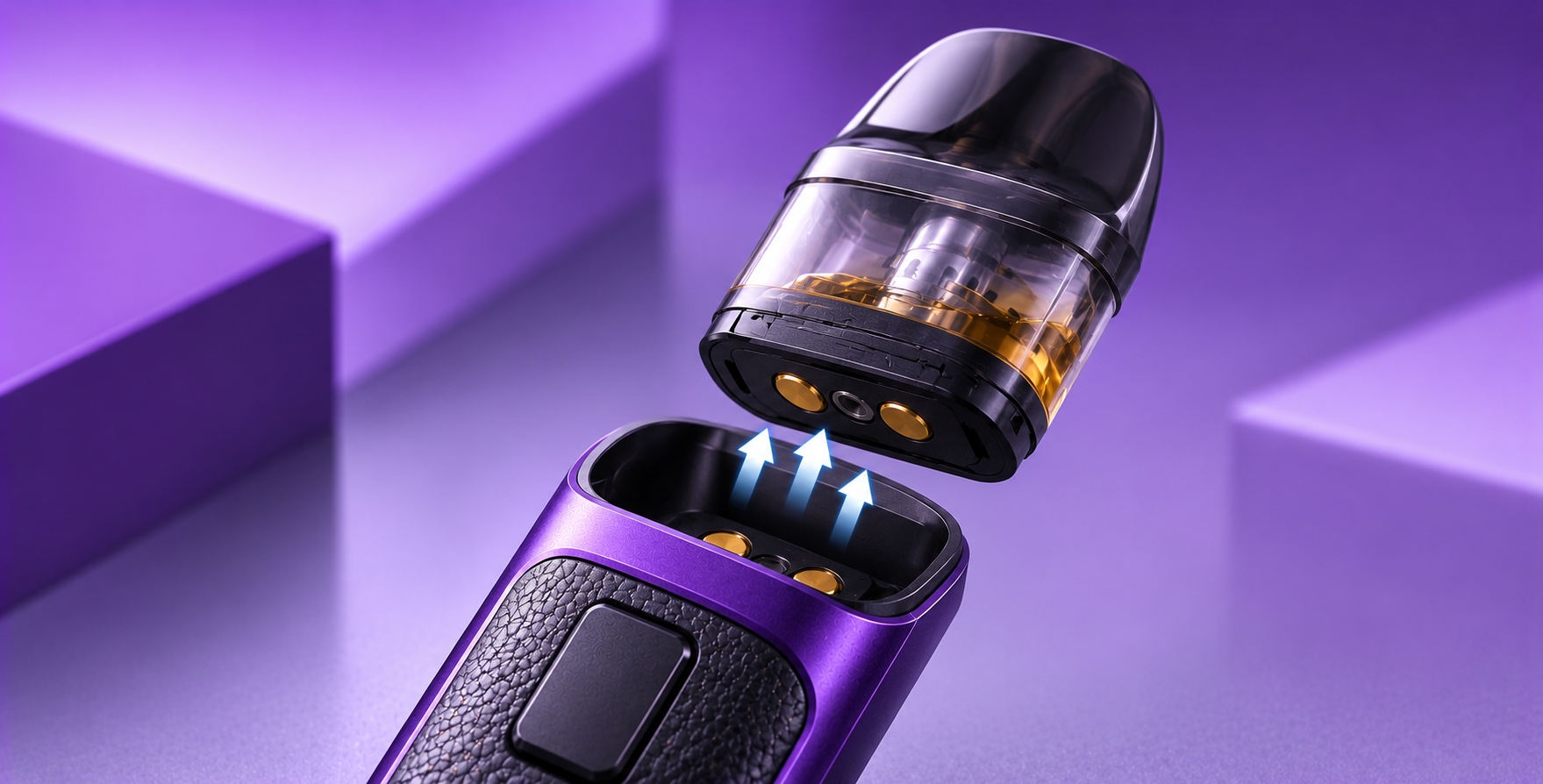
A removable vape pod should attach securely to its device while still allowing removal through the method specified by the manufacturer. If the cartridge suddenly becomes difficult to remove, feels jammed, or refuses to move, the problem may involve its retention mechanism, accumulated residue, physical damage, or incorrect positioning.
Not every tightly fitted pod is defective. Some systems use strong magnets, while others rely on friction-fit housings, clips, or other retention features. These designs can feel different during normal removal.
The important distinction is whether the pod is behaving as designed or whether something is preventing normal removal. This guide explains possible causes of a stuck vape pod, the warning signs to inspect, and when to stop attempting removal.
Quick Verdict: A vape pod may become stuck because of strong magnetic retention, dried e-liquid residue, debris, a damaged cartridge housing, or misalignment inside the pod bay. Start by confirming the correct removal method for your exact device. If the pod will not release through normal manufacturer-approved handling, do not pry, twist, heat, or force it out. Stop using the device and contact the manufacturer or an authorized service provider.
How Are Vape Pods Held Inside a Device?
Pod systems use different mechanical arrangements to keep the cartridge in position. Understanding the retention method can help explain why a pod feels tight and why a removal technique suitable for one device may be inappropriate for another.
Magnetic Pod Connections
Some devices use magnets to hold the pod in its intended position. A magnetic connection may provide noticeable resistance when the cartridge is pulled away from the device.
For example, Innokin's official Kroma-Z support documentation explains that its pod uses strong magnetic connectors and provides a model-specific removal procedure. This does not mean the same technique is suitable for every magnetic pod system.
Friction-Fit Pod Housings
Other devices use a closely fitted cartridge housing. The pod remains in place because its shape and surrounding surfaces create mechanical resistance.
A friction-fit pod may feel snug even when operating normally. However, deformation, residue, or foreign material can increase resistance beyond the intended fit.
Clip or Latch Retention
Certain devices use mechanical clips, catches, or release mechanisms. These must be operated according to the manufacturer's instructions.
Pulling against an engaged latch can damage the cartridge or device housing. Do not assume a pod is designed to be removed by pulling straight upward.
Why Is My Vape Pod Stuck?
1. The Pod Has Strong Magnetic Retention
A magnetic pod may initially feel stuck when its retention force is stronger than expected. This can be normal for certain designs, particularly when the cartridge is fully seated.
The important question is whether the pod can be removed using the procedure in the device manual. Strong magnetic retention alone is not evidence of damage.
2. Dried E-Liquid Residue Around the Pod
A leaking cartridge can leave e-liquid around the pod's exterior or connection area. Over time, residue may become sticky and contribute to resistance between accessible surfaces.
However, a stuck pod does not automatically mean e-liquid is responsible. The source of resistance may be mechanical rather than liquid-related.
Puffin's pod leakage guide explains how damaged seals, filling problems, and cracked reservoirs can allow e-liquid to escape.
3. Dust or Debris Inside the Pod Bay
Pocket lint, dust, or other foreign material can collect around exposed openings and cartridge edges. If debris becomes trapped between the pod and housing, it may interfere with normal removal.
Avoid inserting sharp objects into the pod bay to investigate. Doing so can damage the cartridge, retention mechanism, or electrical contacts.
4. A Damaged or Deformed Pod Housing
A pod that has been dropped, squeezed, or exposed to conditions outside the manufacturer's specifications may develop physical damage. Cracks, deformation, or displaced components can affect how the cartridge fits inside the device.
A visibly swollen, cracked, or distorted pod should not be forced out. If the device itself is bulging, unusually hot, or showing signs of battery damage, stop handling it and follow battery safety guidance.
5. The Pod Is Misaligned
A cartridge that was inserted incorrectly or did not seat evenly may become difficult to remove. Some designs have directional features that require the pod to be installed in a particular orientation.
If the cartridge sits at an unusual angle or appears wedged against the housing, do not attempt to correct the alignment through force.
6. A Damaged Retention Mechanism
Magnets, clips, housing edges, and other retention components can become damaged through impact or wear. A broken component may obstruct normal removal or prevent the pod from releasing correctly.
These problems are not always visible from the outside. If the pod remains jammed despite normal removal attempts, manufacturer support may be necessary.
Normal Tight Fit vs. a Stuck Vape Pod
A secure fit is expected. The warning sign is a change from normal operation or resistance that prevents the cartridge from being removed as instructed.
| What You Notice | Possible Explanation | Recommended Response |
|---|---|---|
| Pod feels firm but removes normally | Normal retention | Follow the manual |
| Pod suddenly becomes harder to remove | Possible residue, debris, or damage | Stop and inspect externally |
| Pod appears tilted or wedged | Possible misalignment | Do not force removal |
| Pod housing is cracked or distorted | Physical damage | Seek approved service or replacement |
| Pod is stuck with unusual heat or odor | Possible serious device fault | Stop handling and follow safety guidance |
These observations cannot confirm the internal condition of a device. If the pod cannot be removed normally, do not assume additional pulling force is the correct solution.
How to Check a Stuck Vape Pod Safely
Step 1: Stop Using the Device
If the cartridge is jammed or unusually difficult to remove, stop activating the device. Disconnect any charging equipment if it is safe to do so, and turn off or lock the device where supported.
Step 2: Identify the Exact Device Model
Find the manufacturer and model name, then consult the official manual or support page. Confirm whether the cartridge uses magnets, friction retention, a latch, or another mechanism.
Do not rely on removal instructions for a different pod system simply because the devices look similar.
Step 3: Check for Visible Warning Signs
Inspect the accessible exterior for cracks, leaking e-liquid, deformation, unusual gaps, or a pod that appears to be sitting at an incorrect angle.
If the device is unusually hot, swelling, smoking, or emitting an abnormal odor, do not attempt further removal. Follow appropriate lithium-ion battery emergency guidance.
Step 4: Use Only the Manufacturer's Removal Method
If the pod appears undamaged and the device is otherwise behaving normally, follow the exact removal procedure specified for that model.
For example, Innokin's Kroma-Z support page describes a particular method for its strongly magnetized pod. That procedure is specific to the Kroma-Z and should not be generalized to unrelated devices.
Step 5: Stop if the Pod Does Not Release Normally
If the cartridge remains stuck or removal requires unusual force, stop attempting to detach it. Do not insert a screwdriver, knife, metal pick, or other tool into the gap.
Avoid twisting a cartridge that is not designed to rotate. Do not squeeze or bend the housing to create additional clearance.
Step 6: Contact the Manufacturer or Authorized Service Provider
Provide the exact model, a description of the problem, and photographs showing any visible damage. Manufacturer support can advise whether the pod can be removed through an approved procedure or whether the device requires service or replacement.
Safety Warning: Never pry a stuck pod out with metal tools, heat the device, place it in a freezer, or apply solvents to loosen residue unless the manufacturer explicitly provides a model-specific procedure. Do not puncture, crush, or open a sealed cartridge or battery housing. If battery swelling, smoke, abnormal heat, or unexpected firing occurs, stop handling the device and follow emergency safety guidance.
Can E-Liquid Make a Vape Pod Stick?
It can contribute to resistance if leaked e-liquid accumulates around the cartridge and dries into a sticky residue. However, the effect depends on the pod design, the location of the residue, and whether other mechanical damage is present.
Do not pour water, alcohol, or another liquid into the pod bay to dissolve residue. Introducing additional liquid may damage electrical components.
If the pod is successfully removed using an approved method, inspect accessible surfaces for residue and follow the manufacturer's cleaning instructions before installing another compatible cartridge.
Can a Magnetic Vape Pod Get Stuck?
Yes. A magnetic pod can feel difficult to remove because of strong retention or because another issue is interfering with movement.
Magnets are not necessarily the source of the problem. Debris, a damaged housing, or incorrect positioning may also affect a magnetically retained cartridge.
The correct removal method depends on the device. Innokin's Kroma-Z support documentation provides an example of manufacturer-specific instructions for a strongly magnetized pod.
What if the Pod Is Stuck and the Device Won't Recognize It?
A stuck pod and an electrical recognition problem can occur together, but one does not automatically prove the cause of the other.
A damaged or misaligned cartridge may affect both physical fit and electrical contact. However, dirty contacts, incompatible cartridges, or internal faults can also prevent recognition without causing mechanical jamming.
Puffin's pod disconnection guide explains those electrical connection issues separately.
Do not repeatedly activate a device with a jammed cartridge in an attempt to determine whether the connection is working.
Can a Stuck Pod Cause a Blinking Warning Light?
Depending on the device, a pod that is not correctly seated or recognized may contribute to a warning indicator. However, blinking lights can also indicate low battery, short-circuit protection, or other model-specific conditions.
A blinking light does not confirm that the cartridge is physically stuck or that its retention mechanism is damaged.
Puffin's blinking light troubleshooting guide covers these separate warning patterns and why they should be interpreted using the official manual.
Should You Replace the Pod or the Entire Device?
Replacement depends on the location and severity of the damage.
- Damaged removable pod: Replace the cartridge with a manufacturer-compatible part if the device housing remains undamaged.
- Damaged retention mechanism: Contact the manufacturer to determine whether the device can be serviced.
- Deformed pod bay: Do not force a replacement cartridge into the device.
- Damaged electrical contacts: Seek authorized service rather than attempting to bend or reposition them.
- Sealed or non-serviceable device: Follow the manufacturer's replacement and disposal instructions.
Do not assume that a replacement pod is compatible merely because it has a similar shape. Cartridge dimensions, retention features, and electrical connections can differ between device generations.
How to Reduce the Risk of a Vape Pod Getting Stuck
Careful handling and manufacturer-approved maintenance can reduce avoidable mechanical problems.
- Use only cartridges approved for the exact device model.
- Follow the correct pod insertion and removal procedures.
- Do not force a cartridge that does not fit normally.
- Address visible pod leaks promptly.
- Keep accessible exterior surfaces free from residue according to the manual.
- Protect the device from drops, crushing, and housing damage.
- Avoid storing the device in conditions outside the manufacturer's specifications.
- Replace visibly damaged pods rather than continuing to reuse them.
There is no universal removal force or maintenance interval suitable for every pod system. The correct handling procedure depends on the cartridge and device design.
Frequently Asked Questions
Why won't my vape pod come out?
Possible causes include strong magnetic retention, residue, debris, housing deformation, or a damaged retention mechanism. Check the official removal instructions for your exact model and stop if the pod requires unusual force.
Can I use pliers to remove a stuck vape pod?
Do not use pliers or other gripping tools unless the manufacturer explicitly specifies a safe procedure for the exact model. Excessive force can crack the pod, damage the housing, or affect electrical components.
Can dried e-liquid make a pod difficult to remove?
Yes. Residue around the cartridge may contribute to sticking, although mechanical damage or strong retention can cause similar symptoms. Do not introduce cleaning liquids into the device to loosen a stuck pod.
Are magnetic vape pods supposed to be hard to remove?
Some magnetic systems have noticeable retention force. The pod should still be removable using the manufacturer's intended method. A sudden change in resistance or a cartridge that will not release normally deserves inspection.
Can I put my vape in the freezer to loosen a stuck pod?
Do not use freezing as a general troubleshooting method for battery-powered devices. Some manufacturer support instructions may discuss temperature-related procedures for particular hardware, but those instructions should not be applied to unrelated models.
Should I replace my vape if the pod is permanently stuck?
Not automatically. The manufacturer may provide an approved removal or service procedure. If the retention mechanism or housing is damaged and the device cannot be serviced safely, replacement may be necessary.
Final Verdict
A vape pod that feels stuck may simply have strong retention, but unexpected resistance can also indicate residue, debris, misalignment, or physical damage. The cause cannot always be determined from the outside.
The safest starting point is identifying the exact model and checking how its pod is intended to be removed. A method appropriate for a magnetic cartridge may be unsuitable for a friction-fit or latch-retained system.
If the pod cannot be removed normally, do not force it. Stop using the device and consult the manufacturer about approved removal, service, or replacement options.
Bottom Line: A secure pod fit is normal; a jammed cartridge is not something to overcome with improvised tools or excessive force. Follow the exact device manual and stop when normal removal is no longer possible.
Technical References & Editorial Review
This article draws on manufacturer documentation describing pod retention, cartridge removal, and device connection checks. It provides general, non-invasive troubleshooting guidance and does not claim hands-on testing of a particular pod system.
- Innokin — Kroma-Z Official Support: magnetic pod retention and model-specific stuck-pod removal instructions.
- Innokin — Sensis Official Support: magnetic pod attachment and removal guidance.
- Vaporesso — Official Vape FAQs: pod seating, connector condition, and device troubleshooting.
- U.S. FDA — Vape Battery Safety: battery-related precautions and manufacturer instructions.
Editorial Note: Prepared for adults of legal purchasing age. This article distinguishes normal pod retention from mechanical jamming and avoids universal removal instructions. It does not recommend opening sealed electronics, forcing damaged cartridges, or modifying retention components. Manufacturer instructions for the exact model take precedence.
Prepared: November 5, 2026 | Editorial Review: Pending publication approval.