 United States
Why Does My Vape Stop Firing After a Few Seconds? Causes Explained
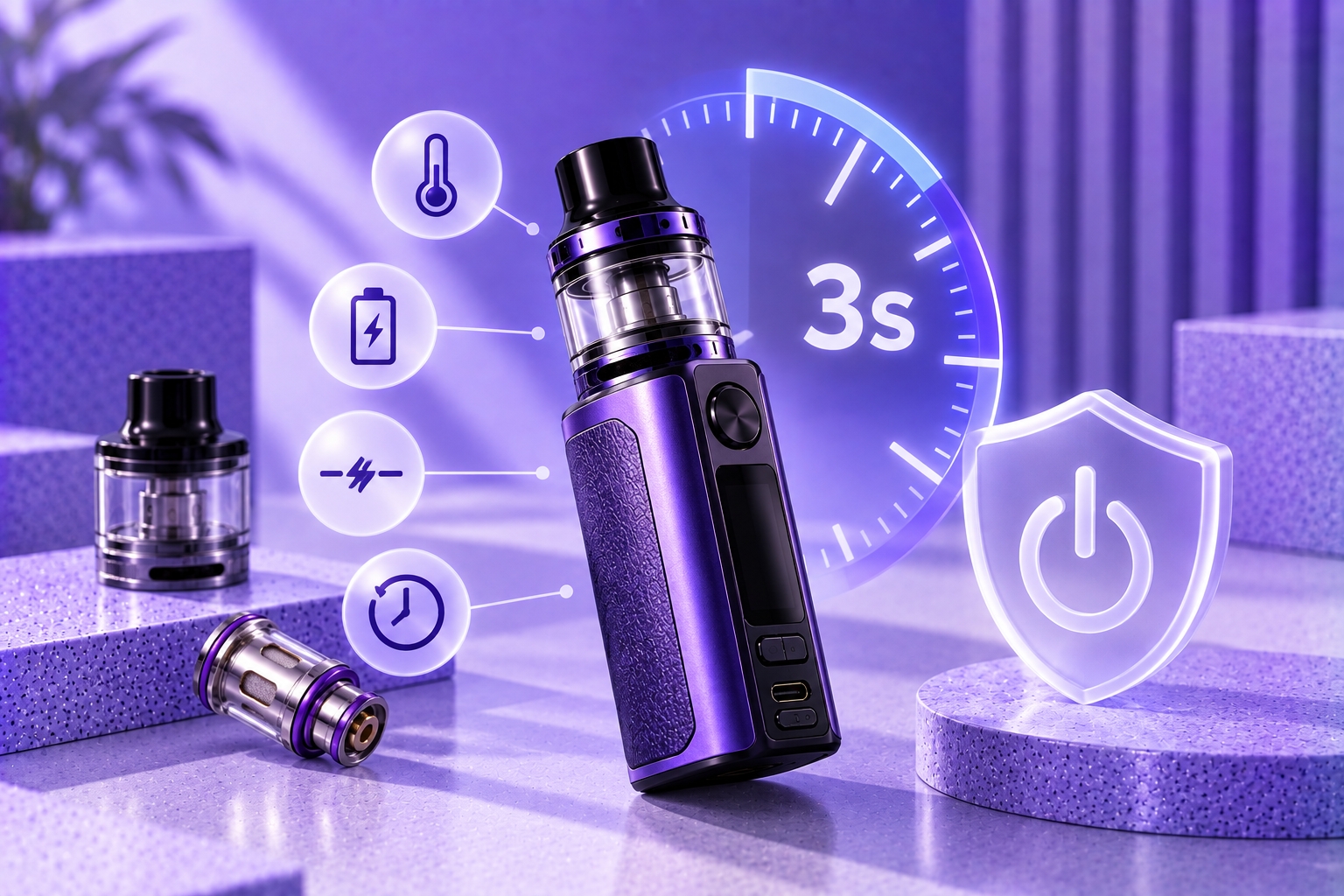
A vape cutoff is usually a programmed limit on continuous activation, but the exact duration and behavior vary by manufacturer and model. Do not assume every device uses the same cutoff time. Check the manual for your exact device when interpreting a cutoff message, blinking pattern, or firing limit.
You press the fire button or inhale from your vape, it works normally for several seconds, and then suddenly stops producing vapor—even though the battery still has power. Release the button or stop inhaling, try again, and the device works normally.
That behavior may be a vape cutoff, also called a firing cutoff, puff-duration limit, overtime protection, or timeout. On devices equipped with this feature, the electronics stop continuous output after a defined period of activation.
A normal cutoff is different from a vape that randomly powers down, repeatedly loses its connection, or refuses to fire at all. Understanding that difference can prevent unnecessary troubleshooting when the device is actually operating as designed.
What Is a Vape Cutoff?
A vape cutoff is a programmed limit that stops the device from continuing to fire after it has been activated continuously for a certain amount of time.
On a button-operated device, the timer generally applies while the fire button remains continuously pressed. On compatible auto-draw devices, a similar limit may apply to continuous inhalation.
When the cutoff is reached, the device stops supplying output to the heating element. Depending on the model, the screen or LED may also display a timeout message or blinking pattern.
Why Do Vapes Have a Firing Cutoff?
The cutoff is generally implemented as part of the device's protection and control system. It limits how long one continuous activation can continue before the electronics stop output.
Manufacturer documentation provides clear examples. Geekvape documentation for the Aegis Hero 2 describes a 10-second timeout that automatically stops output and displays “10s CUT OFF.” Aspire documentation for the Nautilus GT likewise describes an automatic continuous-fire cutoff and an “OVER 10S” screen message.
This means a device stopping after a repeatable period of continuous firing can be normal behavior rather than evidence that the battery or coil has failed.
How Long Is a Vape Cutoff?
There is no universal cutoff duration for every vape.
Ten seconds is documented on a number of devices, but it should not be treated as an industry-wide rule. Some devices use different limits, and certain regulated devices allow the continuous-fire duration to be adjusted within a manufacturer-defined range.
For example, Aspire documentation for the Nautilus GT lists a preset 10-second cutoff while also allowing its continuous-fire setting to be adjusted from 1 to 15 seconds.
The correct cutoff time for your vape therefore comes from the specifications or manual for that exact model.
What Happens When the Vape Reaches Its Cutoff?
The exact response depends on the device. Common manufacturer-documented behaviors include:
- Stopping output to the coil
- Displaying a cutoff or overtime message
- Flashing an LED in a particular pattern
- Temporarily preventing further output
- Returning to normal operation after the activation is released or after a short delay
A screen-equipped vape might display wording such as “10S CUT OFF,” “OVER 10S,” “OVER TIME,” or another model-specific prompt. A screenless device may communicate the same type of event using its LEDs instead.
Because these indicators vary, the meaning of vape LED indicators should be interpreted using the documentation for the exact model.
Does a Vape Cutoff Mean the Device Is Broken?
Usually not when the behavior matches the device's documented continuous-firing limit.
A useful clue is repeatability. If the vape consistently fires normally and stops only after approximately the documented continuous-activation period, the cutoff may simply be functioning as intended.
The device may then resume normal operation once the button is released or the activation condition resets, depending on the model.
That is different from unpredictable shutdown behavior. If the entire device unexpectedly powers off during ordinary use rather than stopping after its documented firing interval, the unexpected shutdown should be diagnosed separately.
Vape Cutoff vs. Device Turning Off: What's the Difference?
| Behavior | Typical Pattern | What to Check |
|---|---|---|
| Firing cutoff | Stops after a repeatable period of continuous activation | Manufacturer's continuous-fire specification |
| Unexpected shutdown | Device powers off unpredictably during otherwise normal use | Battery, connection, temperature, settings, or device fault |
| Low-battery protection | Output stops when the battery reaches the device's programmed low-voltage condition | Battery level and charging status |
| Atomizer protection | Device refuses output after detecting an atomizer-related condition | Screen warning, coil, resistance, and connection |
Is a Cutoff the Same as Low-Battery Protection?
No. Both can stop the device from firing, but they respond to different conditions.
A firing cutoff responds to continuous activation time. Low-battery or low-voltage protection responds to the battery reaching a threshold programmed into the device.
Manufacturer manuals often list these as separate protections. For example, documentation for regulated devices can identify timeout, low-battery, atomizer-short, and over-temperature conditions independently.
If your vape stops immediately or after only a very short activation while showing a battery warning, investigate the battery or charging problem instead of assuming the normal puff cutoff was reached.
Is a Vape Cutoff the Same as Overheating Protection?
No. A firing-duration cutoff is based on how long the device has been continuously activated. Temperature protection responds to a temperature condition detected by the device.
These protections can exist on the same device but operate independently. Manufacturer documentation for some regulated vapes separately identifies timeout and overheat warnings.
If the device stops and displays an over-temperature warning—or becomes unusually hot during ordinary use—the issue should be treated as an overheating problem rather than a routine firing cutoff.
Is a Vape Cutoff the Same as Short-Circuit Protection?
No. Short-circuit protection is another separate condition.
With a normal firing cutoff, the device has typically been operating until its continuous-activation timer expires. With a short-circuit warning, the device detects an electrical condition associated with the atomizer and can prevent output accordingly.
A “Short,” “Atomizer Short,” or similar warning should not be dismissed as a normal cutoff simply because both conditions cause the device to stop firing.
Why Does My Vape Cut Off Before I Finish Inhaling?
If your draw lasts longer than the device's programmed continuous-activation limit, the cutoff may occur before you finish inhaling.
Release the fire button or stop drawing and allow the device to return to its normal state according to its manual. Do not repeatedly attempt to override a protection timer.
If the vape stops much earlier than its documented cutoff or the timing changes unpredictably, another condition may be responsible.
Why Does My Vape Say “10S Cut Off”?
On a device that uses this wording, “10S Cut Off” generally means continuous activation reached the manufacturer's 10-second limit and the device stopped output.
For example, Geekvape documentation for the Aegis Hero 2 describes a “10s CUT OFF” prompt when the fire button is held for more than 10 seconds, after which output stops automatically.
Other devices can use different wording, such as “OVER 10S,” “TIME OUT,” or another manufacturer-defined message.
What Does “Over Time” Mean on a Vape?
“Over Time” or a similar timeout message usually indicates that the device's permitted continuous firing period has been reached.
This is primarily a status or protection message rather than proof of a malfunction. The exact duration that triggers it should be confirmed in the device manual.
Other warnings and abbreviations are covered separately in the guide to vape screen symbols, since their wording and behavior can vary by chipset and model.
Can You Change the Vape Cutoff Time?
It depends entirely on the device.
Many devices use a fixed manufacturer-programmed cutoff that the user cannot change. Some regulated devices, however, provide an adjustable continuous-fire setting.
Aspire's Nautilus GT documentation, for example, describes an adjustable continuous-fire time from 1 to 15 seconds. That feature should not be assumed to exist on other devices.
If your device provides an adjustable cutoff, use only the controls and range documented by its manufacturer. Do not attempt to bypass the cutoff through hardware or firmware modifications.
What If My Vape Stops Firing Before the Cutoff?
If the device stops after only one or two seconds when its documented cutoff is considerably longer, the normal timeout may not be the cause.
Check whether the screen or LEDs indicate another condition, such as:
- Low battery
- No atomizer or lost coil connection
- Short-circuit protection
- Resistance outside the supported range
- Temperature protection
- Device lock
- Another model-specific warning
If the device remains powered on but produces no vapor, the broader no-vapor troubleshooting process can help separate a coil, connection, battery, or activation problem from a normal cutoff.
What If My Vape Keeps Firing After I Release the Button?
That is not the same behavior as a normal cutoff.
A cutoff stops output after a programmed period. If a device continues activating after the fire button is released or continues firing unexpectedly, stop using it and treat the condition as an auto-firing problem.
Do not rely on the cutoff timer as a solution for unintended activation.
How to Tell If You're Seeing a Normal Vape Cutoff
- Check the timing. Does the device stop after approximately the same period of continuous activation each time?
- Look at the screen or LED. A timeout, cutoff, or documented blink pattern can identify the condition.
- Release the activation. A normal cutoff may reset once the fire button is released or inhalation stops, depending on the model.
- Check the manual. Confirm the device's actual continuous-fire limit and reset behavior.
- Watch for other warnings. Battery, atomizer, short-circuit, and temperature messages point toward different conditions.
When Is It Not a Normal Cutoff?
Further troubleshooting is appropriate when the device:
- Stops at inconsistent times
- Completely powers off rather than simply ending the firing cycle
- Stops much earlier than its documented continuous-fire limit
- Shows a low-battery, short-circuit, atomizer, or temperature warning
- Becomes unusually hot
- Requires repeated restarting after ordinary puffs
- Continues firing after activation should have stopped
Those symptoms can point to another protection event or a device problem rather than normal cutoff behavior.
Final Thoughts
A vape cutoff is a programmed continuous-activation limit that stops output after the device has been firing for a defined period. When the behavior occurs consistently at the manufacturer-specified interval and the device resumes normal operation afterward, it can be a normal protection function rather than a malfunction.
The important part is not to assume that every vape uses the same cutoff. Duration, warning messages, LED patterns, reset behavior, and whether the timer can be adjusted all depend on the device. Use the manual for your exact model as the primary reference.
Sources & Further Reading
- Geekvape Aegis Hero 2 User Manual — 10-Second Cutoff and Protection Prompts
- Aspire Nautilus GT Manual — Automatic and Adjustable Continuous-Fire Cutoff
Cutoff duration and behavior vary by manufacturer and model. A repeatable firing timeout can be normal, but unpredictable shutdowns, short-circuit warnings, unusual heat, or unintended firing should not be treated as routine cutoff behavior.